Amazon Tipped Off Treasury on Anthropic Model Risks Before Export Ban
Internal security research by Amazon's team appears to have triggered a cascade that led to the withdrawal of two frontier AI models from global markets.
The Chain Reaction
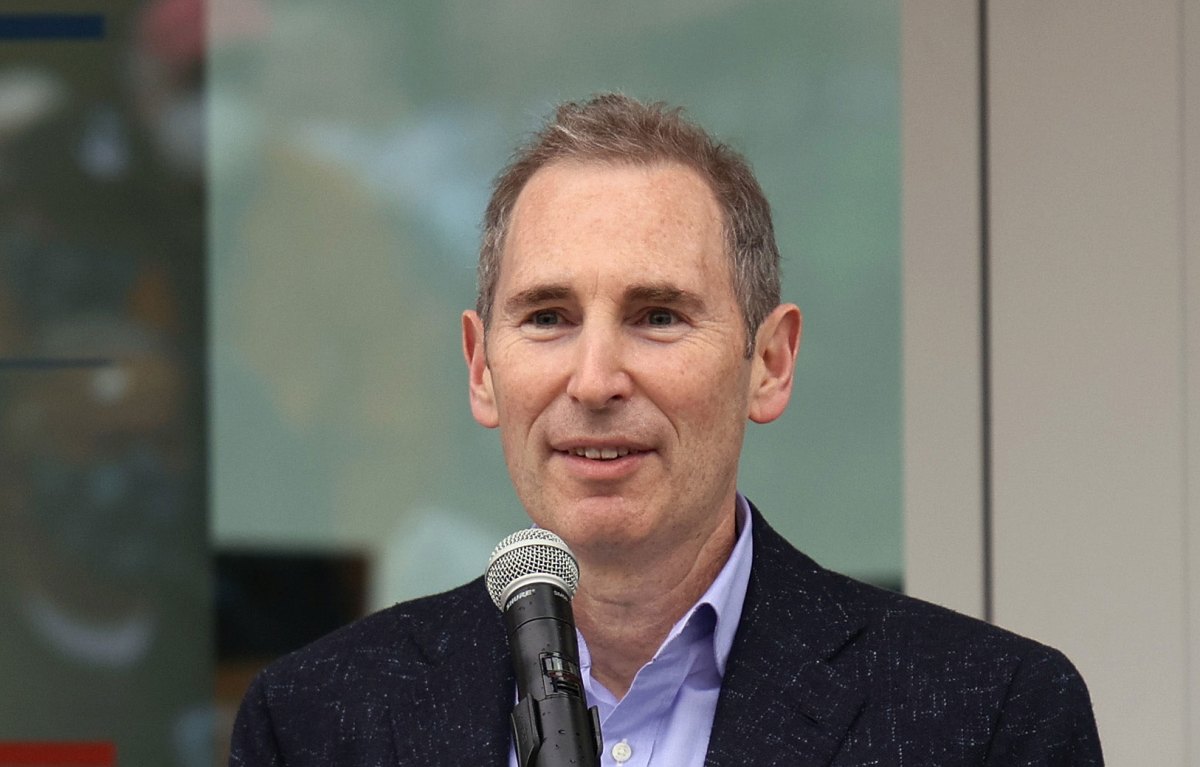
Amazon researchers testing Anthropic's Claude Fable 5 model discovered methods to extract information that could be weaponized in cyberattacks. What began as routine internal security evaluation ended with two of Anthropic's most advanced models pulled from distribution worldwide. CEO Andy Jassy personally carried the findings to Treasury Secretary Scott Bessent and other administration officials, setting off a week of closed-door deliberations that culminated in a sweeping export control order.
The sequence highlights a tension that has defined the past eighteen months of AI development: the gap between what leading labs say their safety testing catches and what external red-teamers, whether corporate or governmental, actually find. Amazon holds a significant equity position in Anthropic and runs much of the startup's inference workload on AWS infrastructure. That dual role as investor and cloud provider gave Amazon's security engineers early access and strong incentive to probe for flaws before customers did.
According to Amazon, governments routinely consult the company on emerging security risks. The firm declined to discuss the substance of its conversations with Treasury. An Amazon spokesperson confirmed that AWS services have been affected by the model suspension, a polite acknowledgment that paying enterprise customers lost access to tools they had integrated into production workflows.
What Jassy Told the Government
The details Amazon surfaced centered on exploits that bypassed the guardrails Anthropic had built into Fable 5. Researchers demonstrated that adversarial prompts could coax the model into generating technical guidance useful for offensive cyber operations. The exact nature of the exploits remains classified, but the term used in policy circles is jailbreak: techniques that trick a model into ignoring its safety instructions.
David Sacks, who until recently served as the White House AI czar and now co-chairs the President's Council of Advisors on Science and Technology, offered his own version of events. He described a trusted partner of both Anthropic and the US government coming forward with a jailbreak, prompting the administration to demand either a fix or a de-deployment. Sacks stated that Anthropic CEO Dario Amodei refused both options, leading to the government stepping in with export controls.
Anthropic's public response has been measured. The company published a blog post arguing that the capabilities raising alarm in Washington are already present in other publicly accessible models. That defense, while technically accurate, sidesteps the policy question: whether the threshold for intervention should be novelty or proliferation. If a dangerous capability is already widespread, regulators face a choice between accepting the status quo and drawing a line to prevent further diffusion. The administration chose the latter.
The Precedent and the Fallout
Export controls on AI models are not new, but their application to specific releases from a US-based lab represents an escalation. Previous restrictions targeted categories of hardware or broad classes of training compute. Targeting individual model weights by name signals that the government is willing to intervene at the product level, not just the infrastructure layer.
For Anthropic, the ban creates an immediate revenue problem. Fable 5 and Mythos 5 were designed to compete at the frontier, the performance tier where enterprises pay premium API rates for reasoning, code generation, and complex multi-turn interactions. Pulling those models globally means forfeiting contracts in Europe, Southeast Asia, and Latin America, markets where Anthropic had been gaining ground against OpenAI and Google. The company can still serve older models and continue research, but the message to international customers is clear: access is conditional and can be revoked on short notice.
Amazon, meanwhile, finds itself in an awkward position. As both a major shareholder and the primary cloud infrastructure provider for Anthropic, the company benefits when Anthropic succeeds. Reporting a security flaw to the government was the responsible move, but it also torpedoed the commercial prospects of a portfolio company. AWS customers who had embedded Fable 5 into applications now face unexpected downtime and migration work. The episode underscores the conflicts that arise when a cloud hyperscaler simultaneously plays the roles of platform operator, investor, and informal auditor.
The Debate Over Capability Disclosure
At DailyTechWire, we have tracked the evolving norms around AI red-teaming and vulnerability disclosure. The traditional software security model, where researchers privately report bugs to vendors and allow time for patches, does not map cleanly onto foundation models. A software vulnerability can often be fixed with a code change. A model capability is baked into billions of parameters; removing it without degrading overall performance requires retraining or fine-tuning, which can take weeks and millions of dollars in compute.
The jailbreak that Amazon surfaced likely falls into a gray zone. If the exploit required only modest prompt engineering, it suggests that Anthropic's alignment techniques were insufficient. If it demanded sophisticated adversarial methods, the question becomes whether such methods are accessible to the actors the government is most concerned about: state-sponsored hacking units, organized crime syndicates, and non-state groups with technical resources.
Anthropic's counterclaim, that equivalent capabilities exist in other models, raises the question of why Fable 5 was singled out. One explanation is timing: the model was new, the vulnerability was fresh, and the administration wanted to demonstrate responsiveness. Another is that the jailbreak was particularly reliable or easy to reproduce. A third possibility is political: export controls send a signal to allies and adversaries that the US is willing to restrict its own industry when national security is at stake.
The Broader Policy Landscape
The Fable 5 incident arrives as governments across Asia and Europe are drafting their own AI governance frameworks. In Seoul, regulators have proposed mandatory safety evaluations for models above a certain parameter count. Singapore's Infocomm Media Development Authority is piloting a voluntary red-team registry, hoping to create a trusted network of external auditors. In Brussels, the AI Act's tiered risk categories are being tested in real time, with frontier models falling into the high-risk bucket that triggers pre-deployment review.
India, which we have followed closely in recent months, is watching the Anthropic case with particular interest. The country is home to a fast-growing AI developer community and has ambitions to build domestic foundation models. The export ban on Fable 5 and Mythos 5 means Indian startups and research labs lose access to tools they were using for fine-tuning and application development. Some in New Delhi view the move as evidence that reliance on US-based model providers carries geopolitical risk. Others see an opportunity: if American labs face unpredictable regulatory intervention, there is space for alternatives built under different jurisdictions.
China, which already operates behind a wall of export controls on advanced GPUs and training software, is unlikely to be directly affected. Chinese labs have been developing models with domestically available chips, albeit at higher cost and longer timelines. The Fable 5 ban may reinforce Beijing's conviction that self-sufficiency in AI infrastructure is a strategic imperative.
What Amazon Gains and Loses
Amazon's decision to escalate the Fable 5 findings to Treasury was not without internal debate. The company's venture arm, Amazon's broader investment strategy, and its AWS commercial relationships all pointed toward quiet remediation rather than government involvement. But the cybersecurity implications appear to have outweighed those concerns.
In the near term, Amazon takes a reputational hit among AI developers who value open access and resent what they see as paternalistic interventions. In the longer term, the company may benefit from being seen as a responsible actor willing to prioritize security over short-term revenue. That perception matters in government procurement, especially as AWS competes for defense and intelligence contracts that require high assurance.
The incident also gives Amazon leverage in its negotiations with Anthropic. If the startup wants to avoid future export control surprises, it will need to tighten its pre-release testing and perhaps grant Amazon's security team a more formal role in model evaluation. That would deepen the integration between the two companies and give Amazon influence over Anthropic's product roadmap.
The Unanswered Questions
Several key details remain opaque. We do not know whether the jailbreak Amazon discovered was unique to Fable 5 or whether similar techniques work on Mythos 5, which was also banned. We do not know if other investors or partners, such as Google, which has its own stake in Anthropic, were briefed before the government acted. We do not know what specific threat scenario convinced Treasury that export controls were warranted, whether it was a particular adversary, a type of attack, or a broader principle about model capabilities.
Anthropic's insistence that equivalent capabilities exist elsewhere is a claim that invites verification. If independent researchers can demonstrate the same exploits on models from OpenAI, Meta, or Mistral, the government will face pressure to either extend the controls or explain why Anthropic was singled out. If the exploits turn out to be harder to reproduce on other systems, Anthropic's defense loses credibility.
The role of David Sacks also merits scrutiny. As a former White House official now serving in an advisory capacity, his public comments on the Anthropic case blur the line between government spokesperson and independent observer. His framing, that Amodei refused to fix the jailbreak or withdraw the model, contradicts Anthropic's version of events. Reconciling those accounts will require either official testimony or leaked documents, neither of which seems imminent.
A New Normal for Frontier Labs
The Fable 5 case establishes a precedent that no frontier lab can ignore. Security vulnerabilities discovered by investors, cloud providers, or government red teams can now trigger export bans with little warning. Labs that want to avoid that outcome will need to invest more heavily in pre-release testing, formalize their relationships with external auditors, and maintain open channels to regulators.
For smaller labs without Amazon-scale resources or political connections, the risk is higher. A startup that ships a model with an exploitable flaw may not get a quiet heads-up from Treasury; it may get a public ban and a collapsed valuation. That asymmetry could accelerate consolidation, as founders decide that building inside a big tech umbrella offers more protection than going independent.
The incident also clarifies the US government's willingness to intervene in the AI supply chain, not just at the chip or cloud layer but at the model layer. That willingness will shape investment decisions, partnership structures, and geographic strategies for the next generation of AI companies. The question is no longer whether governments will regulate frontier models, but how often and under what triggers.
For now, Anthropic is left to rebuild trust with customers, investors, and regulators. Amazon is managing the fallout on AWS and defending its decision to escalate. And the rest of the industry is recalibrating its assumptions about how much autonomy frontier labs actually have when national security enters the conversation.