Uber and Zipline Chase One Million Daily Drone Orders
The ride-hail giant's strategic bet on aerial logistics aims to reshape last-mile delivery across US metros by 2029, starting with Arkansas and Texas this year.
A Million Flights a Day
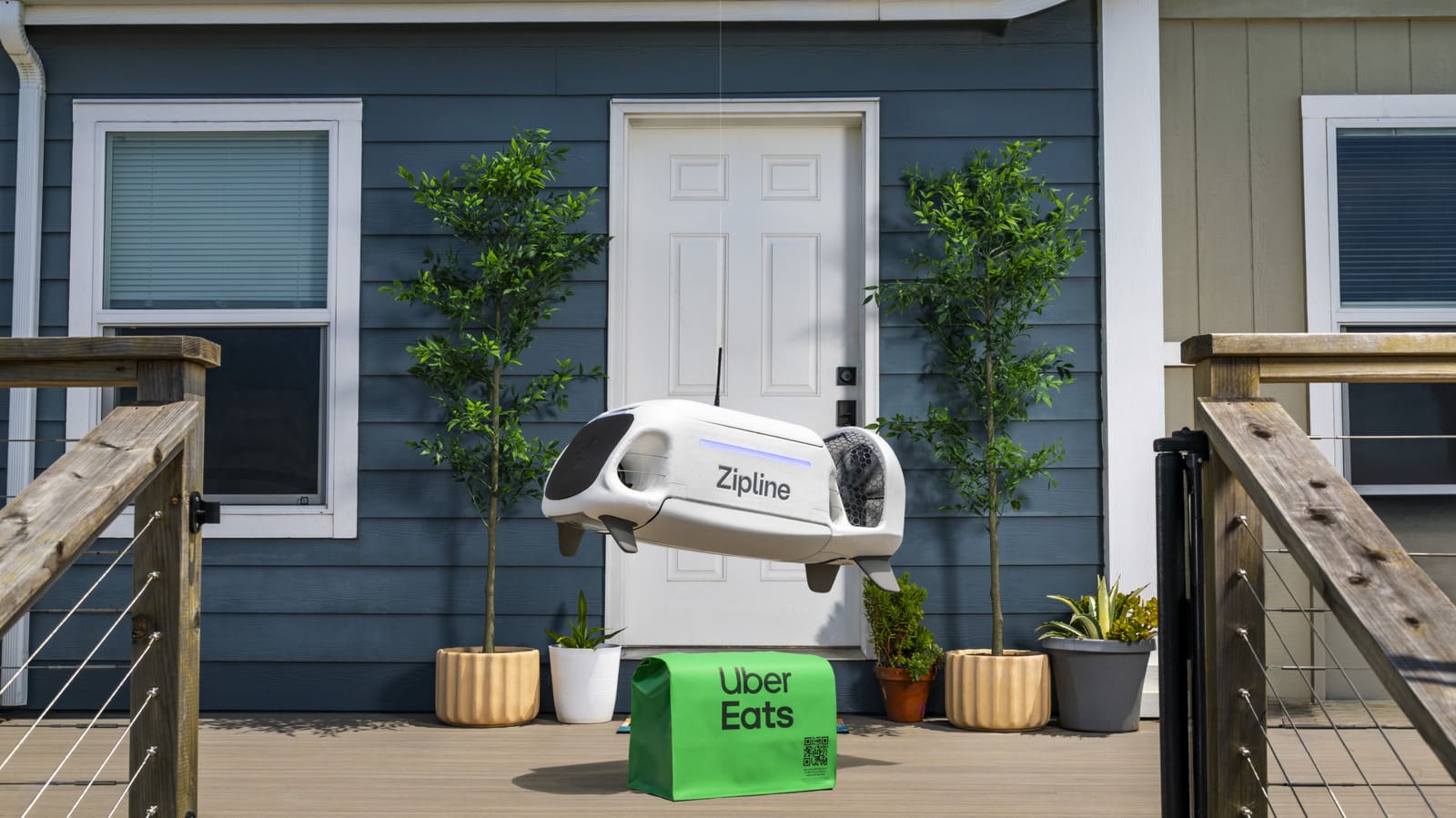
Uber announced a partnership with drone logistics firm Zipline that sets an ambitious target: one million airborne deliveries every day by the end of 2029. The collaboration pairs Uber's demand-side network with Zipline's autonomous aircraft platform, and Uber has taken an undisclosed strategic stake in the drone company to cement the relationship.
The first Zipline-powered Uber Eats orders are scheduled to take flight later in 2026, beginning in markets where Zipline already operates, including Pea Ridge, Arkansas, and the Dallas-Fort Worth metropolitan area. From there, the companies plan to expand drone service to dozens of additional US cities over the next three years.
At DailyTechWire, we've tracked the steady march of on-demand drone logistics from pilot programs to regional scale. This deal represents the largest volume commitment we've seen in the consumer delivery space, and it signals that Uber views aerial fulfillment not as a novelty but as core infrastructure for its platform economics.
Why Zipline
Zipline brings more than hardware to the table. The company has completed over 2.7 million autonomous deliveries across healthcare, food, and retail categories, working with partners that include Walmart and Chipotle. That operational track record matters: drone delivery remains capital-intensive and regulation-heavy, and proven reliability at scale is rare.
For Uber, the partnership extends a multi-year strategy of embedding autonomous logistics into its marketplace. The company previously partnered with Flytrex to bring drone delivery to Uber Eats in 2025, and it has signed robotaxi agreements with Lucid and Momenta to layer self-driving rides into its core mobility offering. The through-line is clear: Uber is building a platform that can route demand to the lowest-cost, fastest fulfillment option, whether that means a human courier, a wheeled robot, or an aircraft.
The financial terms of Uber's investment were not disclosed, but the structure suggests more than a simple vendor relationship. Strategic stakes typically come with board visibility, co-development rights, and volume commitments that give both sides skin in the game.
The Last-Mile Equation
Drone delivery solves a specific problem in urban and suburban logistics: the cost and latency of the final mile. A human driver navigating traffic, parking, and apartment lobbies can take twenty to forty minutes and cost several dollars per order. A drone flying a direct route at forty miles per hour can cut delivery time in half and, at sufficient volume, reduce per-unit costs below traditional courier economics.
But the model only works if three conditions hold: regulatory approval, airspace management at scale, and consumer density high enough to justify fixed infrastructure costs. Zipline's existing operations in Pea Ridge and Dallas-Fort Worth suggest it has cleared the first two hurdles in select geographies. Uber's demand network provides the third.
The one-million-per-day target is worth contextualizing. Uber Eats processes tens of millions of orders globally each day, so one million drone deliveries would represent a meaningful but still minority share of total volume. It implies selective deployment in high-density, high-margin corridors rather than blanket coverage.
Competitive Pressure from DoorDash and Wing
Uber and Zipline are not operating in a vacuum. DoorDash partnered with Wing, Alphabet's drone subsidiary, in 2022, and that service recently expanded into metro Atlanta. Wing has its own operational pedigree, with years of deployments in Australia and the US, and DoorDash commands significant market share in food delivery.
The race is less about who flies first and more about who can thread the operational needle: balancing flight safety, regulatory compliance, unit economics, and customer experience across dozens of markets simultaneously. Both partnerships are converging on the same thesis, that aerial delivery will capture a slice of high-frequency, short-radius orders in the next three to five years, but execution will determine who owns the infrastructure layer.
Uber's advantage lies in its existing merchant and consumer relationships, its routing algorithms, and its ability to cross-subsidize drone investment with profits from rides and freight. Zipline's advantage is its hardware maturity and its regulatory playbook. Whether that combination is enough to hit the 2029 target will depend on how quickly the Federal Aviation Administration expands beyond-visual-line-of-sight waivers and how well the technology handles edge cases at scale, weather delays, no-fly zones, and package handoff in dense apartment complexes.
What This Means for the Delivery Stack
If Uber and Zipline hit their volume goal, the implications ripple beyond food delivery. A fleet capable of one million daily flights represents significant airspace utilization, battery supply-chain scale, and ground-operations coordination. It would likely pull forward investment in drone charging infrastructure, urban landing pads, and air-traffic management software, creating opportunities for adjacent vendors in energy, real estate, and aerospace.
It also raises questions about labor. Drone delivery does not eliminate jobs outright, it shifts them from driving to fleet maintenance, remote piloting, and ground handoff, but the wage and skill profiles change. Uber has long faced scrutiny over gig-worker classification; a future in which a growing share of deliveries are automated will intensify that debate.
For now, the partnership is a bet that the technology, regulation, and consumer appetite are all moving in the same direction. The first flights later this year in Arkansas and Texas will offer an early read on whether that bet is grounded in reality or still flying on optimism.