Beijing Chipmaker Ingenic Eyes HK$3.2 Billion as Hong Kong Becomes Semiconductor Fundraising Hub
The dual-listing move reflects a broader pattern: mainland chip firms are leveraging Hong Kong's capital markets to fund overseas ambitions amid shifting global semiconductor dynamics.
A Dual-Listing Play in Uncertain Times
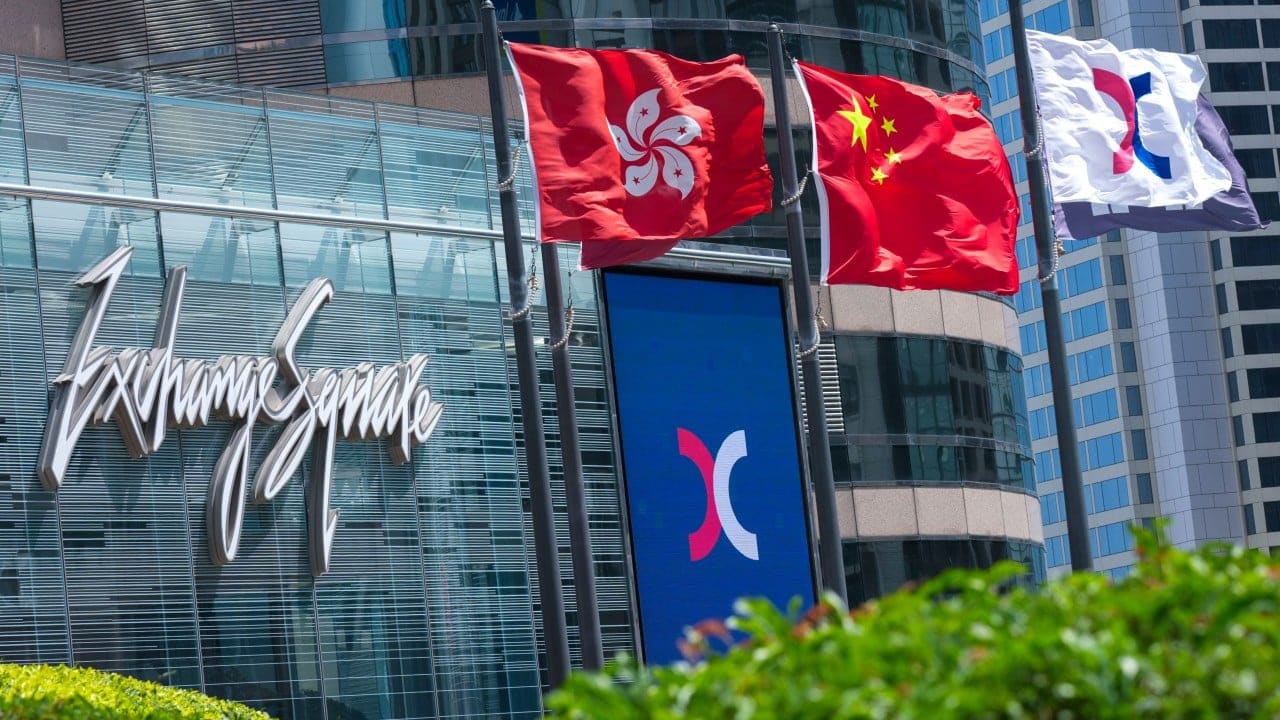
Ingenic Semiconductor, a Beijing-based chip designer already trading on Shenzhen's ChiNext board since 2011, is now seeking up to HK$3.22 billion (approximately US$410 million) through a Hong Kong share offering. The company has filed to issue 31.29 million H shares at up to HK$102.80 apiece, with trading expected to commence on August 25.
The move places Ingenic squarely within a pattern we have tracked across the region over the past eighteen months: mainland Chinese semiconductor companies increasingly view Hong Kong not as an alternative to domestic exchanges, but as a complementary capital gateway. Where Shenzhen and Shanghai listings offer deep domestic liquidity and policy support, Hong Kong provides access to international institutional investors and a regulatory environment more familiar to foreign capital.
At DailyTechWire, we have followed the gradual shift in Chinese chip firms' fundraising strategies as Washington's export controls tighten and Beijing doubles down on self-sufficiency mandates. Ingenic's timing is notable. The company is pursuing offshore capital at a moment when semiconductor valuations in mainland China remain elevated by policy tailwinds, yet global investors are growing more selective about which Chinese tech names warrant premium multiples.
The Hong Kong Semiconductor Corridor
Hong Kong's appeal to chip firms extends beyond regulatory arbitrage. The city offers a venue where yuan-denominated earnings can be repackaged for dollar-denominated investors without the friction of cross-border capital controls. For companies like Ingenic, already established on a mainland board, an H-share listing creates optionality: the ability to tap whichever pool of capital offers better terms at any given moment.
Ingenic's offering size, at over US$400 million, sits comfortably in the mid-tier range for Hong Kong tech IPOs in 2026. It is neither a blockbuster debut nor a token listing. That scale suggests the company is balancing genuine capital needs with the costs and disclosure burdens of maintaining dual listings. Chip design, particularly in the application processor and embedded systems segments where Ingenic operates, remains capital-intensive. Tape-out costs for advanced nodes continue to climb, and firms without the scale of a MediaTek or a Unisoc must either specialize aggressively or expand horizontally into adjacent markets.
The international expansion angle is central. Ingenic has historically focused on consumer electronics processors, IoT controllers, and automotive-grade chips. These categories are globalizing rapidly. Auto semiconductor supply chains, in particular, are fragmenting along geopolitical lines, creating both risk and opportunity for firms with credible product but limited offshore brand recognition. A Hong Kong listing signals to potential partners in Southeast Asia, Latin America, and parts of Europe that the company is serious about operating beyond the Great Firewall's shadow.
Funding Cycles and Geopolitical Hedging
Mainland chip firms face a structural tension. Domestic policy, through initiatives like the Big Fund and provincial semiconductor investment vehicles, channels enormous capital into the sector. Yet that capital often comes with strings: mandates to prioritize domestic customers, restrictions on foreign partnerships, and pressure to deliver results on state-defined timelines. Hong Kong capital, while more expensive in terms of disclosure and governance, offers relative freedom.
Ingenic's dual-listing approach also hedges against regulatory risk. Beijing has shown willingness to intervene in domestic equity markets when valuations detach from fundamentals or when capital flight becomes a concern. By establishing a Hong Kong share class, Ingenic creates a parallel valuation benchmark and a potential escape valve should mainland trading conditions deteriorate.
The broader wave of chip IPOs in Hong Kong reflects a maturing industry. A decade ago, Chinese semiconductor startups were largely pre-revenue or reliant on government grants. Today, firms like Ingenic bring years of public-market operating history, established customer relationships, and product lines that generate measurable revenue. Investors are no longer betting purely on national champion narratives; they are evaluating gross margins, design win pipelines, and exposure to end markets.
What the Fundraising Wave Reveals
The clustering of semiconductor offerings in Hong Kong over the past two years reveals several underlying dynamics. First, Chinese chip firms are increasingly confident in their ability to compete internationally, at least in specific niches. Second, they recognize that domestic capital alone may not suffice if export markets become a larger share of revenue. Third, the regulatory environment in Hong Kong, while tightening in some respects, remains more accommodating to tech listings than many Western exchanges, where scrutiny of Chinese firms has intensified.
Ingenic's offering also illustrates the limits of purely domestic growth. The company has been public in Shenzhen for fifteen years. If internal cash flow and mainland equity markets provided all the capital it needed, a Hong Kong listing would be redundant. The fact that it is pursuing this path suggests either that growth opportunities exceed available domestic funding, or that the company sees strategic value in a more diversified shareholder base.
For international investors, the question is whether Ingenic and its peers can deliver returns that justify the governance and transparency discounts typically applied to Chinese tech stocks. Semiconductor design is a hits-driven business. A single successful chip can generate years of royalty and licensing revenue; a misstep can strand hundreds of millions in R&D investment. Ingenic's track record on ChiNext provides some visibility, but Hong Kong investors will demand clearer disclosure on customer concentration, margin sustainability, and exposure to export control risks.
The Road Ahead for Dual-Listed Chip Firms
Assuming the offering prices near the top of its range and trades successfully, Ingenic will join a small but growing cohort of dual-listed Chinese semiconductor companies. That cohort faces unique challenges: managing two sets of investor expectations, navigating divergent regulatory regimes, and maintaining credibility in both domestic and international markets.
The capital raised will likely flow into R&D, particularly in areas where Ingenic sees white space. Automotive chips remain a high-growth category, with Chinese electric vehicle makers hungry for domestic semiconductor suppliers. IoT and edge computing, where Ingenic has existing product, continue to fragment into specialized verticals. The company may also use proceeds to fund acquisitions or partnerships that accelerate entry into markets where it currently lacks scale.
Hong Kong's role as a semiconductor fundraising hub is unlikely to fade soon. Beijing's push for chip self-sufficiency will keep capital flowing into the sector, but the most ambitious firms will continue to seek offshore listings as a mark of credibility and a hedge against domestic market volatility. Ingenic's offering is less a turning point than a data point in a longer trend: the gradual internationalization of China's chip industry, one dual listing at a time.