Uber Quietly Exits Serve Robotics Without Warning the Delivery Bot Startup
The ride-hailing giant sold its entire stake in the sidewalk robot company it once spun out, leaving Serve to learn about the divestiture through regulatory filings as their partnership nears expiration.
The Unannounced Exit
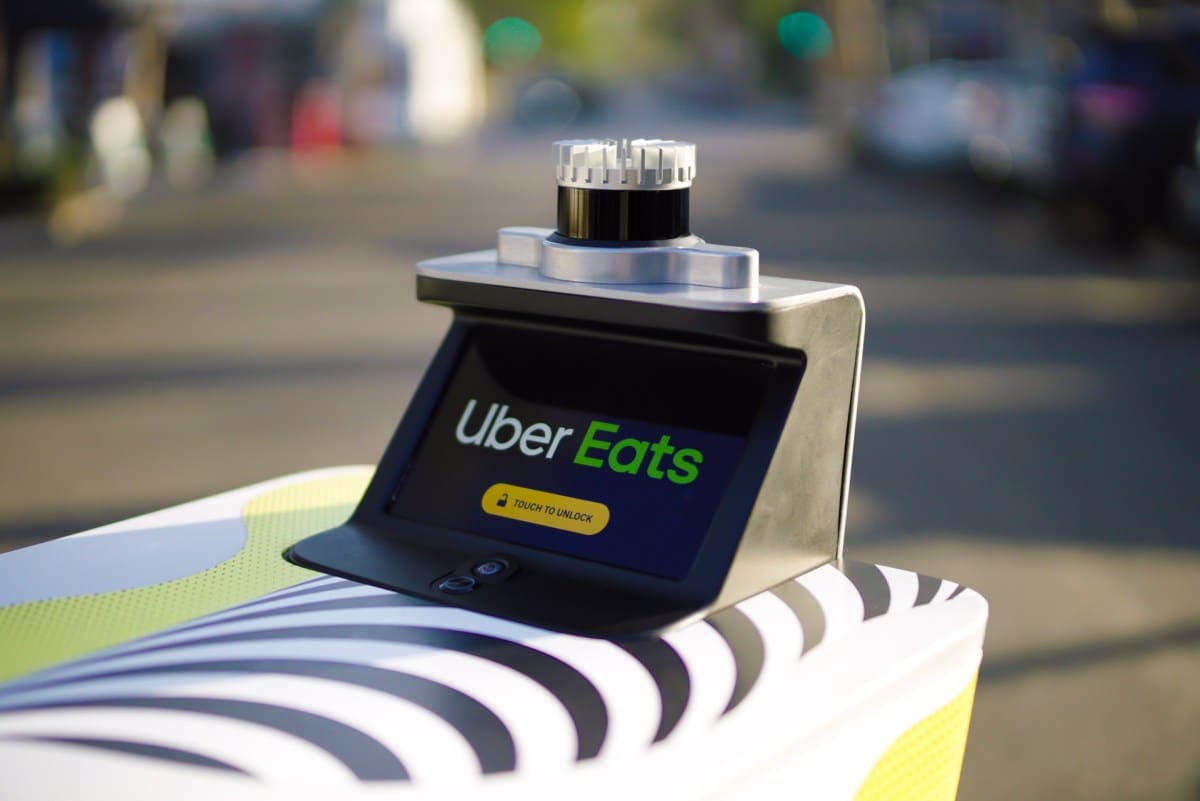
Uber has offloaded its complete ownership position in Serve Robotics, the sidewalk delivery robot company that emerged from its own Postmates acquisition more than five years ago. The move, disclosed through a regulatory filing, caught Serve by surprise. According to a source with knowledge of the situation, Serve's leadership only learned of the full divestiture when the filing became public.
The exit marks the final chapter of what began as a gradual pullback. Uber had been reducing its stake throughout 2025, regulatory documents show, but the complete selloff signals a clean break from a company it once incubated and backed as an independent venture.
For Serve Robotics, the timing is notable. The startup has been navigating a complex relationship with its former parent, one that combined equity ownership with an operational partnership to deploy thousands of autonomous delivery bots across Uber's platform.
From Postmates X to Independence
The story begins with Postmates X, the robotics arm of the on-demand delivery startup that Uber acquired in 2020 for $2.65 billion. A year after that acquisition, the division spun out as Serve Robotics, taking with it the sidewalk delivery bot technology that Postmates X had developed and tested in real-world conditions.
Uber maintained a financial stake and in 2022 formalized a partnership to integrate Serve's robots into its delivery network. By May 2023, the companies had expanded that agreement with plans to deploy up to 2,000 sidewalk bots across multiple U.S. markets, all accessible through Uber's app.
On paper, it looked like a natural symbiosis: Uber would provide demand and distribution, while Serve would supply the autonomous hardware and operational expertise.
Diverging Visions
The cracks started showing earlier this year. During Serve's second-quarter earnings call on August 6, co-founder and CEO Ali Kashani laid out a concerning trend. From the first quarter of 2022 through the first quarter of this year, delivery volume through Uber had grown for 17 consecutive quarters. In the second quarter, that streak broke.
"This was caused by lower-than-expected robot utilization," Kashani told investors. He went further, noting that Serve and Uber now hold "differing views" on how to scale a shared autonomous fleet. The disagreements center on operational details like fleet coordination and merchant integration, the foundational elements of making sidewalk robots economically viable at scale.
At DailyTechWire, we've tracked dozens of robotics partnerships in Asia and North America, and these operational friction points are where most collaborations either solidify or fracture. Fleet utilization rates determine unit economics; if robots sit idle or routes are inefficiently coordinated, the cost per delivery climbs quickly, eroding any advantage over human couriers.
While Uber volume stagnated, Serve reported that deliveries with another food delivery partner grew nearly 50 percent in a single quarter. That disparity likely reinforced Serve's view that the problem wasn't demand for autonomous delivery in general but rather the specific operating model it had with Uber.
Kashani indicated on the August 6 call that Serve did not expect to renew the partnership agreement when it expires in early 2027. That statement came before Uber disclosed the full stake sale, suggesting Serve was already preparing for a future without Uber as an operational partner, even if it assumed Uber would remain a shareholder.
The Broader Pattern
Uber's relationship with Serve Robotics fits into a wider portfolio strategy. Over the past several years, Uber has partnered with or invested in more than 30 autonomous vehicle technology companies, spanning everything from passenger robotaxis to freight hauling and last-mile delivery.
This approach allows Uber to hedge across multiple technology bets without committing fully to any single platform. It also means Uber can exit positions when strategic priorities shift or when a particular technology trajectory no longer aligns with its core business model.
For Serve, the divestiture removes a financial tie that had been both an asset and a complication. Equity ownership can align incentives, but it can also create friction when the investor-partner has competing priorities or a different timeline for commercialization.
Serve went public via a SPAC merger, giving it access to capital markets independent of Uber's balance sheet. That independence becomes more meaningful now. The company can pursue partnerships with other platforms, including competitors of Uber, without navigating the optics or contractual complexities of having Uber as a major shareholder.
What It Means for Sidewalk Robotics
The Serve-Uber split is a data point in the still-unfolding question of how autonomous delivery robots will scale. Sidewalk bots face regulatory hurdles, weather limitations, and the challenge of operating in dense urban environments where pedestrian traffic and physical infrastructure vary block by block.
Partnerships with large platforms like Uber, DoorDash, or regional players in Asia offer immediate demand and brand recognition. But they also require robots to integrate into complex logistics systems built around human couriers, systems that may not be optimized for the different speed, range, and payload characteristics of small autonomous vehicles.
Serve's experience suggests that scaling autonomous delivery may require more than simply plugging robots into existing platforms. It may demand rethinking merchant workflows, route planning algorithms, and even the user experience of ordering and receiving a delivery.
Other robotics companies in the space, including Starship Technologies and Nuro, have pursued different strategies. Starship has focused on university campuses and suburban neighborhoods with more controlled environments. Nuro has targeted grocery and pharmacy delivery with larger, street-legal vehicles. Each model reflects different assumptions about where and how autonomous delivery can be economically sustainable.
The Capital Question
Serve Robotics is now navigating growth without the implicit backing of Uber's brand and capital. The company will need to demonstrate that it can secure partnerships, scale its fleet, and improve unit economics independently.
Investors will be watching utilization rates, cost per delivery, and the breadth of Serve's partner network. The 50 percent quarter-over-quarter growth with an unnamed food delivery partner is a positive signal, but sustaining that growth across multiple markets and partners is a different challenge.
At DailyTechWire, we've seen similar dynamics play out in Southeast Asia, where logistics startups often begin as captive subsidiaries of larger e-commerce or ride-hailing platforms before spinning out. The transition from captive to independent is rarely smooth. It requires building sales, marketing, and partnership functions that the parent company previously handled, along with proving that the unit economics work without preferential treatment.
For Uber, the sale is consistent with a broader strategy of asset-light partnerships. The company has largely exited direct ownership of autonomous vehicle technology, preferring instead to be the platform that connects riders and eaters with whatever mobility or delivery solution proves most efficient. That model worked for ride-hailing by aggregating independent drivers. Whether it works for autonomous delivery, where hardware, operations, and software are tightly coupled, remains an open question.
Serve Robotics will have its answer by early 2027, when the current partnership expires and the company either renews on new terms, replaces Uber with other partners, or charts a fully independent path.