Joby Buys RF Systems Maker for $500M to Split Defense From Air Taxi Push
The electric VTOL company acquires Resonant Sciences to create a standalone defense unit, shielding its consumer certification timeline from military hardware cycles.
A $500 Million Bet on Dual-Track Revenue
Joby Aviation announced it will acquire Resonant Sciences, an Ohio-based specialist in radio frequency and sensor systems, for $500 million in cash and stock. The transaction, disclosed in a regulatory filing this week, marks the electric vertical takeoff and landing developer's most aggressive step yet into defense contracting. Resonant Sciences will form the backbone of a new defense division inside Joby, led by Resonant co-founder and CEO J. Micah North, and will absorb Joby's existing military projects, including turbine-electric and hydrogen-electric aircraft prototypes and the company's autonomy stack. By walling off defense work, Joby aims to insulate its consumer air taxi certification and manufacturing schedule from the longer procurement timelines and classification layers that come with government contracts.
At DailyTechWire, we've tracked Joby's gradual pivot into defense since its 2021 SPAC debut, and the pattern is clear: the company is borrowing a page from the dual-use playbook that has sustained aerospace primes for decades. The Resonant deal delivers two things Joby has been short on, immediate revenue and a security clearance footprint. Resonant Sciences reported $100 million in trailing twelve-month revenue and holds access to classified U.S. government programs, both of which will help Joby answer the question every public eVTOL developer faces: when does the business model shift from capital burn to cash generation?
Splitting the House
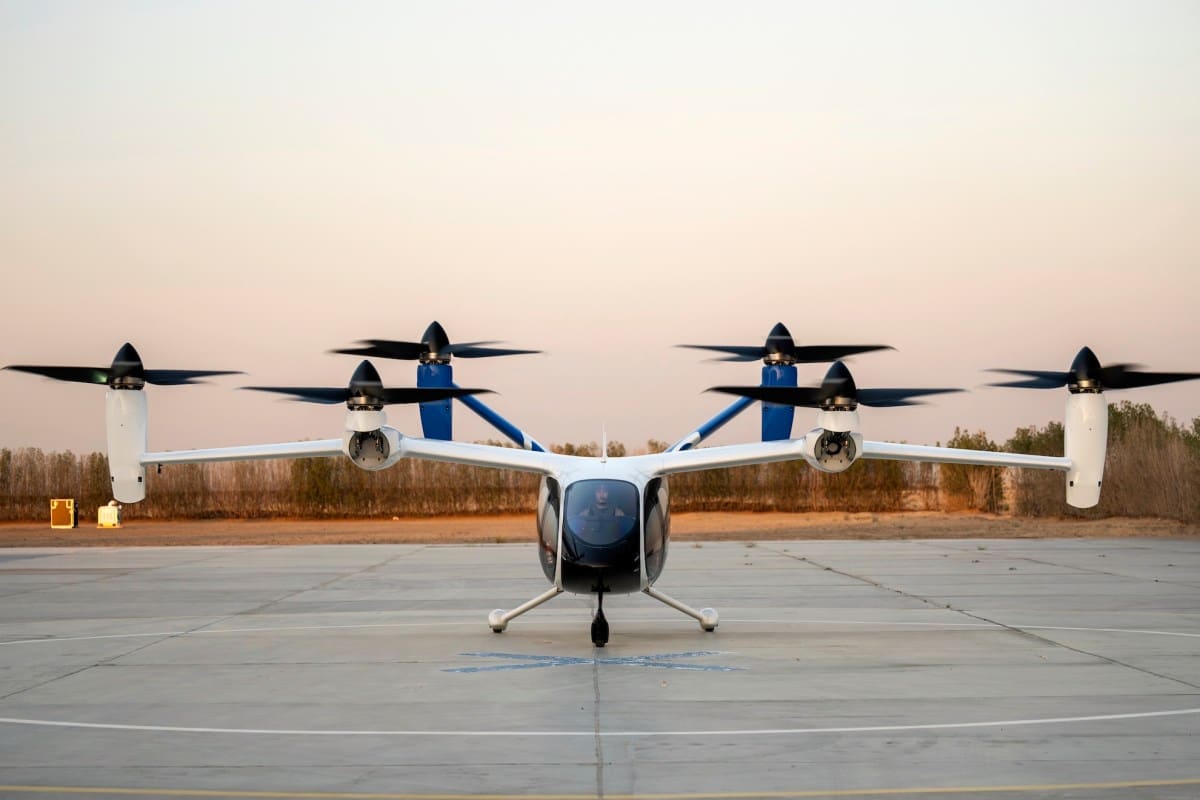
The new defense unit will house all of Joby's non-commercial projects. That includes the gas-turbine hybrid VTOL the company has been developing with L3Harris Technologies since last year, a platform based on Joby's S4 airframe but designed to fly autonomously and cover distances well beyond what battery-electric systems can manage. In 2024, under a government contract, Joby demonstrated a hydrogen-electric hybrid variant of the S4 that flew 521 miles, more than double the range of its battery prototype. Those demonstrations signaled that Joby was serious about addressing the endurance problem that has limited electric aviation in defense scenarios, where refueling infrastructure is sparse and mission profiles demand flexibility.
Resonant Sciences brings radio frequency and sensing technology that complements Joby's airframe work. RF systems are critical for everything from secure communications to electronic warfare and navigation in GPS-denied environments, capabilities the U.S. Department of Defense has prioritized as geopolitical competition intensifies in the Indo-Pacific. By integrating Resonant's sensor portfolio with its own aircraft platforms, Joby can offer the Pentagon a more complete package: not just the airframe, but the eyes, ears, and datalinks that make autonomous systems operationally viable.
The organizational split is equally strategic. Certification of a commercial air taxi under FAA Part 135 rules is a sequential, transparent process with public milestones. Defense programs, by contrast, move through classified channels, often with shifting requirements and multi-year procurement cycles. Running both under one roof creates friction: engineering resources get pulled, timelines blur, and investor communication becomes harder. Joby's decision to create a standalone defense business under North's leadership suggests the company learned from aerospace incumbents like Bell and Sikorsky, which have long maintained separate civil and military divisions to manage these competing rhythms.
Revenue as a Patience Strategy
Joby went public via SPAC merger in 2021, and like every other eVTOL developer that took the same route, it has had to manage a widening gap between shareholder expectations and the reality of aerospace certification timelines. Developing, testing, and certifying a new aircraft category is a capital-intensive process measured in years, not quarters. The acquisition of Resonant Sciences is Joby's second major move to generate near-term revenue while its core product inches toward commercial launch. Last year, Joby paid roughly $125 million for Blade Air Mobility's helicopter rideshare business, gaining access to a network of twelve terminals in New York City and bases at JFK, Newark, and Manhattan's east and west sides. That deal immediately began contributing: Joby reported $38.6 million in revenue in the second quarter of this year, with $36.2 million coming from Blade operations.
The Resonant acquisition follows the same logic but operates at a different scale. A hundred million dollars in annual revenue from defense contracts provides a steady baseline that offsets some of the burn associated with certification and manufacturing ramp. It also diversifies Joby's customer base: instead of betting everything on urban air mobility adoption in cities like New York, Los Angeles, and Singapore, the company now has a foot in the defense market, where budgets are larger, procurement cycles are longer, and geopolitical tailwinds are strong.
That diversification matters in a sector where capital is tightening. Venture investors who poured money into eVTOL startups in 2020 and 2021 have grown cautious as certification delays pile up and the infrastructure required for urban air mobility, vertiports, charging networks, air traffic management systems, remains incomplete. By acquiring businesses that already generate cash, Joby can extend its runway and reduce its dependence on equity raises or debt financing. It's a hedge, and a pragmatic one.
The Broader Defense Trend
Joby's move into defense is part of a wider trend across the advanced air mobility sector. Archer Aviation, one of Joby's closest competitors, has also pursued defense contracts, as have several European eVTOL developers. The logic is straightforward: military customers are willing to pay for performance, have established procurement mechanisms, and are less sensitive to the infrastructure gaps that slow commercial deployment. Defense also offers a path to scale: if Joby can demonstrate reliable autonomous flight and extended range in military applications, those capabilities can eventually migrate to the commercial side, de-risking the technology and building operational experience.
The hydrogen-electric and turbine-electric prototypes Joby is developing under the new defense division illustrate this crossover potential. Hydrogen fuel cells and gas turbines offer energy density that batteries cannot match, making them attractive for long-range or high-endurance missions. If Joby can mature these powertrains in defense programs, where performance requirements are strict but timelines are more forgiving, the company could eventually offer hybrid or range-extended variants for commercial routes that battery-electric aircraft cannot serve, such as intercity or regional flights.
Resonant Sciences' RF and sensor technology adds another layer. Autonomous flight in contested or complex environments requires robust sensing, secure datalinks, and the ability to operate without GPS. These are capabilities the commercial aviation industry will need as well, particularly as regulators and operators move toward higher levels of automation. By developing and proving these systems in defense applications first, Joby can amortize R&D costs and accelerate the path to commercial certification.
What Comes Next
The Resonant acquisition will close in the coming months, subject to regulatory approvals and standard conditions. Once complete, Joby will operate as two distinct businesses: a commercial air taxi division focused on the S4 platform, FAA certification, and urban launch markets, and a defense division led by North, focused on government contracts, classified programs, and advanced propulsion. The structure gives Joby flexibility to pursue both markets without forcing one to wait on the other.
For investors, the deal is a signal that Joby is managing the long game. The company is not abandoning its urban air taxi vision, but it is acknowledging the reality that certification and infrastructure will take time. By building revenue streams now, through acquisitions like Blade and Resonant, Joby is buying itself the patience it needs to see the S4 through to commercial launch. Whether that strategy pays off will depend on execution: Can the defense division scale without distracting from the core product? Can Joby integrate Resonant's technology and culture without friction? And can the company deliver on its certification milestones while managing two very different businesses?
The answers will unfold over the next two to three years. For now, Joby has made a clear choice: it will not wait for the future of urban air mobility to arrive. It will build a business in the present, using defense contracts and helicopter rides to fund the aircraft it believes will define the next chapter of regional transport.