Thailand's Investment Surge Rides Data Center Wave
New capital commitments climbed 37% in the first half of 2026, driven by AI infrastructure demand, but questions linger over lasting economic returns.
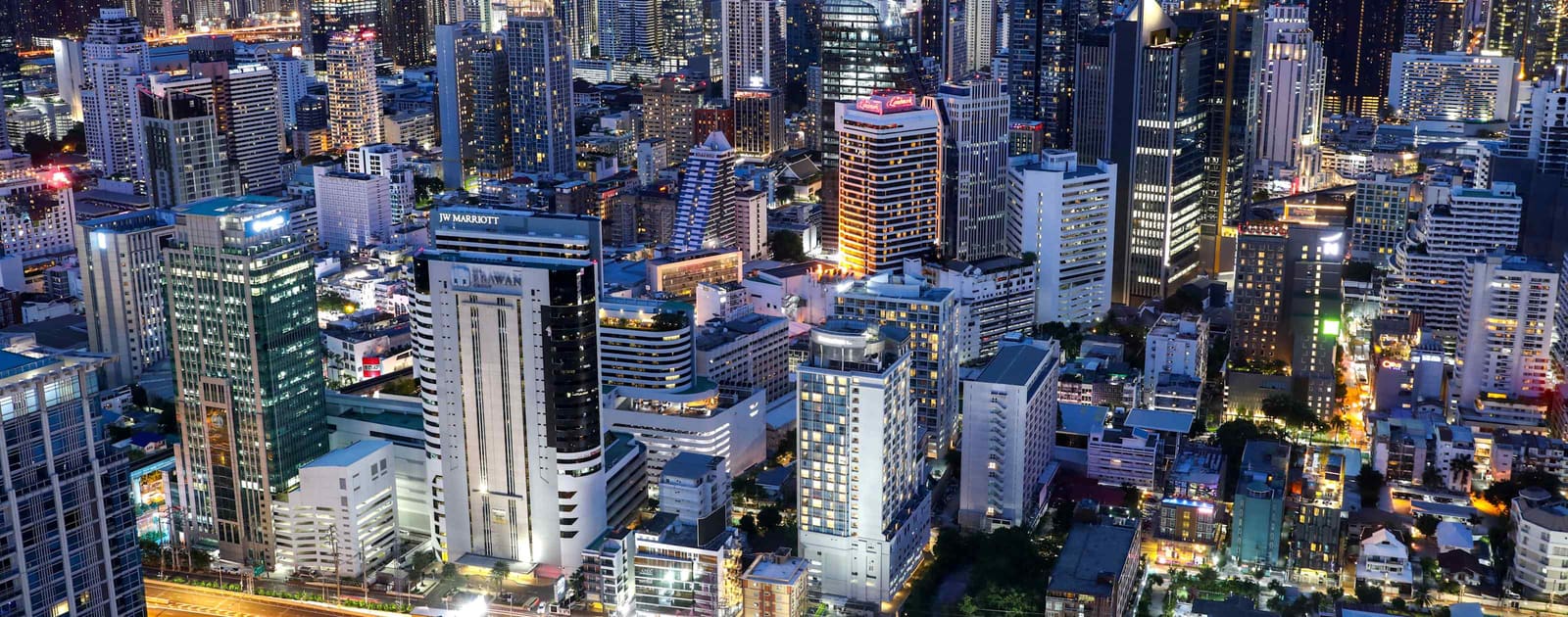
Capital Floods In, Questions Follow
Thailand pulled in $43.6 billion in new foreign and domestic investment during the first six months of 2026, a 37% jump from the same period a year earlier, according to official data released this week. Digital infrastructure projects, particularly data centers catering to artificial intelligence workloads, drove much of the surge.
At DailyTechWire, we've tracked similar patterns across Southeast Asia: Malaysia, Indonesia, and Vietnam have all announced multi-billion-dollar hyperscale campuses over the past eighteen months. Thailand's latest figures confirm the kingdom has become a key node in the region's race to capture compute capacity. Yet the speed of capital deployment has prompted a familiar debate: does laying fiber and racks guarantee durable economic transformation, or simply a temporary construction boom?
The Data Center Magnet
The digital sector accounted for a disproportionate share of new commitments. Several multinational cloud providers and colocation operators have broken ground on campuses near Bangkok's industrial outskirts and in the Eastern Economic Corridor, betting that Thailand's relatively stable power grid and competitive electricity tariffs will offset higher latency to Singapore and Tokyo.
Energy demand is the immediate consequence. Industry observers estimate that a single 100-megawatt data hall can consume as much power as a mid-sized provincial city. Thailand's Energy Ministry has so far signaled confidence that new gas-fired and renewable capacity will keep pace, but permitting delays and transmission bottlenecks remain live risks.
Construction employment has spiked in target zones. Concrete suppliers, steel fabricators, and HVAC contractors report order books filled through late 2027. For local governments, the investment translates to land premiums and property-tax windfalls. Whether those gains endure once the build phase ends is less certain.
The Economic Multiplier Puzzle
Analysts inside and outside Thailand have begun asking what happens after the ribbon-cutting ceremonies. Data centers are capital-intensive but employ relatively few permanent staff. A 200-megawatt facility might run with fewer than one hundred technicians and engineers once operational. Compare that to a similarly sized automotive assembly plant, which can employ thousands and seed supplier ecosystems across multiple provinces.
Trade economists point out that most of the high-value components in a hyperscale data center, server chips, networking switches, liquid-cooling modules, are imported. Local content remains limited to civil works and basic electrical infrastructure. Thailand captures construction revenue and ongoing electricity sales, but the technology stack itself generates margin elsewhere.
There is also the question of utilization. If the AI training wave plateaus or shifts to new geographies, operators may throttle expansion or mothball partially completed shells. The kingdom has seen speculative infrastructure plays before: the 1990s telecom-tower rush left a trail of underutilized assets when traffic forecasts failed to materialize.
Broader Investment Trends
Beyond digital, the $43.6 billion total reflects a mix of automotive retooling, petrochemical expansions, and renewable-energy projects. Electric-vehicle battery plants have attracted commitments from Chinese and South Korean manufacturers, drawn by Thailand's established supply base and tariff advantages under regional trade pacts.
Agricultural-processing and food-export infrastructure also registered gains, particularly cold-chain logistics hubs serving markets in China and the Middle East. These sectors tend to generate more dispersed employment and draw on local raw materials, offering a counterbalance to the concentrated, import-heavy profile of data centers.
Tourism-linked real estate saw a modest rebound, though investment remains below pre-pandemic peaks. Developers have shifted focus toward smaller, mixed-use projects in secondary cities rather than the mega-resort schemes that dominated the 2010s.
Policy and Positioning
Thailand's Board of Investment has extended tax holidays and streamlined land permits for data-center operators, part of a broader push to position the country as a regional digital hub. The government argues that even if direct employment is modest, spillover benefits, skills development, ancillary services, will compound over time.
Critics counter that the incentive package tilts the playing field too far, effectively subsidizing foreign hyperscalers at the expense of domestic manufacturers who receive less generous terms. They also note that data sovereignty and content-moderation rules remain underdeveloped, leaving the kingdom vulnerable to regulatory whiplash if geopolitical winds shift.
Energy policy will be the binding constraint. If new capacity lags or if renewable-integration targets prove unworkable, the government may face a choice between rationing industrial users or granting data centers priority access. Either path carries political risk.
What the Numbers Don't Show
The 37% year-on-year increase is impressive in headline terms, but investment approvals do not equal capital deployed. Historical data show that roughly 60% of approved projects in Thailand reach full commissioning within three years; the remainder stall, scale back, or quietly cancel.
Currency dynamics also matter. The Thai baht appreciated modestly against the dollar over the first half of 2026, making imported equipment marginally cheaper and potentially inflating the dollar-denominated investment total. Adjusted for exchange-rate effects, the real increase in local-currency terms is closer to 32%.
Finally, the geographic distribution is uneven. Bangkok and the Eastern Economic Corridor absorbed more than 70% of new commitments, while northern and northeastern provinces saw minimal inflows. This concentration risks widening regional inequality, a longstanding challenge for Thai policymakers.
The Road Ahead
Thailand's investment surge underscores the gravitational pull of AI infrastructure spending, a phenomenon reshaping capital flows across Asia. Data centers are landing in jurisdictions that offer power, connectivity, and permitting speed, often with less regard for labor markets or local innovation ecosystems.
For the kingdom, the test will be whether this wave of capital seeds new capabilities, advanced engineering talent, software clusters, or simply leaves behind a landscape of humming server halls that contribute electricity revenue but little else. Other markets in the region, Singapore's push into AI research partnerships, Malaysia's focus on semiconductor backend services, offer alternative models that prioritize skills and intellectual property over raw infrastructure volume.
The $43.6 billion figure will be scrutinized in the months ahead, both for how much capital actually flows and for what it builds beyond concrete and copper. Thailand has a narrow window to translate construction momentum into durable economic gains before the next wave of global infrastructure spending moves on to cheaper frontiers.