Tesla Quietly Pulls the Plug on Solar Roof Tiles
After nearly a decade of promising roofing that generates power, the carmaker is steering installers back to conventional panels - a retreat that signals where solar economics really stand.
The Pivot Away from Photovoltaic Tiles
Tesla has stopped supplying Solar Roof to its network of third-party installers, marking a quiet end to one of the company's most visually ambitious energy products. Installers have been told they can now order only conventional solar panels going forward, effectively closing the book on the integrated tile system that launched with significant fanfare in 2016.
The company has not issued a formal announcement. Instead, the shift became evident through changes to its website: the longstanding Solar Roof landing page now redirects visitors to the standard solar panel offering. For an organization that typically broadcasts product launches with multi-year hype cycles, the silence around this discontinuation is notable.
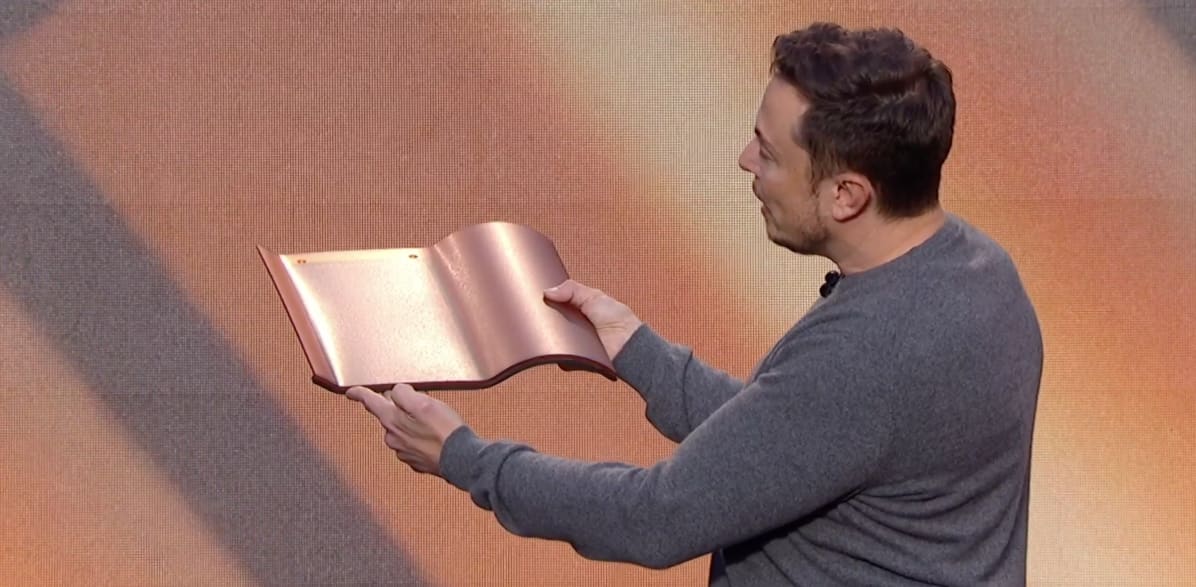
At DailyTechWire, we've tracked the Solar Roof narrative since its unveiling at Universal Studios nearly a decade ago. What began as a moonshot to make renewable energy architecturally invisible has ended as a case study in the friction between design vision and unit economics.
Why the Tile Approach Struggled
Solar Roof attempted to solve a psychological problem: many homeowners resist mounting blue-black rectangles on their property because they dislike the industrial aesthetic. Tesla's answer was to embed photovoltaic cells directly into roof tiles that mimicked slate, terracotta, or textured shingles. The pitch was elegant - your entire roof becomes the solar array, and neighbors remain none the wiser.
The execution proved far less elegant. Installation complexity ballooned compared to conventional rack-mounted panels. Each tile needed individual placement, wiring, and weatherproofing, turning what should have been a multi-day panel job into multi-week roof replacement projects. Labor costs climbed accordingly, and so did the error rate. By the time installers had worked through permitting, structural assessments, and tile-by-tile commissioning, the total system cost often exceeded twice that of a standard rooftop array delivering equivalent kilowatt-hours.
Tesla repriced Solar Roof multiple times between 2019 and 2021, sometimes doubling quotes for customers who had already placed deposits. The moves triggered lawsuits and a wave of cancellations. Meanwhile, conventional solar panel efficiency kept improving - modules today routinely exceed 22 percent conversion, and bifacial designs capture reflected light from rooftops. The performance gap that might have justified Solar Roof's premium kept narrowing.
Installer Economics and the Margin Squeeze
Third-party installers operate on thin margins. They need products they can deploy quickly, with predictable warranties and straightforward permitting. Solar Roof checked none of those boxes. Training took longer, site assessments required architectural input, and warranty claims involved navigating Tesla's notoriously opaque service apparatus.
By contrast, conventional panels from manufacturers like Longi, JA Solar, or Canadian Solar arrive as commodity modules with 25-year performance guarantees and decades of field data. Installers can model job costs to the hour, and homeowners can comparison-shop across multiple vendors. That standardization drives volume, and volume drives down per-watt pricing - a flywheel Solar Roof could never spin.
Tesla's decision to halt Solar Roof supply to installers reflects a broader reality in distributed solar: the market rewards modularity and interoperability, not vertical integration of aesthetics and energy. Installers want components they can mix, match, and service without waiting on a single vendor's parts pipeline.
What Happens to Existing Installations
Thousands of homes across North America already carry Solar Roof tiles. Tesla has provided no public guidance on long-term parts availability or service commitments for these systems. Historically, the company has supported legacy products - Powerwall 1 units, for example, still receive firmware updates - but the lack of clear communication leaves early adopters in a gray zone.
Tile-level failures are inevitable over a 20- or 30-year lifespan. If replacement tiles become unavailable, homeowners may face a choice between patching with mismatched conventional panels or embarking on a full roof retrofit. Warranty terms typically cover defects, but they rarely guarantee perpetual parts inventory for discontinued lines.
This uncertainty underscores a risk inherent in buying first-generation hardware from companies that iterate fast and communicate selectively. Solar Roof buyers were, in effect, beta testers for a product that never reached economies of scale.
The Bigger Picture for Residential Solar
Tesla's retreat does not mean integrated solar roofing is dead. Startups in Europe and Asia continue to experiment with building-integrated photovoltaics - thin-film laminates, solar shingles with micro-inverters, and even photovoltaic façade panels for mid-rise construction. But the center of gravity in residential solar remains conventional panels paired with string or micro-inverters, increasingly bundled with battery storage.
The cost curve for that conventional stack keeps falling. Residential solar installations in the U.S. averaged around 2.50 USD per watt in 2023, down from over 7.00 a decade earlier. Panel prices have dropped below 0.20 USD per watt at the factory gate in China, and balance-of-system costs - racking, inverters, wiring - continue to decline as installers optimize labor.
In that environment, a product that doubles upfront cost for the sake of aesthetics faces a narrow addressable market. Tesla may have concluded that its capital and engineering bandwidth are better spent on energy storage, where Megapack and Powerwall face less commoditized competition and higher gross margins.
Lessons for Hardware Moonshots
Solar Roof's quiet discontinuation offers a reminder that even companies with deep pockets and charismatic founders cannot will a market into existence if unit economics don't close. The product required homeowners to replace an entire roof - often prematurely - to gain solar capacity they could achieve with panels at a fraction of the cost. That value proposition worked only for new-build luxury homes or buyers who prioritized design above return on investment.
Hardware moonshots need a path to commoditization. They need supply chains that can scale, installers who can train quickly, and customers who see clear payback. Solar Roof struggled on all three fronts. Its disappearance from Tesla's lineup is less a failure of technology than a recognition that markets care more about dollars per kilowatt-hour than they do about curb appeal.
For the rest of the residential solar industry, the message is clarifying: keep panels cheap, keep installation fast, and let homeowners who care deeply about aesthetics solve that problem with landscaping.