Sony to End Physical PlayStation Game Production by 2028
The move reflects a broader industry shift as digital purchases now represent nearly four-fifths of PlayStation's full-game sales, raising questions about long-term ownership and preservation.
The Disc Era Draws to a Close
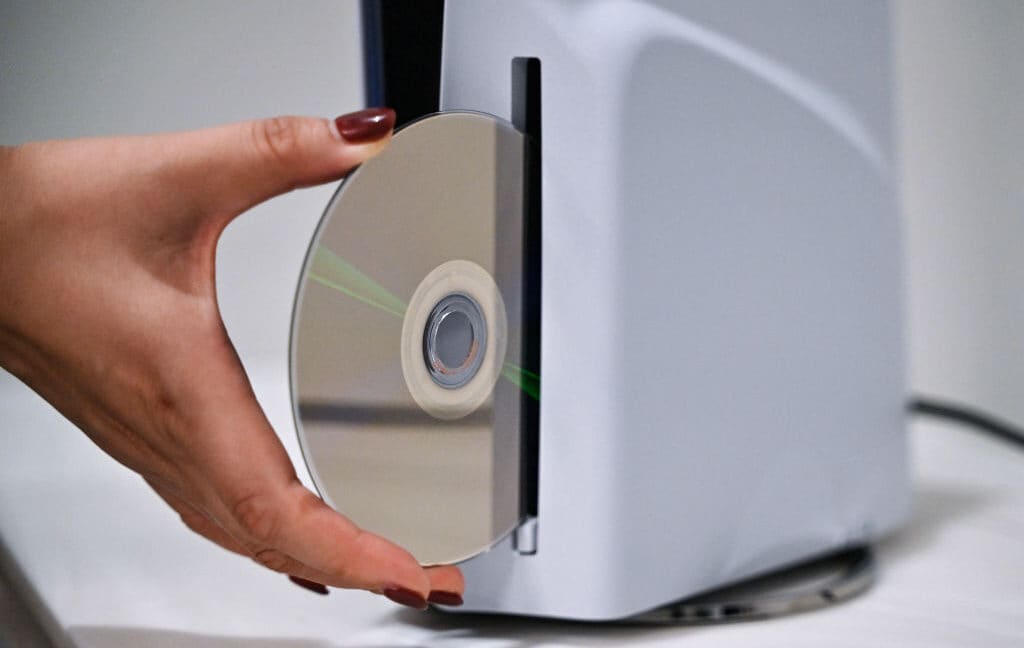
Sony has set a firm deadline for its physical media business: starting January 2028, the company will no longer manufacture game discs for PlayStation platforms. From that point forward, new releases will exist exclusively in downloadable form through the PlayStation Store and participating retail partners, according to Sony.
The company frames the shift as an inevitable response to player behavior. Digital downloads now account for 78 percent of full-game unit sales across PlayStation's ecosystem, up from 76 percent just two fiscal years earlier, based on Sony's financial data through March 2026. That trajectory suggests a console gaming market increasingly detached from tangible media, mirroring patterns already well-established in PC gaming through platforms like Steam and Epic Games Store.
At DailyTechWire, we've watched this transition accelerate across Asia-Pacific markets, where bandwidth improvements in Seoul, Tokyo, and Singapore have made multi-gigabyte downloads routine. Yet the announcement lands differently in regions where internet infrastructure remains inconsistent or data caps make large downloads prohibitively expensive.
What Changes for Players and Retailers
The practical implications unfold across several fronts. Players who prefer physical copies - whether for resale value, lending to friends, or simply the satisfaction of a visible collection - will need to make purchasing decisions before the cutoff. Sony's language suggests the January 2028 date applies to new manufacturing, leaving existing inventory to sell through retail channels for an indeterminate period afterward.
Retailers face a more complex calculus. Physical game sales have anchored foot traffic for chains like GameStop and specialty shops across Southeast Asia and beyond. While these stores will continue distributing digital codes and gift cards, the high-margin business of disc sales, trade-ins, and used game inventory disappears. Some will adapt by expanding accessories, collectibles, and gaming hardware; others may find the economics untenable.
Sony has not clarified whether the PlayStation 6, widely expected in 2027 or 2028, will include a disc drive at all, or if existing PS5 models with optical drives will continue to support legacy physical libraries. The silence on backward compatibility leaves early adopters uncertain about the lifespan of their current collections.
Preservation and Ownership Under Pressure
The shift intensifies long-standing debates around digital ownership. When a game exists only as a license tied to an online storefront, players own access, not the software itself. If Sony shutters servers, revokes licenses, or a publisher pulls a title from the catalog, that game can vanish from libraries with no physical fallback.
This concern is not hypothetical. Sony has previously attempted to close digital storefronts for PlayStation 3, PSP, and Vita - walking back the PS3 and Vita closures only after public outcry in 2021 - and has removed numerous titles from the PlayStation Store due to licensing expirations. Physical discs, by contrast, remain playable as long as the hardware functions, independent of corporate decisions or server uptime.
Preservation advocates worry that entire generations of games may become inaccessible once digital infrastructure moves on. Archival projects depend on physical media and backward-compatible hardware to document gaming history; a fully digital ecosystem complicates those efforts unless Sony implements robust legacy access policies, which the company has not detailed.
Industry Momentum and Regional Disparities
Sony is hardly alone. Microsoft has offered disc-less Xbox consoles for years, and Nintendo's Switch successor is rumored to emphasize digital distribution. The economics favor platform holders: digital sales carry higher margins, eliminate manufacturing and logistics costs, and prevent the secondary market from cannibalizing new sales.
Yet the transition plays out unevenly. Japan, despite its reputation for technological adoption, retains a strong market for physical games, particularly for flagship franchises like Final Fantasy and Monster Hunter. In contrast, markets like South Korea and Taiwan skew heavily digital, driven by robust broadband and a cultural preference for convenience over collectibility.
Emerging markets present a different challenge. In parts of India, Indonesia, and the Philippines, inconsistent internet access and limited payment infrastructure make physical discs a practical necessity. Sony's move may constrain growth in these regions unless the company invests in localized solutions - download kiosks, offline activation methods, or partnerships with mobile carriers to bundle game downloads with data plans.
What Sony Leaves Unsaid
Several questions remain unanswered. Will Sony continue producing PlayStation 5 consoles with optical drives through 2028 and beyond, or will manufacturing shift entirely to digital-only SKUs ahead of the software transition? How will the company handle limited-run or collector's editions, which have historically included physical media even when download codes suffice?
The announcement also arrives without accompanying consumer-friendly policies - no commitment to permanent library access, no guarantee against delisting, no compensation framework if digital storefronts eventually close. These omissions suggest Sony is prioritizing operational efficiency over long-term user assurances, a stance that may prove costly if player backlash mirrors past storefront closure controversies.
For now, the 2028 deadline stands as a clear inflection point. Players who value physical media have eighteen months to adjust their buying habits, while the industry watches to see whether Sony's bet on an all-digital future accelerates or stumbles over the unresolved tensions between convenience and ownership.