Meta Launches Pocket, an AI Gizmo Builder That Shares Only a Name With Mozilla's Defunct Reader
The new app lets users create shareable interactive widgets from prompts, marking Zuckerberg's latest push to make AI the substrate of social media.
A Familiar Name, an Entirely Different Product
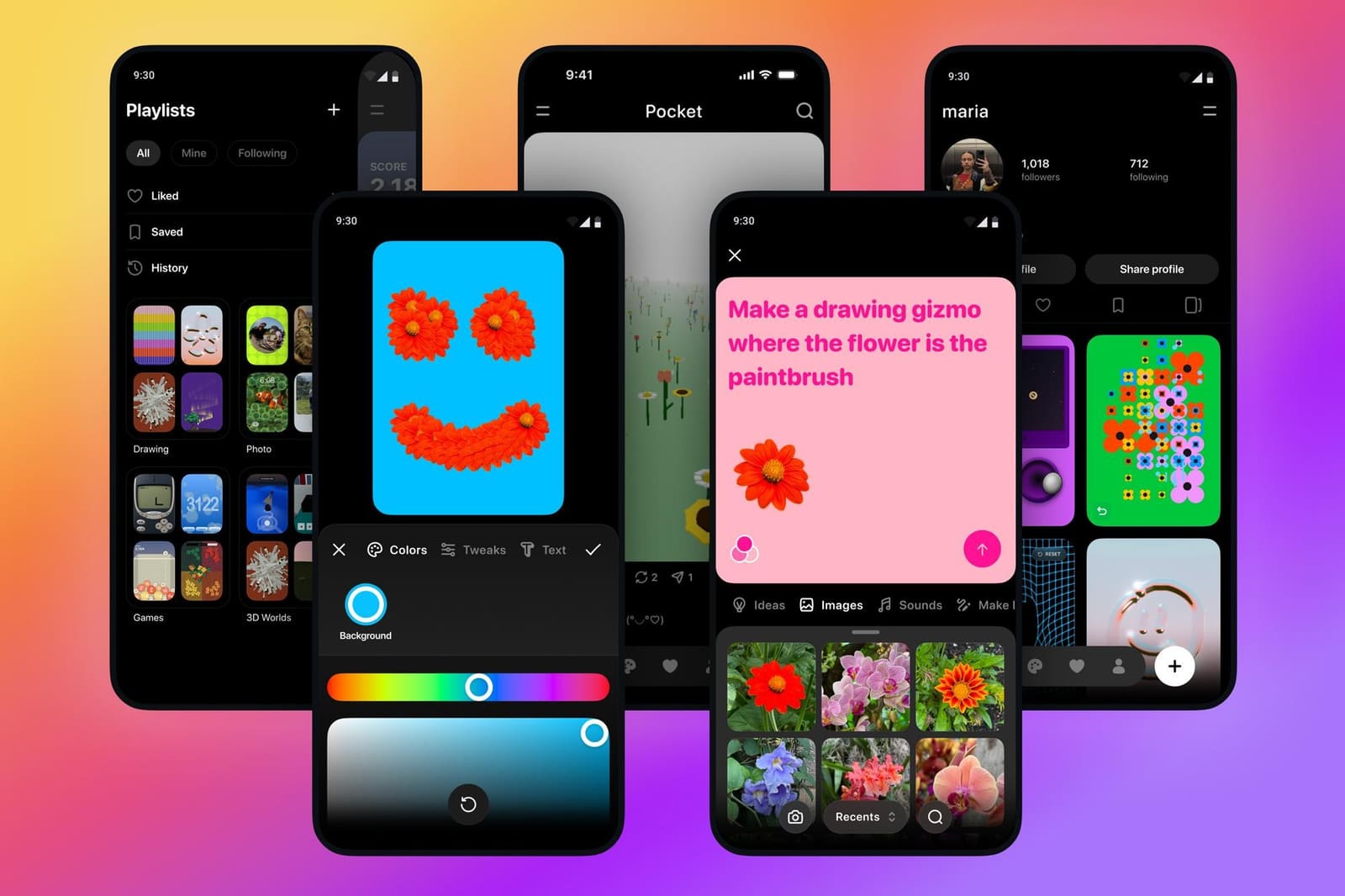
Meta introduced an app called Pocket this week, and anyone who remembers Mozilla's beloved read-it-later service will find exactly nothing familiar beyond the five letters. The new Pocket is a prompt-driven tool for creating and distributing what the company calls "gizmos": small interactive widgets that users can share across Meta's platforms and beyond.
The timing is deliberate. Mozilla shuttered its Pocket reader in 2025, leaving a vacuum and a recognizable brand sitting unused. Meta's decision to resurrect the name for an AI-centric product unrelated to article curation signals how thoroughly the company believes generative models will replace older paradigms of content consumption.
Gizmos as Social Objects
At its core, Pocket allows anyone to type a natural-language prompt and receive a functioning micro-app in return. Early examples include calculators, polling widgets, trivia games, and simple data visualizations. The output is a self-contained interactive element that can be embedded in a feed, sent via message, or posted to a profile.
Mark Zuckerberg has spent the past eighteen months articulating a vision in which AI-generated experiences become the primary currency of social interaction. Rather than sharing static photos or text posts, users in this model share dynamic, personalized tools and mini-experiences. Pocket represents the first consumer-facing product built entirely around that thesis.
The app sits somewhere between a no-code builder and a generative playground. Users describe what they want, the model interprets intent and assembles the logic, and the result is immediately shareable. Meta has not disclosed which underlying model powers Pocket, though the company's recent infrastructure investments in Llama fine-tuning and inference optimization suggest it runs on an in-house stack.
The Atma Sciences Acquisition
Pocket's architecture and design language bear the fingerprints of Atma Sciences Inc., a small startup Meta quietly hired en masse earlier this year. Atma had built a niche app focused on collaborative AI-generated widgets, though it never gained significant traction outside a small community of early adopters and educators.
The acqui-hire brought over a team of engineers with expertise in real-time rendering of AI outputs and lightweight execution environments. That talent now appears to have been folded into Meta's Reality Labs and AI Product divisions, with Pocket serving as the public debut of their work.
At DailyTechWire, we've tracked a pattern of Meta absorbing teams with specialized capabilities in generative UI and agent-based interaction design. The Atma move fits that broader strategy: acquire narrow expertise, integrate it into Meta's platform distribution engine, and launch at scale.
Distribution Across the Meta Ecosystem
Pocket gizmos are designed to flow seamlessly across Facebook, Instagram, WhatsApp, and Threads. A user might create a budget tracker via prompt, share it in a WhatsApp group, and see it reposted to Instagram Stories by another member. Meta is betting that this kind of cross-surface virality will drive adoption faster than a standalone app ever could.
The company has also opened an API for third-party embedding, allowing creators to place gizmos on external websites or in newsletters. Early partners include several education-focused platforms and a handful of media properties experimenting with interactive explainers.
This distribution strategy is central to Zuckerberg's broader AI-as-social-media vision. If gizmos become a common format, Meta controls the creation tool, the hosting infrastructure, and the graph through which they propagate. It's a bid to own the next layer of user-generated content before competitors establish a foothold.
Risks and Open Questions
The success of Pocket hinges on whether casual users will invest time in creating these micro-tools, or whether the format appeals primarily to power users and educators. Early no-code platforms have historically struggled to move beyond enthusiast communities, and it's unclear whether a prompt-based interface lowers the barrier enough to achieve mainstream adoption.
There's also the matter of quality control. Generative outputs are notoriously inconsistent, and a gizmo that fails to work as expected can erode trust quickly. Meta has not detailed what guardrails or testing layers exist between prompt submission and final output, nor how it plans to handle edge cases where a gizmo behaves unexpectedly or surfaces problematic content.
From a branding perspective, reusing the Pocket name is a calculated gamble. It capitalizes on residual recognition while risking confusion and potential backlash from users who associated the name with a very different product philosophy. Mozilla's Pocket was about preserving and curating the open web; Meta's Pocket is about generating ephemeral, platform-native interactions. The two visions occupy opposite ends of the content spectrum.
What This Means for AI Product Strategy
Pocket's launch arrives as the AI product landscape begins to fragment. While OpenAI, Google, and Anthropic have focused on conversational agents and productivity copilots, Meta is carving out a distinct category: generative social objects. The company is positioning itself not as a provider of general-purpose intelligence, but as the platform where AI-generated artifacts live and circulate.
This approach aligns with Meta's core competency in distribution and network effects. The company doesn't need to win on model performance if it can win on reach and ease of sharing. Pocket is a test of whether that logic holds in the generative era.
For developers and founders watching the space, Pocket offers a preview of how incumbents with massive user bases plan to leverage AI. Rather than building standalone experiences, they're embedding generative capabilities into existing social graphs and content formats. The result is a tighter integration between creation and distribution, with the platform controlling both ends.
Whether users will embrace AI-generated gizmos as a new social primitive remains an open question. But Meta's willingness to brand a new product with a well-known name suggests the company believes the shift is inevitable, and it intends to lead it.