Six Experts Dismantle Zuckerberg's Open AI Vision
From Nairobi to Dublin, researchers and policy leaders say Meta's manifesto ignores infrastructure gaps, exploits labor, and conflates access with equity.
A Manifesto That Landed With Skepticism
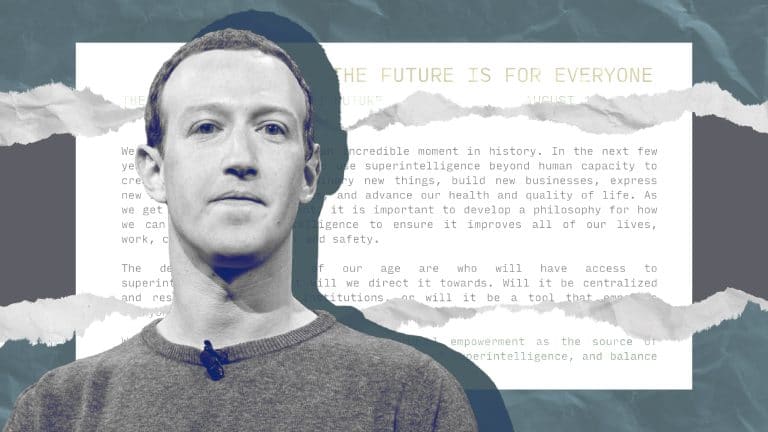
On August 10, Mark Zuckerberg released a public letter called "The Future for Everyone," laying out his case that superintelligence should be distributed widely across borders and industries. The text framed open access to advanced AI as the surest route to equitable outcomes, and positioned Meta as a company working to make that happen at scale.
Within days, researchers and civil society leaders from Kenya to Brazil to Ireland began picking the argument apart. At DailyTechWire, we've tracked similar open-model announcements across the region, and the pattern is familiar: bold claims about democratization, thin acknowledgment of the infrastructure, language, and accountability gaps that determine who actually benefits. Six voices from different corners of the global AI policy landscape offered sharp, specific rebuttals. Their critiques converge on a central tension: access to models is not the same as power over outcomes.
The Data Center Mirage in Africa
Chinasa T. Okolo, founder and scientific director of policy incubator Technecultura and inaugural policy lead at Black in AI, pointed to the widening gap between infrastructure promises and on-the-ground reality. Kenya recently paused a geothermal data center project backed by Microsoft and G42 due to grid constraints. Similar concerns shadow Cassava AI's Nvidia-powered facilities planned for South Africa and Nigeria, where grid stability remains fragile.
Meta has overstated the economic upside of data centers, according to Okolo, not only in the recent manifesto but through advertising campaigns targeting rural towns that once hosted manufacturing or mining plants. The labor benefits concentrate during construction; once operational, these facilities employ only a small permanent workforce. A modest bump in home prices does not translate to higher local wages. Meanwhile, the environmental and health costs are harder to mitigate in countries with weaker regulatory capacity and fewer enforcement mechanisms.
The narrative of AI infrastructure as economic catalyst, Okolo argued, glosses over who bears the cost and who captures the value.
Who Counts as "Everyone"?
Sagar Vishnoi, director and co-founder of Future Shift Labs, challenged the scope of Zuckerberg's definition. Speakers of low-resource and tribal languages, households that share a single device, communities with intermittent connectivity, and populations where digital infrastructure remains patchy or non-existent are largely absent from the manifesto's framing.
If the goal is truly to educate billions, Vishnoi said, investment cannot stop at scaling models. It has to extend to open language infrastructure: consent-driven data sets, community-led digitization efforts, and compute access for local researchers and developers. Trust, he noted, depends less on how much data a system can ingest and more on whether platforms can demonstrate accountable enforcement, independent oversight, and protections that function across diverse legal and social contexts, not just within Silicon Valley's institutional norms.
The Last-Mile Reality Check
Mark Mulobi, products and practices associate at Digital Impact, echoed the concern from a Kenyan perspective. The vision of AI as a personal tutor, helping people learn and access new opportunities, is compelling. But it collides with last-mile realities: reliable electricity, high-speed internet, affordable devices, and meaningful access in rural and underserved areas remain out of reach for many.
Realizing AI's potential in Africa also requires deliberate investment in African languages and local knowledge systems. Without that, Mulobi argued, AI risks widening existing digital divides rather than closing them. The technology may be open, but the infrastructure to use it is not.
A Tool of Geopolitical Leverage
Juan Ortiz-Freuler, co-founder of the Non-Aligned Technologies Movement, a global civil society coalition, read the letter as a document with two audiences. The opening sections target regulators in Brazil, India, Turkey, and Nigeria with messages of transparency, cooperation, and horizontal partnership. The closing sections speak to U.S. power brokers who expect Meta to function as a vector of American influence.
Meta's scale creates contradictions. The company is large enough to run afoul of multiple interest groups at once, and those tensions sharpen as the U.S. government expects private tech multinationals to uphold hegemonic goals that sometimes conflict with profit motives.
While Meta is not primarily a data center company, Ortiz-Freuler noted, it is an intelligence company. Its profit interest lies not in expanding compute but in enlisting users around the world to help train a central machine to understand the complex web of relations underlying the symbolic world it has ingested as text. That intelligence is then optimized for curation, targeting, and other tasks, which the manifesto acknowledges will also serve the U.S. government and the America First agenda.
A Track Record That Undermines the Pitch
Abeba Birhane, founder of Trinity College Dublin's AI Accountability Lab, called the claim laughable. Decades ago, when Facebook expanded across Africa, the company's messaging centered on connecting rural and unconnected women. Today, Meta has amassed population-scale data, monopolized the digital sphere, and controls much of the information ecosystem across the continent, with no observable benefit to the rural women it once invoked.
Meta has exploited cheap or unpaid labor from data workers, extracted resources, and amplified disinformation, misinformation, and malinformation, according to Birhane. When called out, the company has displaced accountability and gaslit the communities it claimed to help. Beyond Africa, nobody should take Meta's letter seriously when the corporation silences criticism, retaliates against workers who expose harm, buries evidence of harm to minors, and launches problematic products while civil society organizations are stretched thin. The company continually violates legal obligations while claiming to have vulnerable groups' best interests at heart.
The Missing Dimensions of Trust
Priya Vora, CEO of the global nonprofit Digital Impact Alliance, argued that technology must be grounded in four principles: participation, agency, choice, and trust. The manifesto speaks to participation, but meaningful participation requires agency and choice, and both depend on trust in the systems people are asked to use.
Governments can set the rules, Vora said, but companies have to earn trust through action. That means designing AI alongside users, especially those with high accessibility needs, being transparent about how data and systems are used, and giving people meaningful recourse when AI fails. Trust is multidimensional, and those dimensions must be considered from the outset and throughout development and deployment. The letter, she noted, omits many of those aspects.
The Equity Gap That Access Alone Cannot Close
The critiques from Nairobi, Dublin, and points in between share a common thread: open models and open access do not automatically produce equitable outcomes. Infrastructure constraints, language exclusion, labor exploitation, and accountability failures shape who can use AI and who benefits from it. The manifesto's framing treats access as the primary variable, but power, control, and trust are the ones that matter.
Meta's track record on the continent and beyond raises questions about whether the company can deliver on the vision it has articulated. The gap between rhetoric and reality remains wide, and the voices challenging that gap are getting harder to ignore.