Singapore Robotics Startup Hivebotics Closes $6 Million Series A for Autonomous Cleaning Tech
Vertex Ventures leads round for NUS spin-off building articulated-arm robots that autonomously clean commercial restrooms
From University Lab to Commercial Facilities
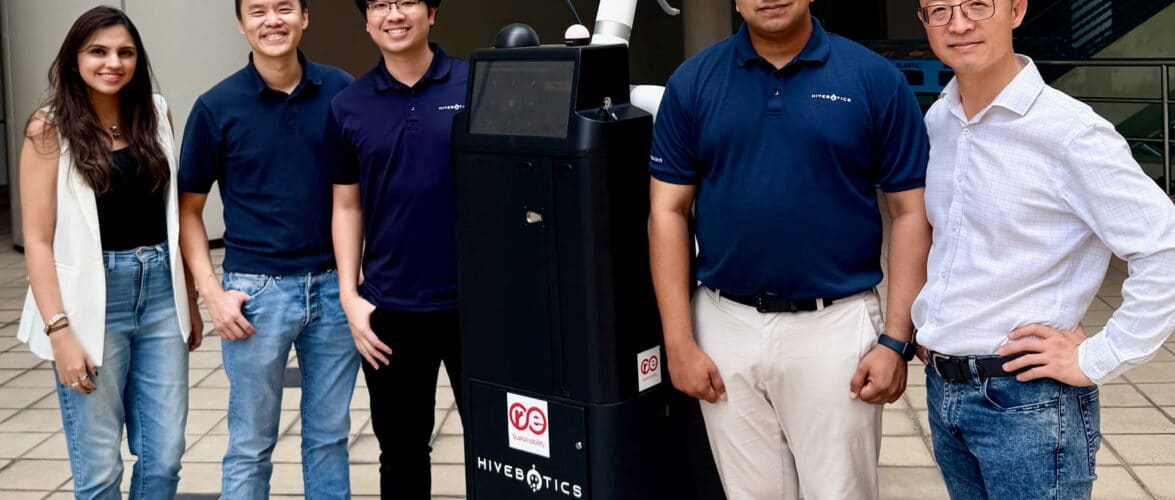
Hivebotics, a robotics venture spun out of the National University of Singapore in 2021, has secured USD 6 million in Series A funding, the company announced. Vertex Ventures Southeast Asia & India anchored the round, with participation from Fareast Land Development - a unit of Taiwan's Farglory Group - and Rigel, a manufacturer of restroom fixtures and products.
The capital will accelerate deployment of Abluo, the startup's flagship autonomous cleaning robot, across commercial and institutional facilities in Southeast Asia and beyond. At DailyTechWire, we've tracked a steady climb in venture interest around robotics that tackle labour-intensive, repetitive tasks in sectors facing acute hiring shortages, and facilities management sits near the top of that list.
The Abluo Platform: Articulated Arms Meet Software Orchestration
Abluo employs an articulated robotic arm to scrub toilets, urinals, sinks, and floor surfaces without human intervention. The system navigates restroom layouts autonomously, adjusting pressure and cleaning patterns for different fixture materials and soil levels. Unlike simpler floor-scrubbing machines that follow fixed paths, Abluo's articulation allows it to reach vertical and angled surfaces - critical for hygiene in high-traffic washrooms.
The hardware pairs with HiveIntelligence, a cloud-based operations platform that schedules cleaning cycles, monitors consumables such as detergent and disinfectant, and logs completion data for facility managers. The software layer is designed to integrate with existing building-management systems, allowing operators to treat robotic cleaners as programmable assets rather than standalone appliances.
Hivebotics positions the technology as a productivity multiplier rather than a direct labour replacement. Cleaning staff can redeploy time from scrubbing to inspection, restocking, and higher-touch tasks that require human judgement - an argument that has gained traction among facility-management firms navigating tight labour markets and rising wage floors across the region.
Strategic Investors Signal Deployment Intent
The composition of the Series A syndicate offers clues about go-to-market strategy. Fareast Land Development manages commercial and residential properties across Taiwan and Southeast Asia; Rigel supplies sanitation products to hotels, offices, and transport hubs. Both bring distribution channels and pilot sites that can compress the sales cycle for a hardware startup.
Vertex Ventures Southeast Asia & India, the lead investor, has a portfolio spanning logistics automation, agricultural robotics, and industrial AI. The firm's thesis centres on software-enabled hardware that can scale across fragmented markets - precisely the challenge Hivebotics faces as it moves from early adopters to broader commercial rollout.
Real-estate operators in Singapore, Hong Kong, and major mainland Chinese cities have begun piloting autonomous cleaning systems in the past eighteen months, driven by pandemic-era hygiene expectations and structural labour shortages. Hivebotics enters a competitive landscape that includes floor-scrubbing robots from established players and newer entrants targeting vertical surfaces, but the articulated-arm approach and integrated software stack represent a technical bet on flexibility over specialisation.
The Facilities-Tech Tailwind in Asia
Across Asia-Pacific, the facilities-management sector is undergoing a technology shift shaped by three forces: demographic ageing that shrinks the pool of manual workers, regulatory mandates around hygiene and traceability, and landlord pressure to reduce operating expense ratios. Robotics companies that can demonstrate rapid payback periods - typically twenty-four to thirty-six months for cleaning automation - are finding receptive customers among commercial landlords, hospital networks, and transport authorities.
Singapore's push to automate low-wage roles has created a test bed for robotics startups, with government co-investment schemes and regulatory sandboxes that ease deployment hurdles. Hivebotics has benefited from that environment, but the Series A capital signals an intent to expand beyond the city-state's relatively small market into larger, messier geographies where labour costs remain lower and infrastructure more varied.
The company will need to prove that its robots can handle the variability of older building stock, inconsistent water pressure, and diverse cleaning protocols across markets. Software adaptability - the ability to update cleaning algorithms and integrate with legacy building systems - will matter as much as hardware robustness in determining whether Hivebotics can achieve the unit economics required for venture-scale returns.
What Comes After Restrooms
Facilities management encompasses far more than washroom cleaning: HVAC maintenance, waste sorting, floor care in non-restroom areas, and exterior façade work all present automation opportunities. Hivebotics has focused first on restrooms because the task is self-contained, hygiene stakes are high, and the value proposition is immediately legible to buyers. The question for investors is whether the articulated-arm platform and software layer can extend into adjacent tasks or whether the company will remain a point solution.
The funding round positions Hivebotics to answer that question over the next eighteen to twenty-four months. Expansion into new fixture types, integration pilots with property-management software platforms, and demonstrations of fleet management at scale will all serve as signals of whether the technology can grow beyond its initial wedge. For now, the backing from Vertex and strategic partners gives the startup runway to prove that autonomous cleaning can move from novelty to infrastructure in Asia's built environment.