Kalanick's Atoms Targets Robotaxi Market After $1.7 Billion Round
The Uber founder's stealth venture is planning acquisitions and a hiring surge to compete in autonomous vehicles, with talks already underway with his former company.
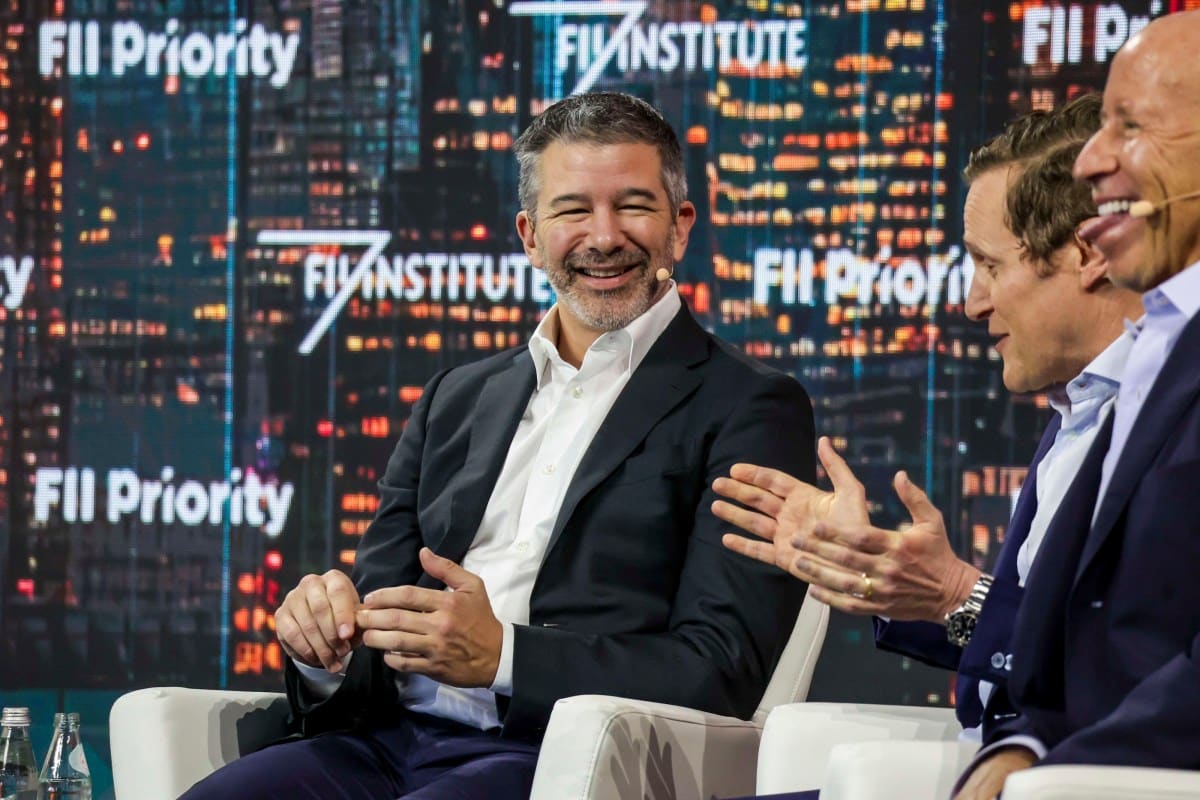
From Stealth to Strategy
Travis Kalanick raised $1.7 billion for Atoms earlier this year through a round led by Andreessen Horowitz, but the former Uber chief executive kept details sparse. The funding marked one of the largest venture rounds of 2026, yet Kalanick declined to outline concrete plans beyond vague references to "unfinished business." That ambiguity is now clearing: Atoms is positioning itself as a contender in the robotaxi sector, with plans for both aggressive hiring and strategic acquisitions to accelerate its entry.
The startup has begun discussions with Uber about potential deployment of its autonomous vehicle technology within the ride-hailing giant's existing network. Uber has already established partnerships with multiple autonomous vehicle developers, creating a ready-made distribution channel for any technology that meets its operational standards. The company has also invested $100 million in Atoms, giving it both financial exposure and strategic alignment with Kalanick's new venture.
The Pronto Acquisition Signal
Atoms' direction became clearer with its acquisition of Pronto, an autonomous mining startup led by Anthony Levandowski. Levandowski previously ran Uber's self-driving programme before his conviction for stealing trade secrets from Waymo; he received a presidential pardon in 2021. The Pronto deal brought both technical talent and operational experience in autonomous systems, albeit in the mining sector rather than urban transport.
Mining applications share core challenges with robotaxis: both require vehicles to navigate dynamic environments, make real-time decisions, and operate safely without human intervention. The difference lies in scale and regulation. Mining sites offer controlled environments with fewer variables; public roads present exponentially more complexity. Whether Pronto's technology can translate effectively to urban robotaxi operations remains an open question, but the acquisition suggests Kalanick is betting on transferable engineering rather than starting from scratch.
A Crowded Autonomous Field
Atoms enters a sector already thick with capital and competition. Waymo operates commercial robotaxi services in San Francisco and Phoenix, logging thousands of paid trips weekly. Cruise, despite a 2023 setback following a pedestrian incident, continues to rebuild its operations with backing from General Motors. Chinese developers including Baidu's Apollo and Pony.ai have deployed fleets in multiple cities, benefiting from regulatory frameworks that favour rapid iteration over prolonged testing.
The technical bar for safe autonomous operation has proven higher than early optimists predicted. Waymo has spent over a decade and billions of dollars refining its system. Cruise burned through similar sums before its regulatory suspension. Newer entrants face the same physics: sensor fusion, edge-case handling, and the challenge of achieving safety performance that exceeds human drivers by a margin wide enough to satisfy regulators and insurers.
Kalanick's advantage, if any, lies in distribution rather than technology. His relationship with Uber provides a potential fast track to fleet deployment, bypassing the years competitors spent building ride-hailing networks from the ground up. Uber's existing infrastructure - dispatch systems, rider apps, insurance frameworks, maintenance networks - could absorb Atoms' technology more seamlessly than a greenfield launch. But that assumes Atoms can deliver a product that meets Uber's safety and reliability thresholds, a bar that has excluded numerous hopeful partners.
Hiring and Acquisition Plans
Sources familiar with Atoms' plans indicate the startup is preparing a recruitment push targeting engineers with experience in perception, motion planning, and simulation. The autonomous vehicle sector has seen significant talent movement over the past 18 months, as companies including Ford's Argo AI shut down and others scaled back. That creates a pool of experienced practitioners, though competition for top-tier talent remains fierce among well-funded players.
Atoms is also exploring additional acquisitions beyond Pronto. Potential targets include companies with sensor technology, simulation platforms, or regulatory expertise. The strategy mirrors patterns seen in earlier autonomous vehicle consolidation: Cruise acquired Strobe (lidar) in 2017; Aurora bought Uber's self-driving unit in 2020. Buying capabilities can compress development timelines, though integration challenges often dilute the expected benefits.
The $1.7 billion war chest gives Atoms runway to pursue both strategies simultaneously. Assuming a monthly burn rate comparable to other pre-commercial autonomous vehicle programmes - typically $30 million to $50 million once engineering teams scale - the company has sufficient capital for two to three years of intensive development. That timeline aligns with optimistic projections for limited commercial deployment, though the sector's history suggests delays are more common than early launches.
The Unfinished Business Thesis
Kalanick's framing of Atoms as "unfinished business" carries obvious resonance. He built Uber into a global ride-hailing platform but was forced out in 2017 amid governance scandals and cultural controversies. Autonomous vehicles represented Uber's long-term existential hedge: if robotaxis could eliminate driver costs, the unit economics of ride-hailing would shift dramatically. Uber invested heavily in self-driving technology before ultimately selling that division to Aurora in 2020, concluding that in-house development was too capital-intensive.
By returning to the sector through Atoms, Kalanick is essentially picking up the thread Uber dropped. The difference is that Atoms operates without the baggage of a public company's quarterly earnings pressure or the complexity of managing a global workforce of millions. It can focus exclusively on the technology and partnerships needed to deliver a working robotaxi system, then integrate with existing platforms rather than building its own ride-hailing network.
Whether that focus translates to success depends on execution. The autonomous vehicle sector is littered with well-funded ventures that failed to deliver: Argo AI, Voyage, Starsky Robotics, and others burned through billions before shutting down or selling at distressed valuations. Technical difficulty, regulatory uncertainty, and the sheer cost of achieving safety at scale have defeated more companies than they have enriched. Atoms has capital, connections, and a founder with relevant experience, but those ingredients have proven insufficient for others.
Regulatory and Safety Hurdles
Deploying robotaxis in the United States requires navigating a patchwork of state and municipal regulations. California's Department of Motor Vehicles issues autonomous vehicle testing and deployment permits, but local governments retain authority over operational details. San Francisco's Board of Supervisors, for instance, has repeatedly clashed with state regulators over the pace of robotaxi expansion, citing safety incidents and traffic disruptions.
Any new entrant must demonstrate safety performance through extensive testing, typically millions of miles in simulation and hundreds of thousands on public roads. Regulators also scrutinise incident response protocols, data transparency, and insurance coverage. The approval process can stretch 12 to 18 months even for companies with proven track records; newcomers face longer timelines and greater scepticism.
Atoms' discussions with Uber may provide a partial workaround. If the startup's technology can be integrated into Uber's existing fleet operations, it might benefit from Uber's regulatory relationships and established safety frameworks. But that assumes Uber is willing to stake its reputation on an unproven system - a risk the company has shown limited appetite for since divesting its own self-driving unit.
At DailyTechWire, we have tracked the autonomous vehicle sector's evolution from early hype through the current phase of cautious commercialisation. The pattern is consistent: bold promises, extended timelines, and a narrowing field of survivors. Atoms enters at a moment when the technology is demonstrably feasible but not yet economically scalable. Whether Kalanick's second act in this space fares better than the attempts Uber abandoned remains an open question, and one that will take years, not quarters, to answer.