Shanghai Startup Bets 3D Stacking Can Break Nvidia's Grip
Dongfang Suanxin unveils a road map anchored in near-memory architecture and software-defined compute, wagering that design innovation can outrun fabrication constraints.
An Architecture Play Under Export Pressure
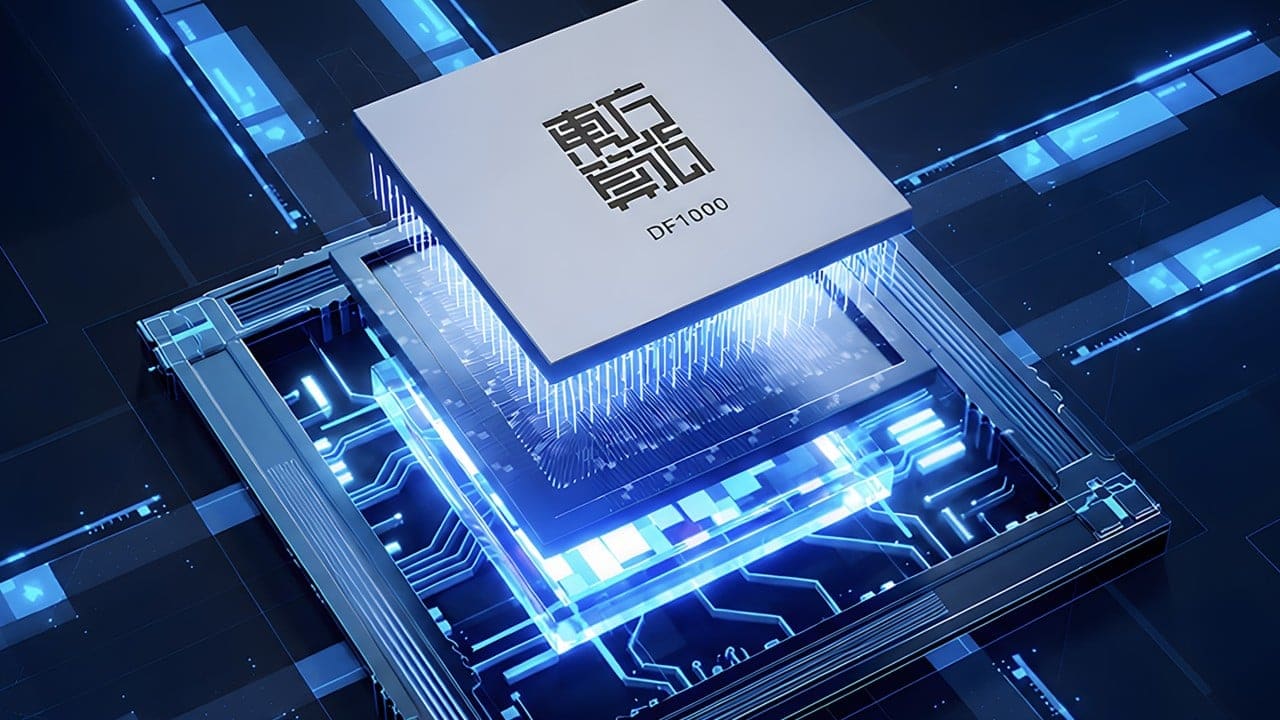
Dongfang Suanxin announced its road map this week with a clear thesis: if you cannot access the most advanced fabrication nodes, redesign the compute stack so those nodes matter less. The Shanghai-based semiconductor firm, funded by a mix of state-backed capital and domestic technology groups, is centering its strategy on software-defined computing and 3D-stacked near-memory architecture. Both techniques aim to move data closer to where it is processed, cutting the power and latency penalties that dominate training and inference workloads at scale.
At DailyTechWire, we have tracked similar architectural pivots across the region. Taiwan's edge-AI specialists and South Korean memory manufacturers have explored vertical integration of DRAM and logic for years, but Dongfang Suanxin's timing is notable. The firm is explicitly positioning these design choices as a workaround for export restrictions that deny Chinese buyers access to Nvidia's H100 and newer datacenter GPUs, as well as the extreme ultraviolet lithography tools required to manufacture sub-7-nanometer chips.
Why Near-Memory and Software Definition Matter
Traditional accelerator designs shuffle vast volumes of weights and activations between off-chip memory and compute units, burning watts and clock cycles in transit. Near-memory architectures place SRAM or HBM dies directly above or beside processing elements, shrinking that journey to micrometers instead of centimeters. The result is lower latency and higher effective bandwidth, which can translate into faster training epochs or cheaper inference at a given power envelope.
Software-defined computing, meanwhile, allows a single piece of silicon to reconfigure its dataflow on the fly. Instead of hardwiring tensor operations into fixed pipelines, the chip exposes programmable interconnects and execution units that adapt to the shape of each model. This flexibility is especially valuable in a landscape where transformer variants, mixture-of-experts models, and diffusion architectures all demand different memory-access patterns.
Dongfang Suanxin is betting that these two approaches, combined, can deliver competitive performance without relying on the cutting-edge process nodes that remain out of reach. If the company can tape out a chip on a mature 14-nanometer or 28-nanometer line and still hit respectable throughput, it would validate a broader hypothesis: that innovation in packaging and interconnect can compensate for lagging transistor density.
The Funding Coalition
The firm has not disclosed exact funding figures, but its backers include a blend of provincial investment vehicles and established technology companies operating in cloud infrastructure, telecommunications, and enterprise software. This structure mirrors the model seen in other strategic semiconductor ventures across China, where central and regional governments co-invest alongside corporations that will eventually become anchor customers.
That captive demand is critical. Even if Dongfang Suanxin's chips trail Nvidia on raw teraflops per watt, domestic cloud providers under pressure to localize their supply chains may adopt the hardware for non-export-sensitive workloads. Over time, that installed base generates the telemetry and software ecosystem needed to iterate quickly, a feedback loop that has powered every successful accelerator platform from CUDA onward.
Risks and Realities
Three challenges loom. First, near-memory architectures are hard to manufacture at scale. Aligning and bonding multiple dies with through-silicon vias requires yield discipline that even mature fabs struggle to maintain. Any defect in the memory stack can render the entire package unusable, driving up costs and lead times.
Second, software ecosystems do not emerge overnight. Nvidia's CUDA enjoys a fifteen-year head start, thousands of optimized libraries, and a global community of developers who instinctively reach for cuDNN and TensorRT. Dongfang Suanxin will need to convince researchers and engineers to learn new APIs, rewrite training scripts, and accept initial performance gaps while the toolchain matures.
Third, export controls are a moving target. If the firm's chips demonstrate meaningful traction, Washington may expand restrictions to cover the packaging equipment, high-bandwidth memory modules, or electronic-design-automation software that underpin 3D integration. The United States has already tightened rules around advanced packaging in recent policy updates, and further measures remain under discussion.
Regional Implications
Across Asia, national semiconductor strategies are converging on similar themes: vertical integration, alternative architectures, and reduced dependence on a handful of American and Dutch toolmakers. South Korea's memory giants are investing heavily in compute-in-memory and processing-in-memory designs. Taiwan's TSMC and smaller advanced-packaging houses are expanding capacity for chiplet-based systems. Japan has restarted public-private partnerships aimed at reclaiming leadership in logic and memory.
Dongfang Suanxin's road map fits within this broader shift. If the company can demonstrate that 3D stacking and software-defined fabrics deliver competitive AI performance on mature nodes, it will accelerate similar programs in Bengaluru, Seoul, and Tokyo. The race is no longer confined to transistor density; it now encompasses interconnect bandwidth, thermal management, and the co-design of hardware and compilers.
What Comes Next
The firm has not announced a tape-out date or disclosed partnerships with foundries, but industry observers expect prototype silicon within eighteen to twenty-four months. Early benchmarks will focus on inference rather than training, since inference workloads are more forgiving of memory bottlenecks and easier to optimize with custom kernels.
In the meantime, Dongfang Suanxin must build a software stack robust enough to attract early adopters. That means open-sourcing core libraries, publishing performance data, and working closely with framework maintainers at PyTorch and PaddlePaddle. The technical roadmap is aggressive, but the real test will be whether the company can convert architectural cleverness into a platform that developers choose to support.
At DailyTechWire, we will be watching how quickly the firm moves from announcement to silicon, and whether its backers remain patient if the first chips fall short of headline promises. In a market where Nvidia's lead is measured in software maturity as much as hardware specs, closing the gap demands sustained execution across every layer of the stack.