Samsung's Z Flip 8 Sticks With Exynos as Upgrades Shrink
Leaked specifications reveal minimal hardware evolution from last year's model, signaling a possible plateau in flip-phone innovation cycles.
Another Year, Another Exynos
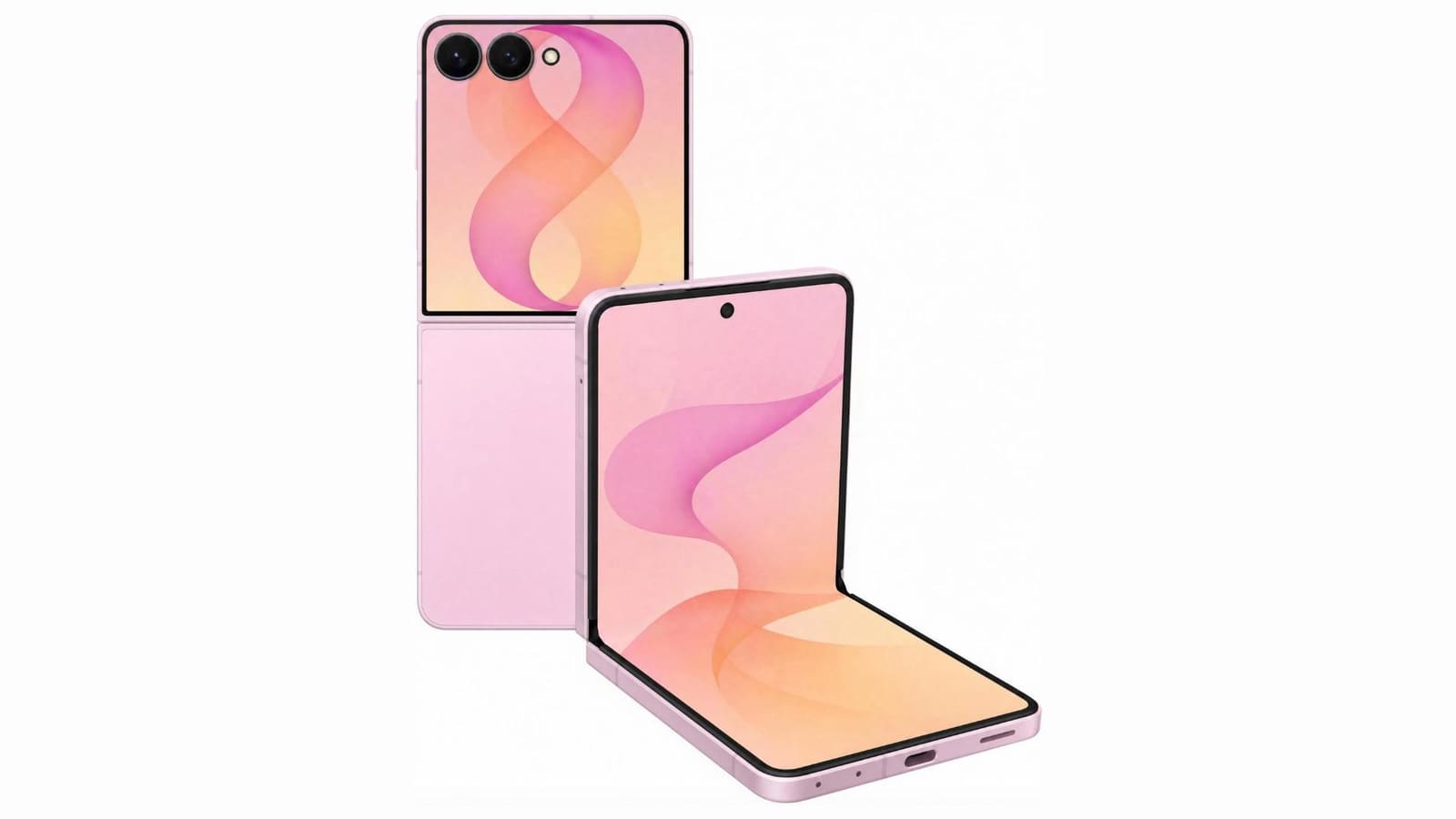
Samsung appears ready to launch a flip phone that won't ask much of anyone's muscle memory. Specifications circulating ahead of next week's expected unveiling show the Galaxy Z Flip 8 carrying forward the visual design and core feature set of its predecessor, with the company choosing its own Exynos 2600 silicon over Qualcomm's Snapdragon alternatives.
The processor choice is the most consequential decision Samsung has made for this generation. Where competitors have moved aggressively to adopt Qualcomm's latest flagship chips for sustained performance and thermal management in the cramped interiors of foldable devices, Samsung is betting that its own semiconductor roadmap can deliver comparable experience without the licensing cost or supply-chain dependency. The Exynos 2600 succeeds the 2500 that powered the Z Flip 7, a chip that generated mixed reviews for efficiency under sustained workloads.
At DailyTechWire, we've tracked how Samsung's internal chip strategy has oscillated between Exynos and Snapdragon across regions and product tiers. This year's decision to standardize on Exynos for the Z Flip line suggests either confidence in the new architecture or a calculated trade-off to preserve margin in a segment where average selling prices have compressed.
Charging Gets a Bump, Little Else Changes
The other hardware shift is support for 45W wired charging, up from the 25W ceiling on the Z Flip 7. Fast-charging standards have become table stakes in Asian markets, where consumers routinely expect full top-ups in under an hour. Samsung's move here likely reflects pressure from Chinese competitors like Oppo and Xiaomi, whose flip and fold devices already support 67W or higher.
Beyond power delivery, the leaked specifications point to continuity. The hinge mechanism, cover display dimensions, main screen resolution, camera array, and battery capacity all appear unchanged. For a product category that Samsung pioneered in its modern form and has iterated annually since 2020, the Z Flip 8 represents the most conservative step yet.
The Incremental-Update Trap
Samsung's restraint may be deliberate. Foldable phones have matured from fragile curiosities into reliable daily drivers, and the company now ships millions of units each quarter. But that volume has come with a new challenge: managing customer expectations when the fundamental form factor no longer surprises.
The Z Flip series has always occupied an unusual position in Samsung's portfolio. It's more affordable than the larger Z Fold line, targets a younger demographic, and competes as much on style as on specifications. Incremental updates work when the design itself remains aspirational. The risk is that buyers who purchased a Z Flip 6 or 7 will see no reason to upgrade, and prospective customers will wonder whether the form factor has stalled.
Chinese manufacturers have responded to this dynamic by pushing hardware envelope: larger cover screens, better cameras, thinner profiles. Samsung's decision to hold the line on design and bet on Exynos suggests the company believes software differentiation and ecosystem lock-in matter more than spec-sheet wins.
What the Exynos Bet Reveals
Samsung's chip choice also signals broader strategic priorities. By reserving Snapdragon processors for the flagship Galaxy S series and ultra-premium Z Fold models, the company can negotiate better terms with Qualcomm and avoid the margin erosion that comes from paying top-tier licensing fees across every product line.
Exynos development has been uneven. The 2400 series disappointed in power efficiency, prompting Samsung to skip Exynos entirely for some markets in previous years. If the 2600 delivers competitive performance and better thermal behavior, Samsung will have validated its long-term investment in vertical integration. If it underperforms, the company risks ceding ground to competitors who can tout Snapdragon 8-series pedigree.
The timing is also notable. Qualcomm's next flagship mobile platform is expected later this year, and Samsung's decision to launch the Z Flip 8 with Exynos now may be a hedge against supply constraints or a desire to avoid splitting inventory between chip variants.
The Foldable Market's New Normal
Samsung's cautious update reflects a maturing product category. Early foldable adopters tolerated fragility and high prices for the novelty of a folding screen. Today's buyers expect durability, software polish, and pricing that doesn't require a second mortgage. The Z Flip 8's evolutionary approach suggests Samsung believes it has arrived at a formula that works and sees little upside in disruptive change.
That calculus may hold in markets where Samsung enjoys strong brand loyalty and carrier partnerships. It's less certain in Asia, where Huawei, Honor, Oppo, and Vivo have all launched competitive flip devices with aggressive pricing and feature sets tailored to local preferences. Samsung's reliance on Exynos and minimal hardware upgrades could make the Z Flip 8 a tougher sell in Shenzhen or Jakarta than in Seoul or San Francisco.
The official launch event is expected next week, and Samsung will likely emphasize software features, AI integrations, and ecosystem continuity. But the leaked specifications tell a different story: a company that has decided incremental refinement is safer than bold reinvention, at least for this generation.