Peripheral AI Chips See Price Lift as Demand Spreads Beyond Flagship Models
China's largest contract manufacturer signals that the AI infrastructure build-out is tightening supply across a broader swath of the semiconductor stack than many anticipated.

The Spillover Nobody Priced In
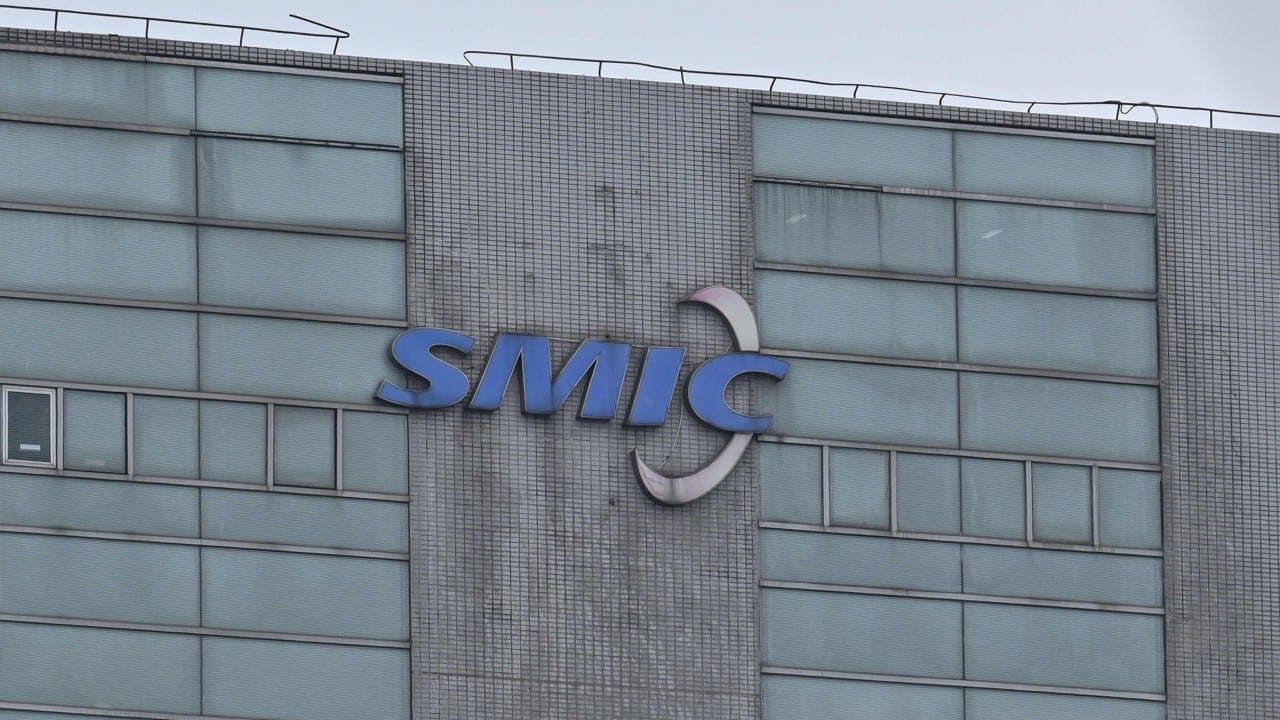
When the industry talks about the AI chip shortage, the conversation usually centers on flagship accelerators and high-bandwidth memory. But Semiconductor Manufacturing International Corp., the largest contract chipmaker in China, is watching a different story unfold: a surge in demand for the peripheral chips that surround those marquee components - and a corresponding firmness in pricing that is proving surprisingly resilient.
According to SMIC, the AI investment boom is driving what the company describes as "spillover effects" into adjacent chip categories: power management ICs, interface controllers, sensor hubs, and the constellation of support silicon that makes a datacenter or edge inference box actually work. More to the point, SMIC has stated there is "no chance" it will lower pricing for those components, even as traditional demand drivers like smartphones and automotive electronics soften.
At DailyTechWire, we've tracked capex waves before, but this one is notable for how it is pulling on capacity across process nodes and chip types that were not initially seen as AI-critical. The implication is that tightness in the AI supply chain is now broad enough to prop up wafer pricing in segments that would otherwise be entering a down cycle.
Why Peripheral Chips Matter Now
The term "peripheral AI chip" covers a lot of ground. It includes analog power converters that regulate voltage for accelerators, SerDes chips that move data between processors and memory, timing and clock-distribution ICs, and even discrete logic that handles housekeeping tasks inside servers. None of these parts make headlines, but each datacenter rack or edge appliance requires dozens of them.
What has changed is the sheer scale of deployment. Hyperscalers and cloud providers are ordering AI infrastructure in volumes that dwarf previous build-outs, and each incremental GPU cluster or inference array carries a long bill of materials. Even if a peripheral chip represents only a few dollars of value per unit, multiply that by tens of millions of server boards and the demand becomes material.
SMIC's commentary suggests that this secondary wave of orders is absorbing capacity that would otherwise have been available for consumer electronics or automotive clients. That matters because those two segments - smartphones in particular - are experiencing inventory corrections and softer end demand. In a typical cycle, foundries would respond by cutting prices to keep utilization high. SMIC is signaling that AI-adjacent demand is strong enough to avoid that outcome.
The Capacity Bind
Foundries operate on a model where utilization is everything. Empty fab capacity is expensive, so the instinct is to chase volume even if it means accepting lower average selling prices. The AI boom is flipping that calculus. Instead of a glut, fabs are seeing queues for mature-node and specialty processes that were supposed to be commoditized.
SMIC operates across a range of nodes, from 14-nanometer logic down to 180-nanometer analog and power processes. The company's willingness to hold pricing firm suggests that order books remain healthy across that spectrum, not just at the leading edge. That is a departure from recent years, when pricing power was concentrated in advanced nodes and everything else was a race to the bottom.
Part of the story is geographic. Chinese customers - many of them building out AI infrastructure for domestic cloud platforms, surveillance systems, and industrial automation - are ordering locally where possible, and SMIC is a primary beneficiary. Export controls and geopolitical friction have made supply-chain localization a priority, which in turn channels more design wins and volume to domestic fabs.
But the broader point holds across regions: AI infrastructure is a system-level build, and the peripheral components are as necessary as the headline parts. If you cannot source the power management or interface chips, the accelerator sits idle.
What It Means for the Rest of the Stack
The knock-on effects are starting to show up in other markets. Automotive semiconductor buyers, for example, have been hoping for relief after two years of tight supply and elevated pricing. If foundries are prioritizing AI-adjacent orders, that relief may be slower to arrive. The same logic applies to consumer IoT, industrial controllers, and other applications that rely on mature-node capacity.
There is also a strategic dimension. SMIC's stance reflects confidence that AI demand has staying power - that this is not a one-year capex spike but a multi-year infrastructure cycle. That confidence is not universal. Some analysts worry that hyperscaler spending will moderate as utilization rates for existing AI hardware remain below expectations, or as return-on-investment questions start to bite.
SMIC's pricing posture is a bet that the wave is real and sustained. If that bet is correct, we are in for a period where semiconductor economics are bifurcated: advanced-node scarcity at the top, and persistent tightness in mature nodes that were supposed to be abundant. If the bet is wrong, the company will face the same margin pressure that has plagued the industry in past downturns.
The Regional Angle
From a regional perspective, the dynamic underscores how quickly China's domestic semiconductor ecosystem is being reshaped by AI. Government-backed investment, corporate capex from Alibaba Cloud, Tencent, and ByteDance, and a push to reduce reliance on foreign suppliers are all converging to create a domestic demand base that can absorb significant foundry capacity.
SMIC is not the only beneficiary - packaging houses, substrate suppliers, and test facilities are all seeing elevated order flow - but as the largest domestic foundry, it is the most visible barometer. The company's commentary also hints at a broader shift: Chinese fabless chip designers are increasingly targeting AI infrastructure, and those designs need to be manufactured somewhere. SMIC is the natural home.
For the rest of Asia, the message is that competition for foundry capacity is intensifying, and not just at the leading edge. If peripheral AI chips are commanding firm pricing at mature nodes, then other applications will either pay up or wait. That is a reversal from the buyer's market that prevailed for much of the past decade outside of memory and leading-edge logic.
Looking Ahead
The question now is how long this pricing environment lasts. If AI deployment continues at the current pace, the peripheral chip shortage could persist well into next year, keeping utilization high and pricing firm. If deployment slows - either because of budget constraints, regulatory headwinds, or simply a pause to digest existing capacity - then the overhang in smartphones and automotive could reassert itself, and pricing power would evaporate.
SMIC's decision to hold the line on pricing is a signal that, for now, the company expects the former scenario. It is also a reminder that the AI supply chain is broader and more interconnected than the flagship components suggest. The chips that manage power, move data, and coordinate timing are not glamorous, but they are essential. And in a market where every rack of AI hardware needs dozens of them, even the peripheral parts can command a premium.