Orchestration, Not Just Silicon: Where Nvidia's Real Moat Lives
As hyperscalers build competing GPUs, the chipmaker's edge has shifted to the infrastructure layer that keeps gigawatt-scale compute running efficiently.
The Question Investors Missed
For the past eighteen months, market watchers fixated on a single vulnerability: Amazon and Google were designing their own accelerators, and Nvidia's GPU monopoly would crumble. The company's share price reflected that anxiety, plateauing after a blistering 10x run between early 2023 and mid-2025. Yet earnings calls this week revealed a different story unfolding beneath the surface. The competition that matters is no longer about which chip can push the most FLOPS. It's about which company can prevent a gigawatt data center from choking on its own data.
At DailyTechWire, we've tracked infrastructure spend across Seoul, Singapore, and Shenzhen long enough to recognize when the game changes. What Nvidia has assembled around its Vera Rubin architecture is not a faster GPU. It's a full-stack answer to the orchestration crisis that emerges when training clusters scale past ten thousand nodes and inference latency budgets shrink to milliseconds.
Traffic Control at Gigawatt Scale
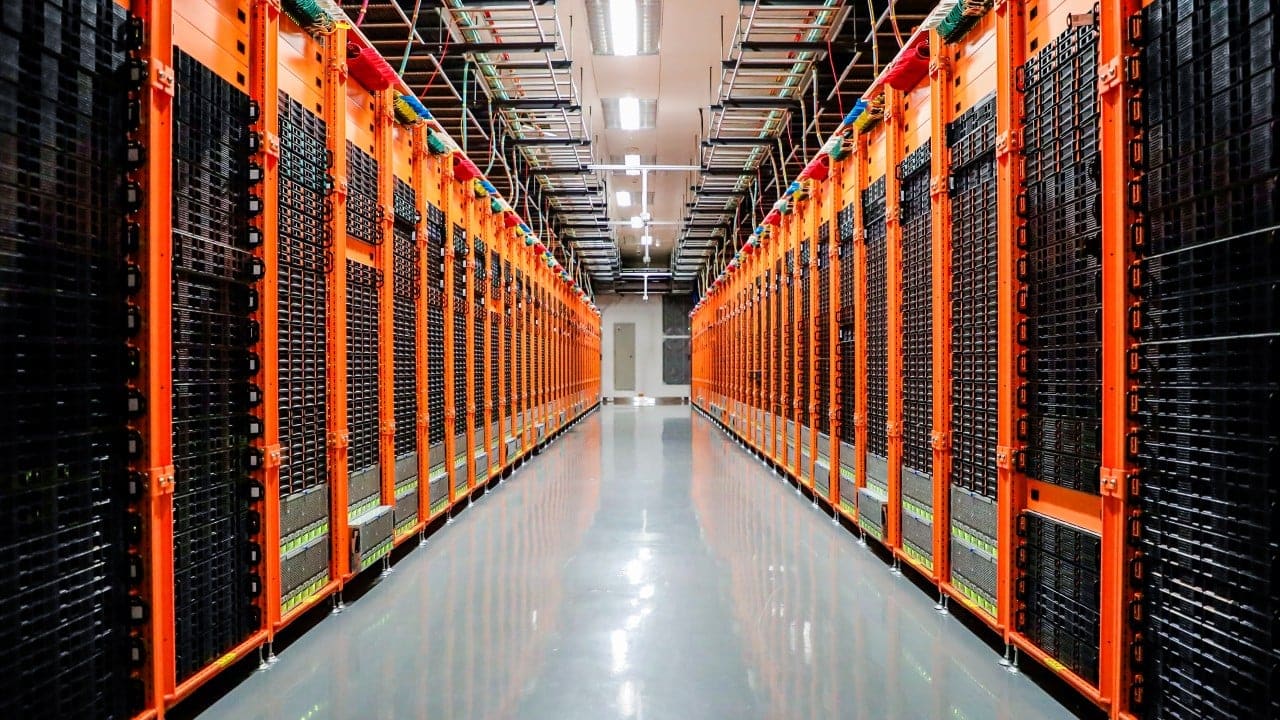
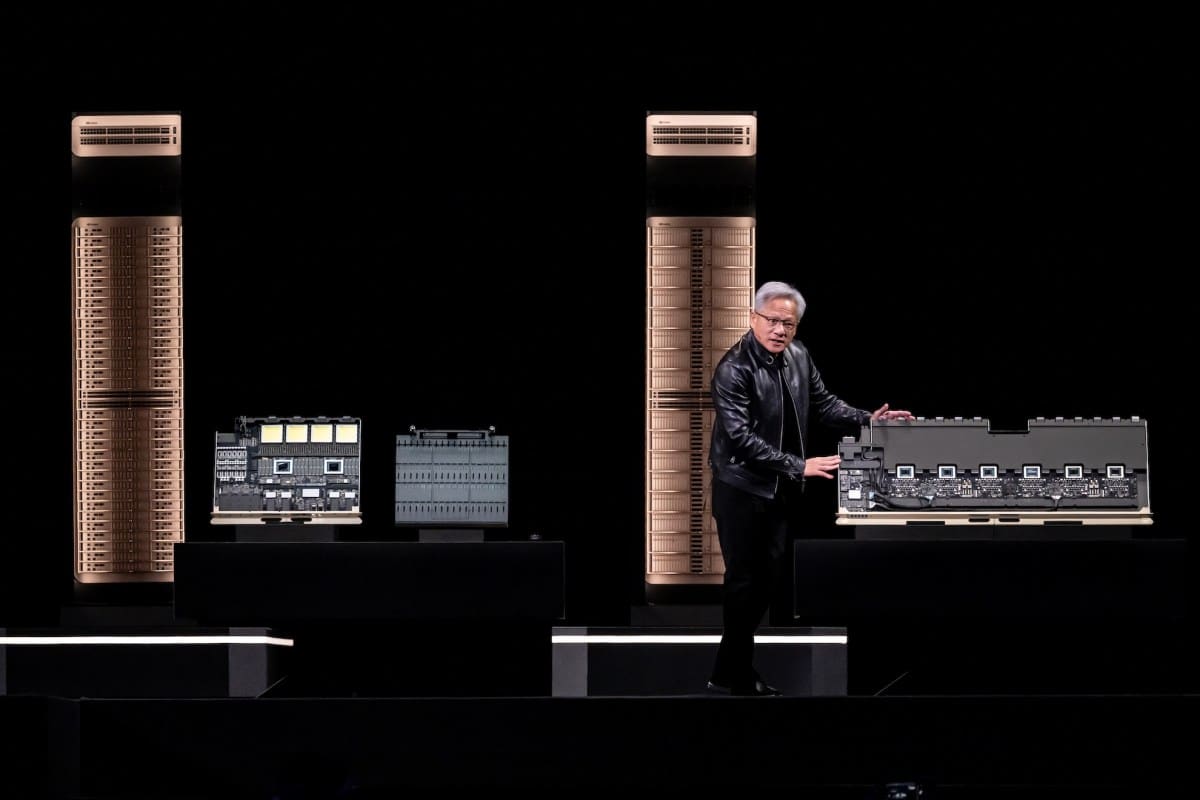
The Vera Rubin rollout pairs the Rubin GPU with a constellation of specialized units: the Vera CPU, the Groq 3 LPX inference accelerator, and dedicated racks for storage and networking. On paper, these look like accessories. In practice, they address the bottleneck that no amount of compute can solve: getting the right data to the right processor at the right microsecond.
Jason Hardy, who leads storage technology at Nvidia, framed the problem plainly. Memory capacity has scaled alongside compute, enriching suppliers like Micron in the process. But capacity means nothing if the data sits idle while the GPU waits. The Vera CPU exists to solve that choreography. According to Hardy, early deployments saw performance improvements approaching three times baseline in operations where the CPU handled data acceleration, unlocking the full throughput of flash storage that would otherwise bottleneck.
This is not a marginal gain. In environments where every watt translates to operating cost and every token of latency affects user experience, a 3x improvement in data movement efficiency is the difference between a viable product and one that bleeds margin.
The OpenAI Countermove
The same dynamic is visible in OpenAI's Jalapeño chip, announced earlier this month. Rather than compete on orchestration infrastructure, OpenAI's design tries to eliminate the problem entirely. By enlarging the integrated domain, Jalapeño keeps entire workloads within a single connected system, minimizing the need to shuttle data across buses and switches.
It's an elegant architectural choice, one that reflects the company's vertical integration and willingness to rethink the stack from scratch. But it also validates the underlying thesis: at this scale, efficiency comes from smarter logistics, not just more transistors. Whether you solve it with orchestration layers or monolithic chip design, the constraint is the same.
Why Hyperscaler Chips Don't Solve This
Amazon's Trainium and Google's TPU have closed much of the raw performance gap in training and inference. They're credible alternatives for workloads those companies control. But building a competitive GPU is only half the equation. The other half is ensuring that thousands of those chips, spread across racks and interconnected by miles of fiber and copper, can operate as a coherent whole without waiting on memory fetches, network hops, or storage I/O.
Nvidia's advantage here is structural. The company has spent years instrumenting every layer of the stack, from CUDA to NVLink to the firmware that manages power distribution. That telemetry feeds back into hardware design, creating a flywheel where each generation of products is optimized for the inefficiencies observed in the previous one. Hyperscalers can match the GPU, but matching the entire closed-loop system requires years of deployment data they don't yet have.
This is not to say Nvidia's position is unassailable. Google has deep experience running planetary-scale infrastructure. Amazon has spent a decade refining Nitro, its hardware virtualization layer. Both have the capital and talent to build orchestration systems that rival Nvidia's. But the competition has shifted from a singular product category to a multi-layer stack, and the incumbency advantage is significant.
The Tokens-Per-Watt Endgame
The focus on orchestration reflects a broader maturation in AI infrastructure. Early in the boom, the constraint was simply acquiring enough compute. Procurement was the bottleneck. Today, procurement is table stakes. The constraint is utilization: wringing maximum throughput from hardware that already exists, because adding another rack means another megawatt of power and another million dollars in cooling.
Companies optimizing for tokens per watt are realizing that the biggest inefficiencies lie outside the arithmetic units. A GPU idling for ten microseconds while waiting for a memory fetch is ten microseconds of wasted energy and lost throughput. Multiply that across a hundred-thousand-chip cluster, and the losses compound into material cost.
Nvidia's Vera CPU and associated infrastructure target exactly this inefficiency. They are not designed to train models or run inference. They are designed to ensure that the components that do those things never wait. In a market where every fractional improvement in efficiency translates to competitive advantage, that kind of specialization matters.
A New Layer of Competition
The shift to orchestration opens a different kind of competitive landscape. It's no longer sufficient to design a faster accelerator. Companies need expertise in interconnects, memory hierarchies, distributed systems, and thermal management. They need to understand how data flows through a rack, a row, and a building. They need firmware engineers who can optimize for power states and network engineers who can minimize tail latency.
This is a game that favors incumbents with broad portfolios and deep integration. Nvidia has been building this capability for years, often under the radar while the market focused on GPU specs. The result is a product line that increasingly resembles a data center operating system, not just a collection of chips.
The hyperscalers have the resources to compete here, and some are already moving. But the timeline is longer, the expertise harder to acquire, and the feedback loops slower than simply taping out a new ASIC. Nvidia's advantage in orchestration is not insurmountable, but it is real, and it will take years for rivals to catch up.
What This Means for the Next Buildout
As the AI infrastructure market enters its next phase, the terms of competition are changing. The early wave was about securing supply. The current wave is about maximizing what that supply can deliver. Companies that succeed will be those that treat the data center as a system, not a warehouse of discrete components.
Nvidia's pivot from GPU vendor to infrastructure platform reflects that shift. The Vera Rubin architecture is not just a chip launch. It's a statement about where the value will accrue in the next stage of the market. For investors who spent the past year worrying about GPU competition, this reframing is significant. The moat was never just about transistors. It was always about the system around them. Now the market is starting to price that in.