Alibaba Opens Brazil Cloud Centers to Anchor AI Play in South America
The Hangzhou company's first Latin American data facilities signal a regional bet on enterprise AI adoption as US-China competition reshapes global infrastructure markets.
A Regional Anchor in Latin America's Largest Economy
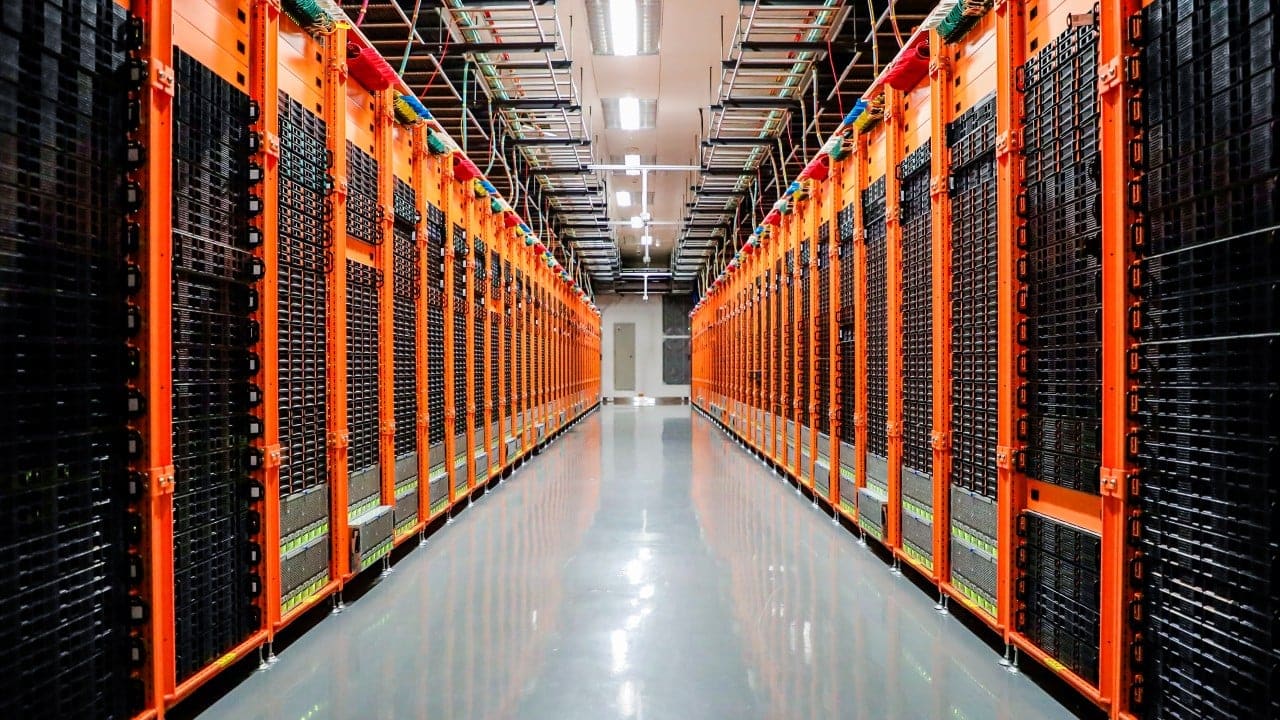
Alibaba has brought two data centers online in Brazil, establishing the company's first physical infrastructure presence in South America. The facilities will offer local enterprises cloud computing resources and what Alibaba describes as agentic AI services, a category of tools designed to automate decision-making and task execution with minimal human oversight.
The timing reflects a broader pattern we've tracked at DailyTechWire: Chinese hyperscalers are accelerating deployments in markets where US platform dominance remains incomplete. Brazil, with its 215 million population and expanding digital economy, represents the kind of scale that justifies ground-up infrastructure investment rather than reseller partnerships.
Why Brazil, Why Now
Brazil's digital transformation has been uneven but rapid. E-commerce penetration climbed from 6% of retail in 2019 to nearly 14% in 2025, according to data from the Brazilian Chamber of Electronic Commerce. Financial services, agriculture, and logistics have all digitized at pace, creating enterprise demand for compute capacity that can handle inference workloads close to end users.
Latency matters for real-time AI applications, whether that's fraud detection in payment systems or precision agriculture models processing satellite imagery. Hosting compute in-country cuts round-trip times to North American or Asian clouds by 80 to 150 milliseconds, enough to make interactive AI experiences feel responsive rather than sluggish.
Alibaba's move also comes as regulatory pressure mounts globally for data localization. Brazil's General Data Protection Law, effective since 2020, imposes strict rules on cross-border data transfers. In-country infrastructure simplifies compliance and reassures enterprise customers wary of sending sensitive data offshore.
The Agentic AI Pitch
Alibaba has framed the Brazilian launch around agentic AI, a term that has gained currency in the past year to describe systems that can plan multi-step workflows, invoke APIs, and execute tasks autonomously. These capabilities sit a layer above traditional machine learning inference: rather than simply classifying an image or generating text, an agentic system might book a service appointment, update inventory records, and notify stakeholders in sequence.
The practical appeal for enterprises is labor arbitrage. A Brazilian retailer, for instance, could deploy an agent to handle return requests, cross-reference warehouse stock, generate shipping labels, and update customer records without human routing at each step. The economics become compelling when wages for skilled operations staff are rising faster than cloud compute costs, a dynamic visible across much of Latin America.
Whether enterprises will trust these systems with unsupervised authority remains an open question. Early agentic deployments in Asia have shown high error rates when faced with edge cases or ambiguous instructions, requiring fallback to human review. Alibaba's challenge will be tuning reliability thresholds to match the risk tolerance of Brazilian customers, many of whom are experimenting with AI for the first time.
Competitive Landscape and US-China Dimensions
Alibaba is not entering a vacuum. Amazon Web Services has operated Brazilian data centers since 2011 and holds an estimated 32% share of the country's public cloud market, according to Synergy Research Group. Microsoft Azure and Google Cloud also maintain local infrastructure. Alibaba's late entry means it will compete on price, vertical-specific tooling, or both.
The US-China technology rivalry adds a geopolitical dimension. Washington has tightened export controls on advanced semiconductors and AI training systems, aiming to slow China's development of frontier models. But those controls do not extend to inference chips or cloud services built on older-generation hardware, leaving room for Chinese providers to compete aggressively in emerging markets on cost and localized support.
Brazil has not aligned itself with US technology restrictions and maintains pragmatic trade relationships with both Beijing and Washington. That neutrality gives Alibaba operational freedom that would be harder to secure in, say, India or parts of Southeast Asia where geopolitical sensitivities run higher.
Infrastructure Economics and Regional Expansion
Building data centers in Brazil is expensive. Power costs in São Paulo run roughly 40% higher than in Singapore or Virginia, and real estate prices in the country's commercial hubs have climbed steadily. Alibaba's willingness to absorb those costs suggests confidence in multi-year revenue growth sufficient to justify the capital outlay.
The two-facility launch also hints at redundancy planning. Enterprises shopping for cloud providers often require proof of failover capacity, especially for mission-critical workloads. A single data center is a single point of failure; two facilities in different availability zones provide the resilience needed to win large contracts.
Looking ahead, Brazil may serve as a beachhead for broader Latin American expansion. Argentina, Colombia, and Chile all have growing tech sectors and limited domestic cloud infrastructure. Once Alibaba establishes operational expertise and customer references in Brazil, replicating the model elsewhere in the region becomes tactically simpler.
What Remains Uncertain
Alibaba's announcement provided few specifics on capacity, chip architecture, or pricing. The company has not disclosed whether the Brazilian centers will run on its proprietary Yitian ARM-based processors or rely on x86 chips from Intel or AMD. That choice has downstream implications for performance, software compatibility, and long-term supply chain resilience.
The regulatory environment also carries risk. Brazil's data protection authority has been active in enforcement, and any misstep in handling customer data could trigger fines and reputational damage. Alibaba will need to invest in local legal and compliance teams to navigate a regulatory landscape that remains in flux.
Finally, the success of the agentic AI pitch depends on customer adoption, which is never guaranteed. If Brazilian enterprises remain cautious about delegating authority to autonomous systems, Alibaba's differentiation thesis weakens, and the competition reverts to a price war on commodity compute, a game AWS is well-equipped to win.
A Long Game in a Contested Market
Alibaba's Brazilian launch is a calculated bet that South America's AI adoption curve will steepen over the next five years and that being early with local infrastructure will yield durable competitive advantage. The company is playing a long game in a region where cloud penetration remains low and customer switching costs have not yet calcified.
Whether that bet pays off will depend on execution, on the pace of enterprise AI adoption, and on how geopolitical currents shape market access in the years ahead. For now, Alibaba has secured a foothold in a market that few other Chinese tech giants have prioritized, and that positioning, if leveraged well, could open doors across Latin America.