Andreessen Horowitz Bets $1.1 Billion on AI Hardware Infrastructure
Silicon Valley's storied venture firm pivots from software-first investing to back chips, data centers, and robotics as physical AI bottlenecks emerge

The Hardware Pivot
Andreessen Horowitz has raised $1.1 billion for a new fund aimed squarely at the physical layer of artificial intelligence, according to the firm. The "Machine Age" fund represents a notable departure for a venture capital house that built its reputation on software-first investing, from Facebook to GitHub to Slack.
The firm now argues that the next wave of AI advancement depends less on algorithmic breakthroughs and more on solving tangible infrastructure constraints: faster chips, denser memory hierarchies, power-efficient edge devices, and the sprawling real estate and cooling systems required to keep them running.
At DailyTechWire, we've tracked a broader pattern across venture portfolios in Seoul, Singapore, and the Bay Area over the past eighteen months. Firms that once dismissed hardware as capital-intensive and margin-thin are now scrambling to back semiconductor startups, custom silicon designers, and data center operators. The difference today is scale. A $1.1 billion single-thesis fund signals that Andreessen Horowitz believes the infrastructure gap is not a temporary bottleneck but a multi-decade build cycle.
What the Fund Will Target
The Machine Age fund will concentrate on several layers of the AI stack, according to Andreessen Horowitz. These include compute chips and memory technologies, interconnects that link processors within and across systems, edge devices that bring inference closer to sensors and cameras, and the supporting infrastructure of power distribution, cooling, and physical facilities.
The firm frames these investments as enabling "faster, more efficient systems" and "cheaper and higher-bandwidth memory across the memory hierarchy." In practical terms, that means backing companies designing application-specific integrated circuits for transformer models, startups engineering high-bandwidth memory modules, and perhaps even firms rethinking liquid cooling or modular data center construction.
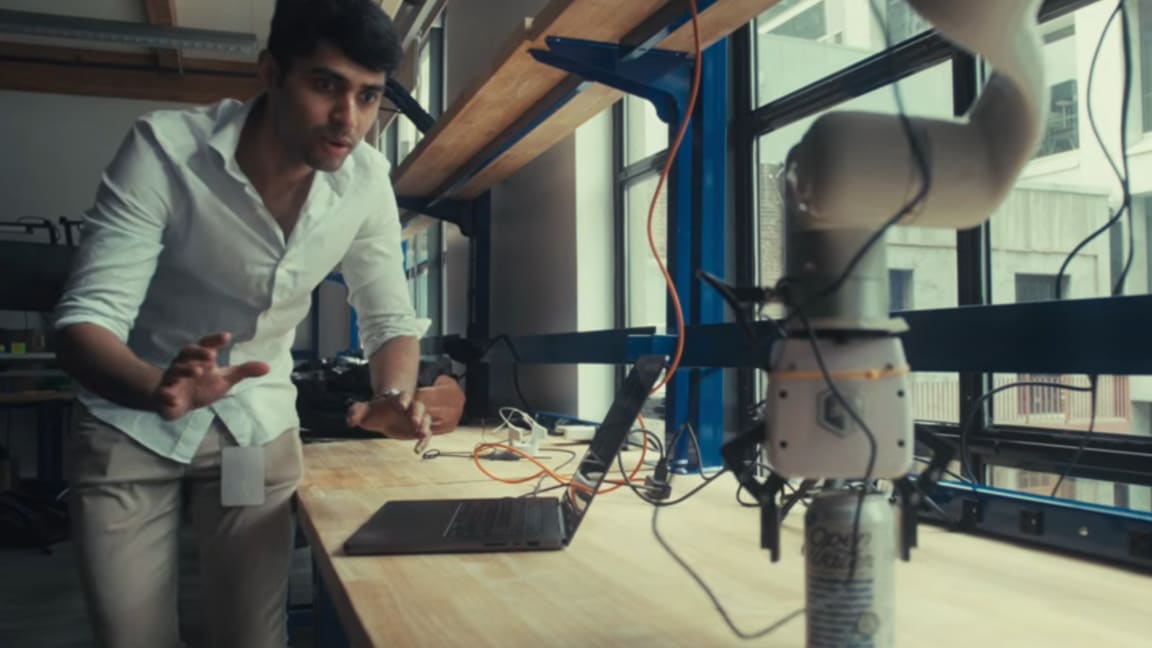
Robotics also falls within scope. As AI models move from cloud inference to embodied systems, whether autonomous vehicles, warehouse automation, or manufacturing robots, the demand for low-latency, power-constrained compute at the edge intensifies. Andreessen Horowitz describes a need for devices that allow AI to "explore and interact with the world," a framing that aligns with the firm's earlier bets on autonomous systems and industrial automation.
Why Hardware, Why Now
The timing reflects a structural tension in the AI industry. Training frontier models has become eye-wateringly expensive. Inference, once assumed to be cheap, now consumes massive bandwidth as millions of users query large language models daily. Memory bandwidth, not floating-point operations, often determines model throughput. And securing reliable power and cooling for GPU clusters has become a competitive moat in its own right.
Andreessen Horowitz calls AI advancement a "social and national imperative," language that echoes the geopolitical framing common in Washington and Brussels. Export controls on advanced chips, competition for TSMC capacity, and the race to secure rare-earth materials for semiconductors have all elevated AI infrastructure from a technical problem to a strategic one.
The fund's thesis also dovetails with a broader capital rotation. Software valuations compressed in 2023 and 2024 as interest rates rose and growth assumptions reset. Hardware, by contrast, offers tangible assets, long-term contracts with hyperscalers, and revenue streams tied to physical deployment rather than user engagement metrics. For limited partners seeking diversification within tech, infrastructure plays have regained appeal.
The Competitive Landscape
Andreessen Horowitz is far from alone. Sequoia Capital has backed multiple AI chip startups, including those designing inference accelerators and memory controllers. Kleiner Perkins has invested in cooling technologies and modular power systems. Benchmark has positions in robotics and edge compute. The question is less whether hardware merits venture capital and more whether traditional VC fund structures, with their ten-year horizons and expectation of rapid exits, align with the capital intensity and longer development cycles of semiconductor and infrastructure businesses.
Chip startups often require hundreds of millions of dollars to tape out a single design, validate it in production, and win customer adoption. Data center projects can take years to permit, construct, and commission. The Machine Age fund's $1.1 billion corpus suggests Andreessen Horowitz is prepared to write larger checks and hold positions longer than software investing typically demands.
The firm's track record in hardware is mixed. It has invested in defense tech, autonomous vehicles, and space startups with varying degrees of success. But it has not historically led the semiconductor or data center sectors the way it has dominated consumer internet and enterprise SaaS. Whether its software-honed playbook, emphasizing network effects and go-to-market velocity, translates to hardware businesses that depend on supply chain mastery and manufacturing partnerships remains an open question.
Implications for the Ecosystem
A fund of this size will influence pricing, talent allocation, and strategic priorities across the AI hardware ecosystem. Startups building custom silicon or memory technologies will find it easier to raise seed and Series A rounds if they can credibly position themselves as future Machine Age portfolio companies. Incumbents like NVIDIA, AMD, and Intel will face a new cohort of well-funded challengers, some targeting niche workloads, others aiming to displace established architectures altogether.
The fund may also accelerate consolidation. Andreessen Horowitz has historically been an active acquirer and merger facilitator within its portfolio. If several chip or infrastructure startups struggle to reach standalone scale, the firm could orchestrate roll-ups or orchestrate acquisitions by larger platform companies.
For Asia-based hardware players, the fund represents both opportunity and competition. Taiwanese foundries, Korean memory manufacturers, and Chinese AI chip designers already dominate key segments of the supply chain. Andreessen Horowitz's investments will likely concentrate in the United States and Europe, driven by export control considerations and national security concerns. But collaboration and licensing deals between Western startups and Asian manufacturers are inevitable, and the fund's capital could amplify demand for foundry capacity, advanced packaging, and high-bandwidth memory from suppliers across the region.
The Long Build Ahead
Andreessen Horowitz describes its goal as opening "the throttle" on AI's physical buildout. The metaphor is revealing. The firm believes the constraint is not ideas or algorithms but the slower, grittier work of fabricating chips, erecting data centers, and solving thermal and power challenges at scale.
Whether $1.1 billion is enough to move the needle in an industry where a single advanced fab costs upward of $20 billion is debatable. But venture capital has always been about catalyzing ecosystems, not funding them in their entirety. If the Machine Age fund helps a handful of startups prove out novel architectures, unlock bottlenecks in memory or interconnects, or demonstrate that AI infrastructure can be built faster and cheaper, it will have succeeded on its own terms.
The broader test is whether the venture model itself can adapt to hardware's realities. Software scales with marginal cost near zero. Hardware scales with supply chains, manufacturing yield, and logistics. The firms that navigate that transition will shape not only the AI industry but the future of venture capital itself.