OpenAI Turns Indian Free Users Into Revenue as IPO Looms
The AI lab is monetizing its 100 million Indian weekly users with advertising, starting with 50 brands and a ₹725 daily campaign minimum.
Monetizing India's Free Tier at Scale
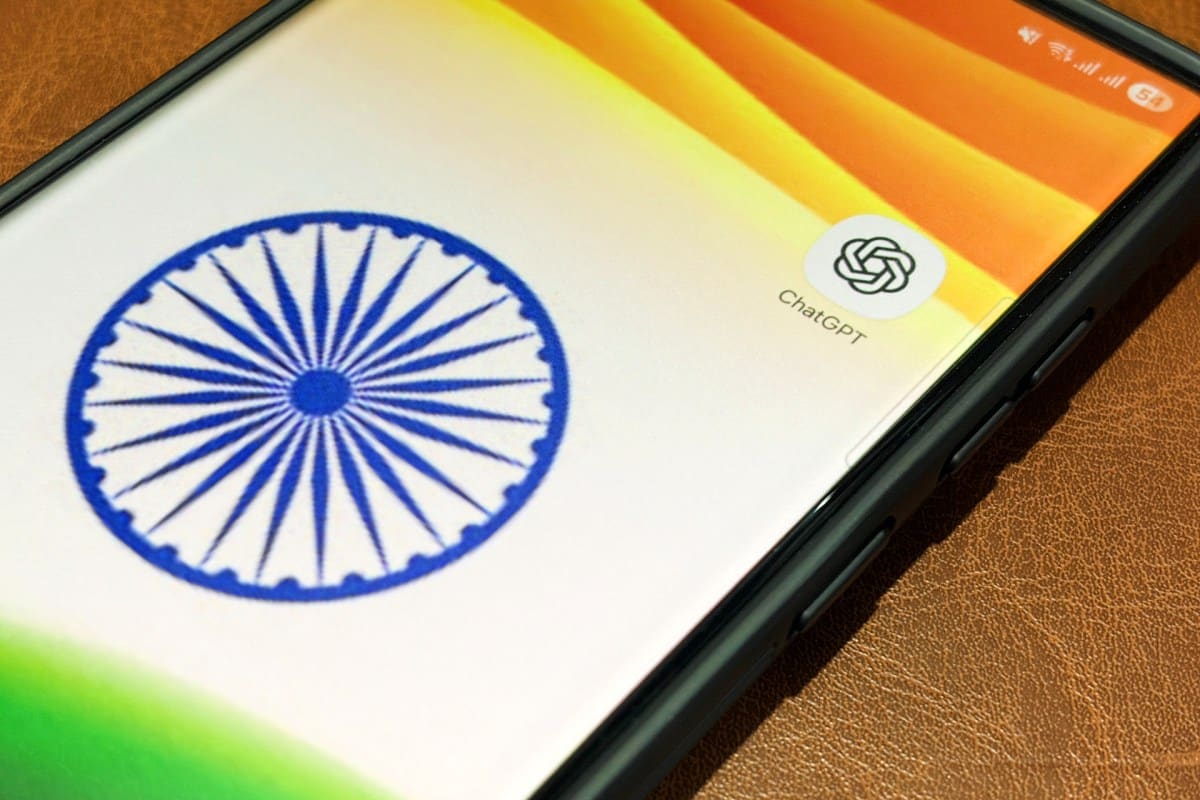
OpenAI has begun displaying advertisements to users of ChatGPT's free and Go subscription tiers across India, marking the company's third major geographic expansion of its advertising platform this year. The rollout targets an estimated 100 million weekly active users in the country, most of whom access the AI assistant through zero-cost or low-cost subscription plans.
The company announced it will initially partner with 50 brands, working through agencies WPP and Omnicom to serve contextual advertisements during chat sessions. An ad manager tool launching next month will open self-service campaign creation to marketers willing to commit a daily minimum spend of ₹725, roughly $7.60 at current exchange rates.
At DailyTechWire, we've tracked OpenAI's methodical approach to building out revenue streams beyond enterprise API contracts. The India advertising push follows similar launches in the United States in February and across Europe earlier this month, suggesting a coordinated global rollout timed to financial milestones rather than product readiness alone.
The India Playbook: Discounts, Cricket, and Critical Mass
OpenAI has invested heavily in user acquisition across India over the past eighteen months. In August 2025, the company introduced a sub-$5 monthly ChatGPT Go plan tailored specifically for the market, undercutting its standard international pricing. For a limited period, it offered that tier free for an entire year, a promotional tactic rarely seen in developed markets.
The company also secured high-visibility sponsorships during India's cricket tournaments, including the Women's Premier League and the Indian Premier League, both of which command viewership in the tens of millions. These moves helped establish brand recognition in a market where smartphone penetration far outpaces desktop use and where competitors like Google's Gemini and homegrown alternatives vie for attention.
More recently, OpenAI hired Uber's India head to oversee expansion efforts, signaling that the country is not merely a user-growth opportunity but a strategic revenue geography. The combination of mass adoption and advertising infrastructure now converts that user base into monetizable inventory.
Ad-Supported AI and the Context Advantage
Dave Dugan, who leads global ad solutions at OpenAI, framed the offering around "relevant, high-context moments when decisions are beginning to take shape." The pitch rests on the premise that conversational AI sessions reveal user intent more explicitly than traditional search queries or social media browsing.
A user asking ChatGPT for budget smartphone recommendations or travel itinerary suggestions presents a clearer signal than a Google search term or a Facebook scroll, theoretically allowing advertisers to serve more targeted messages. Whether users tolerate that intrusion in an interface they've come to expect as conversational and assistive remains an open question.
The ₹725 daily minimum positions the platform as accessible to mid-market advertisers rather than restricting inventory to multinational brands. That threshold is low enough to attract regional e-commerce players, direct-to-consumer startups, and local service providers, all of whom have shown willingness to experiment with emerging ad channels in India's competitive digital economy.
IPO Pressure and the Revenue Ramp
OpenAI's advertising expansion is unfolding against the backdrop of a widely anticipated initial public offering, expected either late this year or in early 2027. The company recorded $6.7 billion in revenue during the second quarter ending June 2026, up from $5.7 billion the prior quarter, according to financial data reviewed by industry analysts.
Those figures represent strong sequential growth, but they also underscore the company's need to demonstrate diversified revenue sources beyond enterprise contracts and premium subscriptions. Advertising offers a scalable, high-margin complement to API usage fees, particularly as competition intensifies from Anthropic, Google, and a growing roster of open-weight model providers.
Last November, internal projections cited by industry observers suggested OpenAI was targeting 220 million paying subscribers by 2030. At that time, approximately 35 million users subscribed to its Plus and Pro plans. The gap between current paid penetration and long-term targets makes the free and Go tiers critical not only for user retention but also for revenue generation through advertising.
The Asia Revenue Puzzle
India represents both opportunity and complexity for OpenAI. The country's digital advertising market is projected to grow at double-digit rates through the end of the decade, driven by mobile-first consumption and rising internet connectivity in tier-two and tier-three cities. Yet average revenue per user remains a fraction of what OpenAI extracts in North America or Western Europe.
Advertising allows the company to capture value from users unlikely to convert to paid plans while maintaining the free tier as a top-of-funnel acquisition channel. The model mirrors strategies employed by Meta, Google, and Spotify, all of which have successfully monetized massive Indian user bases through ad-supported tiers.
The risk lies in user experience degradation. If ads disrupt the conversational flow or erode trust in the assistant's neutrality, OpenAI could see churn among the very users it has spent heavily to acquire. The company has not disclosed ad frequency, placement formats, or whether responses will be labeled when influenced by paid partnerships.
Implications for the Broader AI Ad Market
OpenAI's move validates a business model that other AI labs have been cautious to embrace. Anthropic has remained ad-free, positioning Claude as a privacy-focused alternative. Google integrates ads into its Gemini experience more subtly, leveraging its existing search advertising infrastructure. Perplexity, meanwhile, has faced scrutiny over how it surfaces sponsored content alongside cited sources.
The India rollout also tests whether conversational AI can sustain the attention economy dynamics that have powered social media and search advertising for two decades. If users accept ads in ChatGPT without significant backlash, expect rapid expansion to other high-growth markets across Southeast Asia, Latin America, and Africa.
For advertisers, the platform introduces a new performance channel but also uncertainty around measurement. Traditional metrics like click-through rates and conversion pixels may not translate cleanly to a chat interface. OpenAI's ad manager will need to provide robust attribution tools if it hopes to compete for budget share against Meta's pixel-tracked campaigns or Google's search intent signals.
What Comes Next
OpenAI's phased geographic rollout suggests the company is learning as it scales. The U.S. launch provided initial data on user tolerance and advertiser demand. Europe added regulatory complexity, given GDPR constraints and the EU's AI Act. India now tests the model in a price-sensitive, mobile-first, hyper-competitive market.
If the India experiment succeeds, expect similar rollouts across Indonesia, Brazil, and Nigeria in the coming quarters. If user backlash materializes or advertiser ROI disappoints, OpenAI may retreat to premium-only advertising or rethink its free-tier economics altogether.
For now, the message is clear: OpenAI views advertising as a core pillar of its pre-IPO revenue story, and it's willing to risk user experience trade-offs to prove the model works at global scale.