OpenAI Quietly Ships iMessage Plugin While Apple Lawsuit Looms
The desktop integration raises questions about data access, corporate boundaries, and what happens when your chatbot wants to read your texts.
A Plugin That Needs the Keys to Your Kingdom
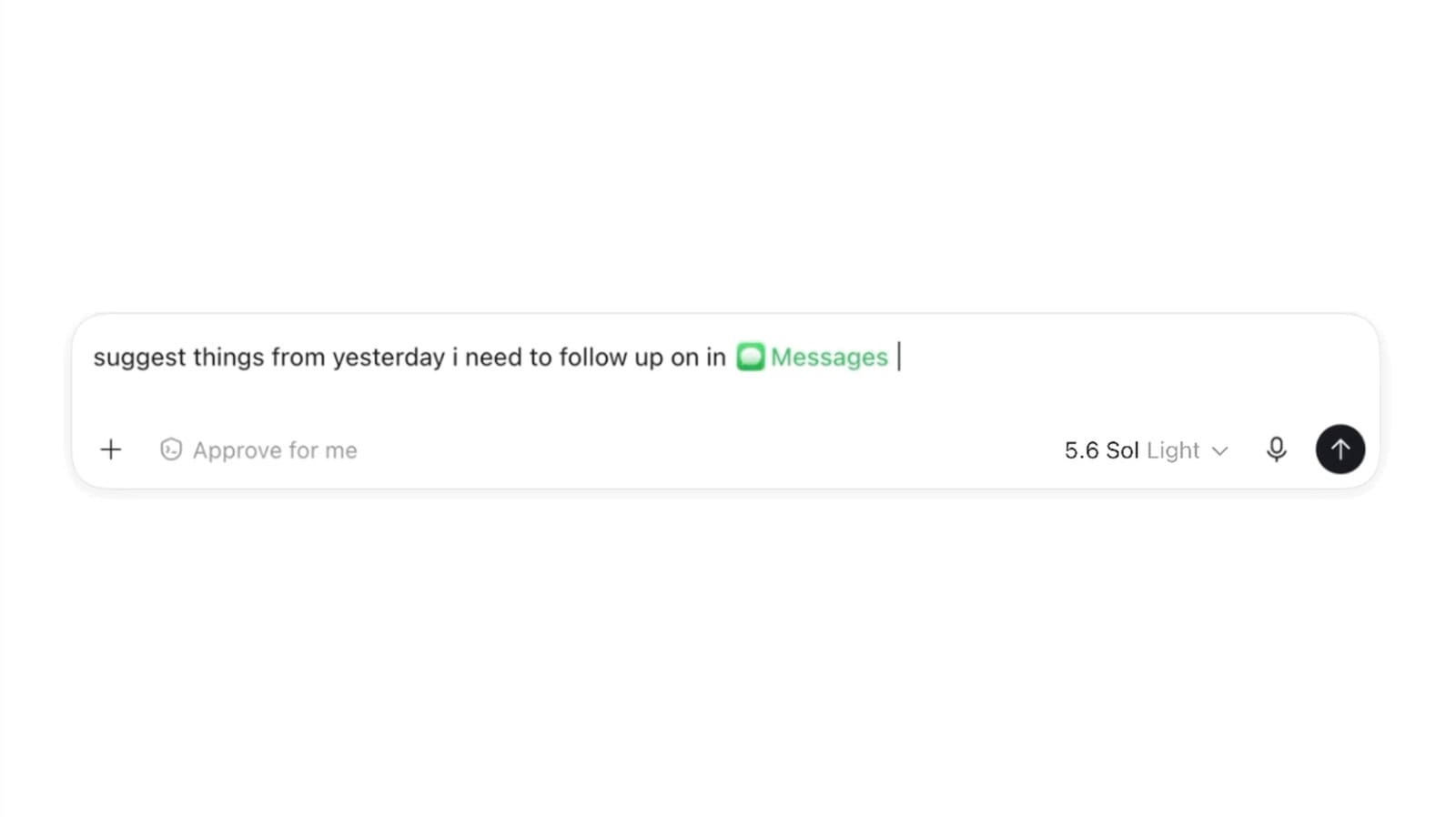
OpenAI has made ChatGPT capable of reading and responding to Apple iMessages on Mac, but only if you're willing to hand over significant system access. The new plugin, currently limited to ChatGPT Work and Codex subscribers, allows the AI assistant to scan message histories, draft replies, and send texts directly through the Messages app.
The setup process is deliberately multi-step. Users must grant ChatGPT access to their on-device Messages database when the initial permissions dialog appears. They'll then need to navigate into System Settings and enable Full Disk Access, a permission tier that Apple typically reserves for backup software and system utilities. The plugin also requests access to the user's contact list and Mac automation tools.
At DailyTechWire, we've tracked the gradual expansion of AI assistants into personal communication channels across Asia and North America. This move by OpenAI represents a more invasive integration than most: Full Disk Access theoretically allows an application to read nearly any file on a Mac, far beyond what's needed to parse iMessages. The permission model suggests OpenAI built the plugin without a dedicated API from Apple, instead relying on brute-force file access to the Messages SQLite database.
The Mechanics of Message Mining
In a demonstration shared by OpenAI, a user asks ChatGPT to surface conversations they missed the previous day. The chatbot retrieves relevant threads, summarizes them, and then composes a reply at the user's request. The workflow is seamless from the user's perspective, but the underlying architecture is revealing.
Apple's Messages app stores conversation data locally in a structured database. Third-party developers have historically accessed this data through unofficial means, reverse-engineering the schema or using accessibility APIs not intended for this purpose. OpenAI's approach appears to follow a similar path: the Full Disk Access requirement implies the plugin reads directly from the file system rather than interfacing with a sanctioned Apple framework.
This method has precedent, and it has consequences. In 2024, Apple repeatedly disabled Beeper Mini, a service that attempted to bring iMessage to Android by routing messages through Mac relay servers. Apple's rationale centered on security and user privacy. Beeper eventually abandoned the effort after multiple rounds of cat-and-mouse patching. The episode underscored Apple's stance: iMessage integrations that bypass official channels face existential risk.
Timing and Tensions
The plugin arrives during a particularly strained moment in the Apple-OpenAI relationship. In July, Apple filed a lawsuit accusing OpenAI of systematically recruiting its employees to extract confidential information. The complaint alleges that OpenAI targeted engineers with access to trade secrets related to machine learning infrastructure, chip design, and product roadmaps.
Neither company has commented on whether the iMessage plugin was developed collaboratively or if OpenAI proceeded independently. Apple's historical pattern suggests the latter. When third parties build integrations without explicit partnership, Apple has shown little hesitation in cutting off access, especially when those integrations touch core services like iMessage.
The legal backdrop adds a layer of uncertainty for enterprise customers evaluating the plugin. If Apple decides to block the integration through a macOS update or changes to file permissions, organizations that have woven ChatGPT into their communication workflows could face sudden disruption. This risk is not hypothetical. Apple has previously modified macOS security policies in ways that broke third-party tools, often framing the changes as necessary for user protection.
Enterprise Adoption and the Privacy Calculus
OpenAI's decision to limit the plugin to Work and Codex tiers signals an enterprise focus. These subscription plans target businesses and developers, users who may be more willing to navigate complex permission dialogs in exchange for productivity gains. The use case is straightforward: executives and remote teams who spend hours in ChatGPT for drafting, analysis, and coding now have a way to triage messages without leaving their AI workspace.
But the privacy implications are non-trivial. Full Disk Access grants ChatGPT the technical ability to read far beyond iMessages. While OpenAI has not indicated the plugin accesses other files, the permission itself is broad enough to include documents, emails stored locally, browser data, and application logs. Enterprise IT teams will need to weigh the convenience of integrated message handling against the expanded attack surface. If a user's OpenAI account were compromised, or if a vulnerability emerged in the plugin, the exposure would extend to the entire disk.
OpenAI has not disclosed whether message content is processed locally or sent to its servers for analysis. The company's standard ChatGPT terms allow user inputs to be used for model training unless explicitly opted out. For businesses subject to data residency regulations or handling sensitive client communications, this ambiguity could be a dealbreaker.
What Apple Might Do Next
Apple's response will likely hinge on how widely the plugin is adopted and whether it perceives a threat to iMessage's walled garden. The company has long positioned iMessage as a secure, end-to-end encrypted service. Allowing a third-party AI to parse those messages, even on-device, complicates that narrative.
One plausible scenario: Apple introduces a macOS update that restricts Full Disk Access for applications attempting to read the Messages database, effectively forcing integrations to use a new, sanctioned API. This would mirror Apple's approach with other sensitive data stores, such as location services and health records, where developers must use specific frameworks and undergo app review.
Another possibility is that Apple and OpenAI reach a formal agreement, especially if enterprise demand for the plugin proves strong. Apple has historically been willing to partner when the business case is compelling and the integration can be secured to its standards. The company's collaboration with Google to offer Google Maps within Apple services, despite years of competition, is one example.
For now, the plugin exists in a gray zone: technically functional, officially unsanctioned, and legally fraught. Users who enable it are making a bet that the integration will persist and that the privacy trade-offs are acceptable. For enterprises, that bet carries organizational risk.
The Broader Pattern
This iMessage plugin is part of a broader trend we've observed across the AI sector. As large language models become more capable, their developers are pushing them deeper into operating system layers and personal data streams. Microsoft's Copilot integrations with Windows, Google's Gemini hooks into Android, and now OpenAI's reach into macOS all follow the same logic: the more context an AI has, the more useful it becomes.
But context requires access, and access requires trust. In Asia, where data localization laws are stricter and government scrutiny of foreign AI platforms is intensifying, this model faces regulatory headwinds. In markets like Singapore, South Korea, and India, enterprises are increasingly required to demonstrate that employee communications remain within jurisdictional boundaries. An AI plugin that may route message content to U.S. servers complicates compliance.
The tension between utility and control will define the next phase of AI product development. OpenAI's iMessage plugin is an early test case, and how Apple responds will signal how much room the industry has to maneuver.