Nvidia Bets on MediaTek to Keep Hyperscalers Inside Its Data Center Orbit
A $3.5 billion stake turns a Taiwanese chip designer into a gateway for custom silicon that still speaks Nvidia's language.
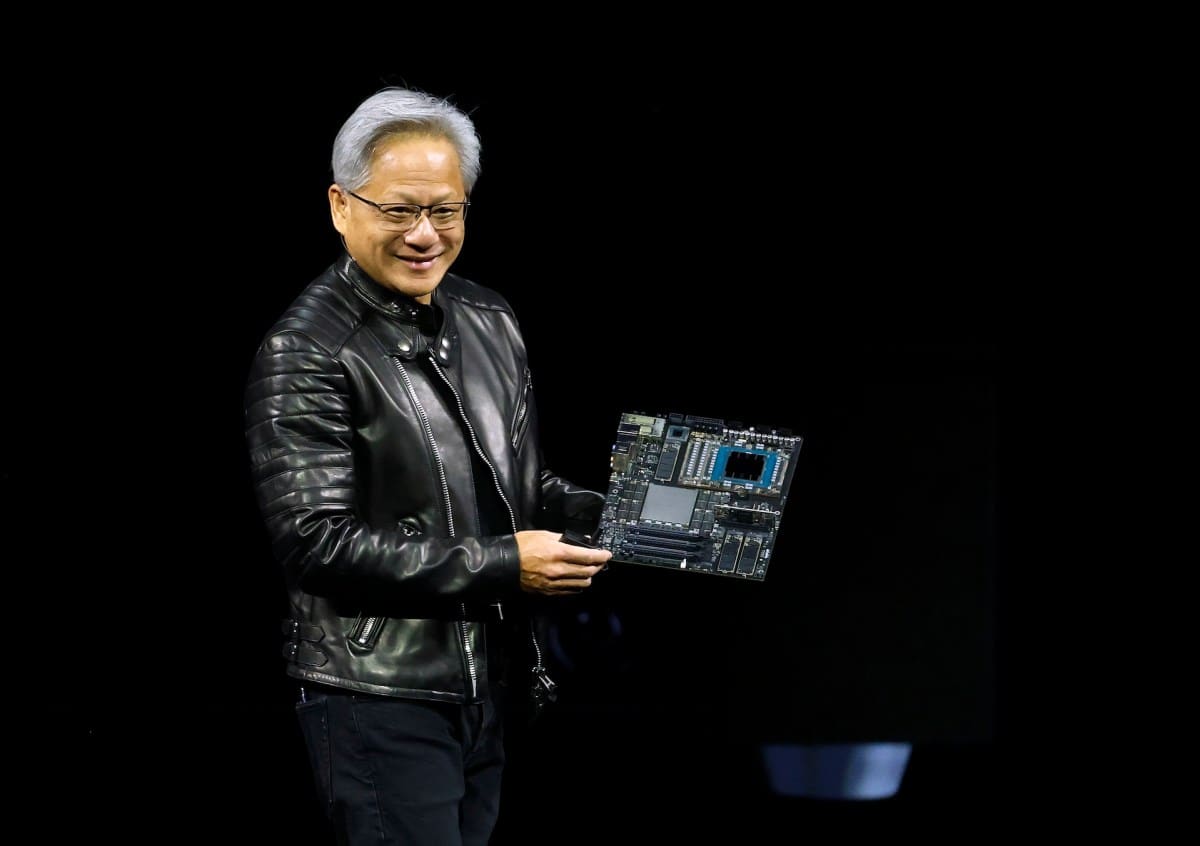
The Deal That Redefines Silicon Partnership
Nvidia has committed $3.5 billion to MediaTek, the Taiwanese semiconductor firm known for powering smartphones and consumer electronics. The investment comes with a strategic clause: MediaTek will integrate Nvidia's NVLink Fusion technology stack into its custom chip design operations, enabling the Taiwan-based company to produce application-specific integrated circuits that plug directly into Nvidia-based data center infrastructure.
The arrangement addresses a tension that has been building across the AI industry. Over the past eighteen months, major cloud providers including Amazon Web Services, Google Cloud, and Microsoft Azure, alongside AI labs such as OpenAI and Anthropic, have poured resources into developing proprietary accelerators. The goal is clear: reduce dependence on Nvidia's flagship GPUs, which currently command an estimated 85% of the data center AI accelerator market.
At DailyTechWire, we've tracked this shift closely. What Nvidia has executed here is not a defensive retreat but a repositioning. By licensing its interconnect technology and rack-scale architecture to a contract manufacturer with established relationships across the cloud ecosystem, the company ensures that even custom chips become nodes in an Nvidia-defined network fabric.
Ceding the Chip, Capturing the Infrastructure
Dion Harris, Nvidia's senior director of HPC and AI hyperscaler infrastructure solutions, described the company's posture during a call with reporters: "Nvidia is an AI infrastructure company. We expanded beyond pure computing chips years ago."
That framing is deliberate. NVLink Fusion, the technology suite at the center of the MediaTek partnership, includes NVLink interconnect protocols that govern chip-to-chip communication within racks and across clusters. In practical terms, this means a custom ASIC designed by MediaTek for a hyperscaler customer can interface seamlessly with Nvidia GPUs, storage controllers, and networking switches already deployed in that customer's data center.
The architecture creates a form of lock-in that operates one layer above the silicon itself. A cloud provider may design its own inference accelerator to reduce per-unit costs, but if that accelerator must communicate with training clusters, memory pools, or other workloads running on Nvidia hardware, adopting NVLink Fusion becomes the path of least resistance. Harris made the point explicit: standardizing on Nvidia's rack-scale platform allows customers to deploy custom chips "right alongside" Nvidia GPUs using the same infrastructure fabric.
Amazon Web Services announced a similar arrangement last week, committing to deploy an additional two million Nvidia GPUs and integrate NVLink Fusion across its infrastructure, though without the direct equity investment that characterizes the MediaTek deal.
MediaTek's Custom Silicon Ambitions
MediaTek has been expanding its data center ASIC operations over the past two years, a strategic pivot from its traditional stronghold in mobile and consumer devices. In June, the company disclosed that it expects its custom chip business to generate $2 billion in revenue for 2026, a figure that represents roughly 6% of its total projected revenue based on analyst estimates.
The Nvidia partnership provides MediaTek with both capital and technical scaffolding to accelerate that trajectory. Access to NVLink Fusion and Nvidia's rack-scale design methodologies lowers the barrier for MediaTek to pitch its services to hyperscalers that already operate Nvidia-based infrastructure. For those customers, commissioning a custom chip from MediaTek no longer requires re-architecting data center networking or rewriting low-level communication libraries.
MediaTek has not publicly disclosed its current ASIC customer roster, but industry context suggests the list includes at least one major cloud provider and several AI-native companies building inference engines for language models and recommendation systems. The Nvidia deal positions MediaTek to compete more directly with established ASIC vendors such as Broadcom and Marvell, both of which have reported surging demand for custom AI chips over the past year.
Beyond the Data Center
The partnership extends into adjacent markets where Nvidia has been expanding its footprint. MediaTek will continue collaborating on DGX Spark, Nvidia's compact desktop system aimed at developers, and RTX Spark, the company's push to embed AI acceleration into consumer PCs. Both product lines target edge inference workloads and local model fine-tuning, use cases that have gained traction as developers seek to reduce latency and cloud API costs.
The automotive vertical is another shared focus. MediaTek's in-vehicle infotainment platforms already incorporate Nvidia RTX graphics for cockpit displays and integrate with Nvidia Drive AGX, the company's compute platform for autonomous driving functions. The partnership statement indicates the two companies will "develop platforms for AI-powered, software-defined vehicles," language that suggests deeper integration of MediaTek's system-on-chip designs with Nvidia's sensor fusion and planning software.
Nvidia CEO Jensen Huang framed the deal in expansive terms: "AI is transforming every computing platform, from the world's largest AI factories to the PC and the car. Together, we're building platforms that bring Nvidia accelerated computing to new markets and give customers the freedom to create differentiated AI systems at enormous scale."
That final phrase, "freedom to create differentiated AI systems," encapsulates the strategic paradox. Customers gain the ability to design custom silicon tailored to specific workloads, but that differentiation occurs within guardrails defined by Nvidia's interconnect standards and software stack.
The Circular Economics of Ecosystem Investment
The MediaTek investment follows a pattern Nvidia has refined over the past three years. The company has taken equity stakes in dozens of AI startups, cloud infrastructure providers, and semiconductor firms, often structured as convertible notes or preferred shares that align those companies' growth with Nvidia's own platform expansion.
CoreWeave, the GPU cloud provider, received Nvidia backing in 2023 and now operates one of the largest concentrations of H100 and H200 accelerators outside the major hyperscalers. Lambda Labs, another Nvidia-backed infrastructure startup, has built its business around offering on-demand access to Nvidia GPUs for training and inference. In each case, the investment creates a customer that amplifies demand for Nvidia's core products while extending the company's reach into market segments it does not serve directly.
The MediaTek deal operates on similar logic but with a crucial difference: rather than funding a customer, Nvidia is funding a supplier that will, in turn, serve Nvidia's customers. The circularity is more complex, but the outcome is the same. MediaTek's custom chips will drive adoption of NVLink Fusion, which reinforces Nvidia's position as the de facto standard for data center AI communication.
Risks and Constraints
The strategy is not without vulnerabilities. If a consortium of hyperscalers were to standardize on an alternative interconnect protocol, such as AMD's Infinity Fabric or an open standard like CXL (Compute Express Link), Nvidia's leverage over custom silicon would diminish. CXL, in particular, has gained support from Intel, AMD, Arm, and several cloud providers as a vendor-neutral approach to memory and accelerator interconnects.
Nvidia has responded by making NVLink Fusion more modular and interoperable, allowing customers to integrate it with existing infrastructure rather than requiring full-stack replacement. The company has also opened portions of its software stack, including CUDA libraries and TensorRT optimization tools, to third-party accelerators, a move that reduces friction for customers evaluating non-Nvidia chips.
Another constraint is MediaTek's own execution capacity. Scaling a custom ASIC business requires not only design expertise but also close collaboration with foundry partners, primarily TSMC, to secure advanced node capacity. TSMC's 3nm and 2nm production lines are heavily allocated to Apple, Qualcomm, and other high-volume customers, leaving limited room for newcomers. MediaTek's ability to deliver on the $2 billion revenue target will depend in part on its ability to secure wafer allocation at competitive pricing.
What This Signals for the AI Chip Landscape
The MediaTek investment underscores a broader shift in how dominance is maintained in the AI hardware market. As training workloads consolidate around a small number of frontier model developers and inference workloads fragment across thousands of applications and edge deployments, the competitive battleground is moving from chip performance to system integration.
Nvidia's competitors, notably AMD and Intel, have focused primarily on matching GPU specs: FLOPS, memory bandwidth, power efficiency. The NVLink Fusion strategy suggests that those metrics, while important, are insufficient. The real moat lies in the software stack, the interconnect fabric, and the installed base of infrastructure that makes switching costs prohibitive.
For hyperscalers, the calculus is evolving. Custom chips can reduce marginal costs for high-volume inference workloads, but only if those chips can coexist with existing infrastructure and tooling. Nvidia's bet is that by making coexistence easy, it can shape the custom silicon market to its advantage rather than being displaced by it.
For MediaTek, the partnership offers a path to diversify beyond consumer electronics into higher-margin enterprise and data center markets. Success will require not only technical execution but also navigating relationships with hyperscaler customers that view chip design as a strategic capability and are wary of vendor lock-in.
The $3.5 billion price tag reflects the stakes. Nvidia is not simply acquiring influence over a supplier; it is funding the construction of an on-ramp that channels custom silicon development into its own ecosystem. Whether that on-ramp becomes the default path or merely one option among many will shape the data center landscape for the next decade.