Nevada Opens the Floodgates: 7,000 Paid Robotaxis Coming to Las Vegas
State regulators just approved the largest commercial autonomous vehicle deployment in US history, with Tesla, Waymo, and Uber racing to put thousands of driverless cabs on the Strip
The Biggest Bet on Autonomous Vehicles Yet
The Nevada Transportation Authority handed down approvals on August 20th that will reshape urban mobility in Las Vegas over the next twelve months. Three companies, Tesla, Waymo, and Uber, received Autonomous Vehicle Network Company permits authorizing them to operate paid, driverless taxi services across Clark County. The combined ceiling: 7,000 robotaxis.
Tesla secured the largest allocation, with permission to deploy up to 5,000 vehicles. Waymo and Uber each received approval for 1,000 units. The scale dwarfs existing autonomous taxi programs in San Francisco and Phoenix, where Waymo currently operates several hundred vehicles, and sets Nevada up as the proving ground for whether robotaxi economics can work at fleet scale.
At DailyTechWire, we've tracked autonomous vehicle policy across Asia and North America for three years. This approval represents a regulatory philosophy distinctly different from California's cautious, incremental approach. Nevada is making a calculated wager that rapid deployment, not slow-walk permitting, will surface the operational and safety lessons the industry needs.
Tesla's Statewide Ambitions and Emergency Protocols
Tesla's permit carries statewide coverage, provided the company notifies regulators before expanding beyond Clark County. That flexibility is unusual. Most AV permits are geographically bounded to specific metro zones, reflecting regulators' desire to monitor performance in contained areas before allowing wider rollout.
During the August 20th session, Tesla outlined coordination efforts with Nevada law enforcement to produce a five-minute instructional video for first responders. The video will walk officers and paramedics through step-by-step procedures for handling emergencies involving Tesla's autonomous vehicles, addressing a recurring concern in AV incidents: how to safely disable, move, or extract passengers from a vehicle with no human driver.
Tesla also tempered deployment expectations. While the permit allows up to 5,000 robotaxis, the company told regulators it would be "extremely happy" to reach 2,500 vehicles on Nevada roads by the end of 2027. That timeline suggests a staged rollout, likely beginning with high-traffic corridors along the Strip and gradually expanding to residential neighborhoods and McCarran International Airport routes.
The gap between permitted capacity and realistic targets is revealing. It acknowledges the operational complexity of fleet management, vehicle maintenance, remote assistance infrastructure, and the reality that hardware production and software validation often lag ambitious regulatory approvals.
Waymo's Paid Transition and Uber's Partnership Model
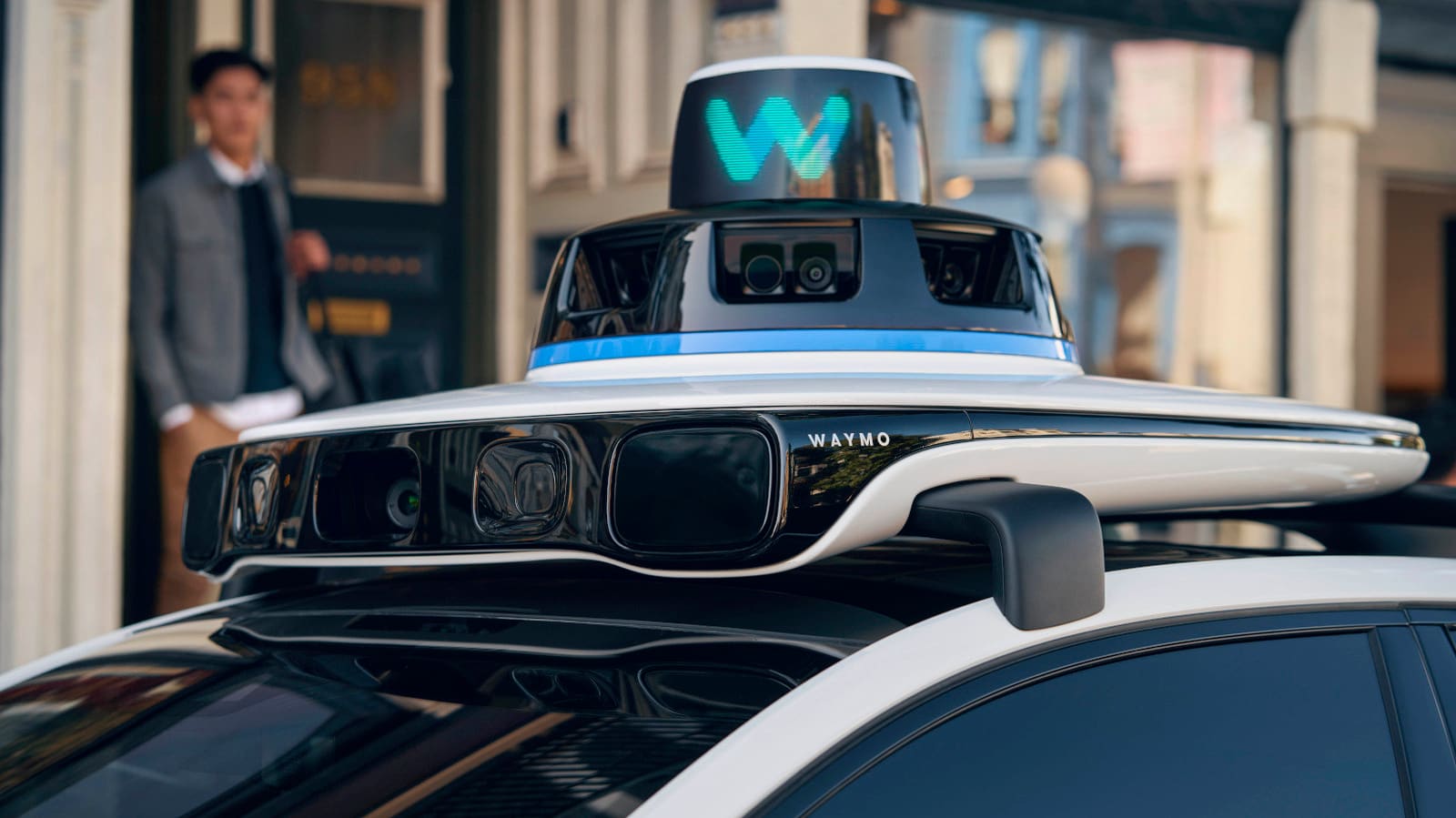
Waymo's approval marks a business model shift. The company has operated fully driverless vehicles in Las Vegas since July, but without charging passengers. The new permit removes that restriction, allowing Waymo to convert its Nevada operations from a data-gathering exercise into a revenue-generating service.
Waymo's 1,000-vehicle cap is smaller than Tesla's, but the company enters Nevada with more operational experience. Its Phoenix and San Francisco fleets have logged millions of paid miles, and its sensor suite, lidar, radar, and camera arrays, has been refined over years of real-world deployment. The question for Waymo is whether its premium hardware costs can be offset by the density and utilization rates achievable in a tourism-heavy city like Las Vegas.
Uber's approval is structurally different. The ride-hailing giant will not build or operate its own autonomous vehicles. Instead, it will integrate robotaxis from Amazon's Zoox and Hyundai's Motional into its existing app platform. This asset-light model lets Uber expand its autonomous offerings without the capital expenditure of vehicle manufacturing or the liability exposure of operating the self-driving stack.
Zoox brings a purpose-built robotaxi, a bidirectional, symmetrical vehicle with no steering wheel, designed exclusively for autonomous operation. Motional, a joint venture between Hyundai and Aptiv, has been testing its Ioniq 5-based robotaxis in Las Vegas since 2020. Uber's role is demand aggregation and dispatch optimization, leveraging its user base to feed ride requests into partner fleets.
Why Las Vegas, and Why Now
Las Vegas is an ideal testbed for several reasons. The city's economy depends on tourism, which generates predictable, high-volume transportation demand concentrated along the Strip and between hotels, casinos, convention centers, and the airport. That density supports the utilization rates autonomous fleets need to be economically viable.
The regulatory environment is also favorable. Nevada has courted autonomous vehicle companies since 2011, when it became the first US state to pass legislation authorizing driverless testing. The state's Transportation Authority has historically moved faster than California's DMV or Public Utilities Commission, approving pilots and commercial permits with fewer bureaucratic layers.
Weather is another factor. Las Vegas's dry, sunny climate reduces the sensor and perception challenges that rain, snow, and fog pose for computer vision and lidar systems. Fewer edge cases mean faster validation cycles and lower intervention rates, critical metrics for companies trying to prove their systems are safer than human drivers.
The timing aligns with a broader industry inflection point. After years of testing and limited pilots, autonomous vehicle companies are under pressure from investors to demonstrate commercial traction. Waymo, backed by Alphabet, has spent an estimated $30 billion on development. Tesla has promised full self-driving capability for years, and its valuation partly depends on delivering it. Uber's pivot from building its own AV program to partnering reflects the capital intensity and long timelines that have forced consolidation across the sector.
The Operational Realities Ahead
Deploying thousands of robotaxis is not a software update. It requires physical infrastructure: vehicle depots for charging, cleaning, and maintenance; remote operations centers staffed around the clock to handle edge cases and system failures; and field teams to respond when a vehicle gets stuck, blocked, or involved in a collision.
Fleet utilization will determine profitability. A robotaxi that sits idle for 18 hours a day loses money. The companies will need to optimize dispatch algorithms, predict demand surges around conventions and sporting events, and manage the geographic imbalance between tourist-heavy zones and residential areas where vehicles need to reposition between rides.
Public acceptance is another variable. Las Vegas draws 40 million visitors annually, many of whom will encounter a robotaxi for the first time. How those riders react, whether they trust the technology, whether they tip (and how that works without a driver), and whether they share their experiences on social media, will shape adoption curves.
Safety incidents will be scrutinized. A single high-profile crash, especially one involving a pedestrian or cyclist, can trigger regulatory backlash and public skepticism. Tesla, Waymo, and Uber will be operating under intense media and regulatory oversight, with every disengagement, collision, or system failure logged and, in many cases, made public.
What It Means for the Broader AV Industry
Nevada's approvals send a signal to other states and cities evaluating their own autonomous vehicle policies. If the Las Vegas deployment proceeds without major safety incidents and demonstrates measurable benefits, reduced congestion, lower emissions, improved accessibility, it will embolden regulators elsewhere to issue similar permits.
If the rollout stumbles, expect a chilling effect. Legislators and transportation agencies in Texas, Arizona, Florida, and other states considering large-scale AV approvals will pull back, demanding more testing, more data, and more proof before opening their roads to commercial robotaxi fleets.
For the companies, Nevada is both opportunity and risk. Tesla can use the deployment to validate its camera-only approach to autonomy, a strategy that has drawn criticism from engineers who argue lidar is essential for safe operation. Waymo can leverage its operational maturity to capture market share and build brand trust. Uber can test whether its platform model, aggregating multiple AV partners under one app, can deliver the seamless user experience that made it dominant in human-driven ride-hailing.
The next twelve months will reveal whether the robotaxi future arrives in Las Vegas, or whether the gap between regulatory approval and operational reality remains too wide to cross.