Meta Tests Robotic Arms to Automate Data Center Operations
The social media giant is piloting hardware from multiple vendors to handle cable swaps and server resets, aiming to control labor costs as AI infrastructure spending accelerates.
The Automation Push Inside Meta's Server Farms
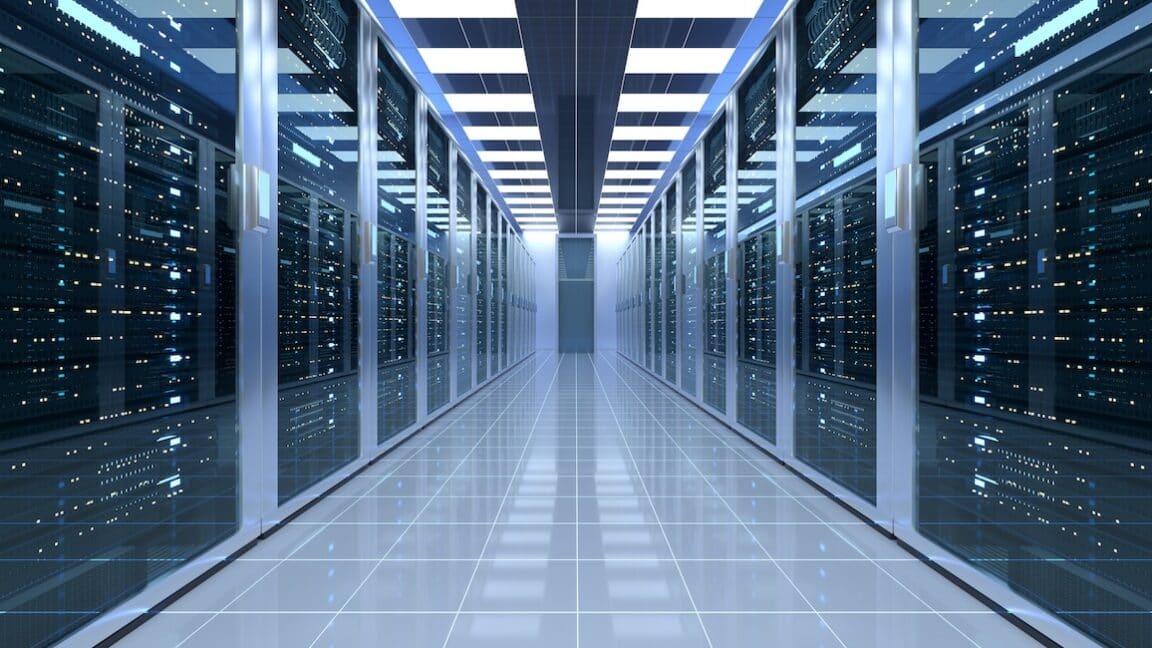
Meta has begun evaluating robotic systems capable of performing routine maintenance tasks inside its data centers, including cable swapping and server power cycling. Multiple workers at the company confirmed the pilot programs are underway, though the initiatives have remained largely under wraps until now. The effort represents one of the tech industry's most concrete attempts to reduce human labor in facilities that have traditionally required hands-on technicians.
The company is drawing hardware from at least three robotics suppliers: Watney Robotics, Kinova, and ABB. Each vendor brings different capabilities to the table, from articulated arms to mobile platforms designed for constrained industrial environments. One of the systems under evaluation is Kinova's Gen3 robotic arm, which Meta is testing for power cycling operations - essentially cutting and restoring electricity to individual servers when remote resets fail or maintenance windows require physical intervention.
Why Data Center Automation Matters Now
At DailyTechWire, we've tracked the ballooning capital expenditure across hyperscale operators in Asia and North America. Meta's own infrastructure spending has climbed sharply in the past eighteen months, driven by training runs for large language models and inference workloads that demand thousands of GPUs running around the clock. Those clusters generate heat, require dense networking, and produce a steady stream of hardware failures that today still need human hands to resolve.
Labor accounts for a meaningful - if often opaque - slice of total cost of ownership in data center operations. Technicians on the floor handle everything from replacing failed drives to re-seating network cables when a port goes dark. If a robotic arm can swap a fiber-optic patch cable or flip a breaker with the same reliability as a human, the economic case becomes straightforward: one robot can work multiple shifts without overtime, benefits, or turnover.
What the Robots Can and Cannot Do
The cable-swapping robot Meta is testing could, according to one data center technician familiar with the project, handle up to 80 percent of certain workloads currently performed by people. That figure reflects tasks that are repetitive, well-defined, and occur in predictable locations - precisely the kind of work robotics excels at. Swapping Ethernet or fiber cables between racks, for instance, follows a known sequence: identify the port, release the latch, remove the old cable, insert the new one, verify the link comes up.
Power cycling is similarly procedural. When a server locks up and software commands fail, a technician walks to the rack, locates the breaker or power distribution unit, cuts power, waits, then restores it. A robotic arm equipped with the right end effector - a gripper or actuator - can perform the same motion, provided the environment is standardized and the robot's vision system can reliably identify the target switch.
What remains difficult is anything that requires judgment, improvisation, or fine motor skills in unpredictable conditions. Diagnosing why a server failed, tracing a cable through a tangled bundle, or working around an unexpected obstruction still favor human flexibility. The robots Meta is testing are not general-purpose androids; they are task-specific machines that operate within carefully bounded scenarios.
The Human Cost and the Broader Trend
One worker at a Meta data center expressed concern that automation is arriving faster than many technicians anticipated. "We thought those of us performing the physical tasks were safe for a while, but not anymore," the worker said. The sentiment reflects a broader anxiety in the industry: if even manual, on-site roles can be automated, few job categories remain insulated from displacement.
Meta is not alone. Hyperscalers and colocation providers across the region have been experimenting with autonomous mobile robots for rack inspections, thermal imaging, and asset tracking. What distinguishes Meta's effort is the focus on manipulation - actually touching and moving hardware - rather than just sensing and reporting. That leap from passive monitoring to active intervention marks a new phase in data center automation.
The timing aligns with the capital intensity of AI infrastructure. Training a frontier model can require tens of thousands of GPUs, each generating 300 to 700 watts of heat, all networked with low-latency fabrics that demand meticulous cable management. The scale makes manual operations a bottleneck. If a single technician can service a dozen racks per shift, and a facility houses thousands of racks, the headcount grows quickly. Robots, in theory, compress that curve.
Vendor Landscape and Technical Readiness
Kinova, a Canadian robotics firm, specializes in lightweight robotic arms originally designed for assistive applications and research. The Gen3 model offers six or seven degrees of freedom, enough dexterity to navigate tight spaces between server racks. ABB, a Swiss industrial automation giant, brings decades of experience in factory robotics and has been moving into logistics and service environments. Watney Robotics, less widely known, focuses on mobile manipulation platforms that combine mobility with arm-based tasks.
None of the three vendors commented on the Meta projects, and Meta itself has not publicly disclosed details. The secrecy is typical for infrastructure pilots, especially when labor implications are sensitive. If the trials succeed, however, the companies involved will likely highlight Meta's deployment as a reference case, accelerating adoption elsewhere.
Technical readiness remains a question. Robotics in structured environments - automotive assembly lines, semiconductor fabs - has been mature for years. Data centers, by contrast, are semi-structured: racks and aisles follow a layout, but cable routing, equipment mix, and failure modes vary. Teaching a robot to handle that variability without constant human supervision requires robust computer vision, path planning, and error recovery. The 80 percent workload figure cited by the Meta technician suggests the technology is not yet capable of full autonomy, but it is closing in on practical utility.
What Comes Next
If Meta's pilots prove successful, the next step will be scaling: moving from a handful of robots in one or two facilities to fleets distributed across dozens of data centers worldwide. That transition will require standardization - uniform rack designs, consistent cable color codes, predictable power distribution layouts - all of which may influence how Meta designs its next generation of infrastructure.
The implications extend beyond Meta. Other hyperscalers watch each other's moves closely, and a validated automation playbook at Meta will invite imitation. The cost pressures are universal: every major cloud provider and AI lab is grappling with the same physics of power, cooling, and uptime. If robots can meaningfully reduce operational expense while maintaining reliability, adoption will spread quickly.
For the technicians on the ground, the question is not whether automation arrives, but how fast and how far it goes. The roles that remain will likely tilt toward oversight, troubleshooting edge cases, and managing the robots themselves. The jobs that disappear will be the ones most easily reduced to repeatable procedures - precisely the work that, until recently, seemed too physical to automate.