How Decades of Mining Automation Are Shaping Caterpillar's AI Strategy
The industrial giant is translating hard-won lessons from autonomous haul trucks and drills into enterprise AI deployment, backed by a $100 million workforce training push.
From Haul Trucks to Algorithms
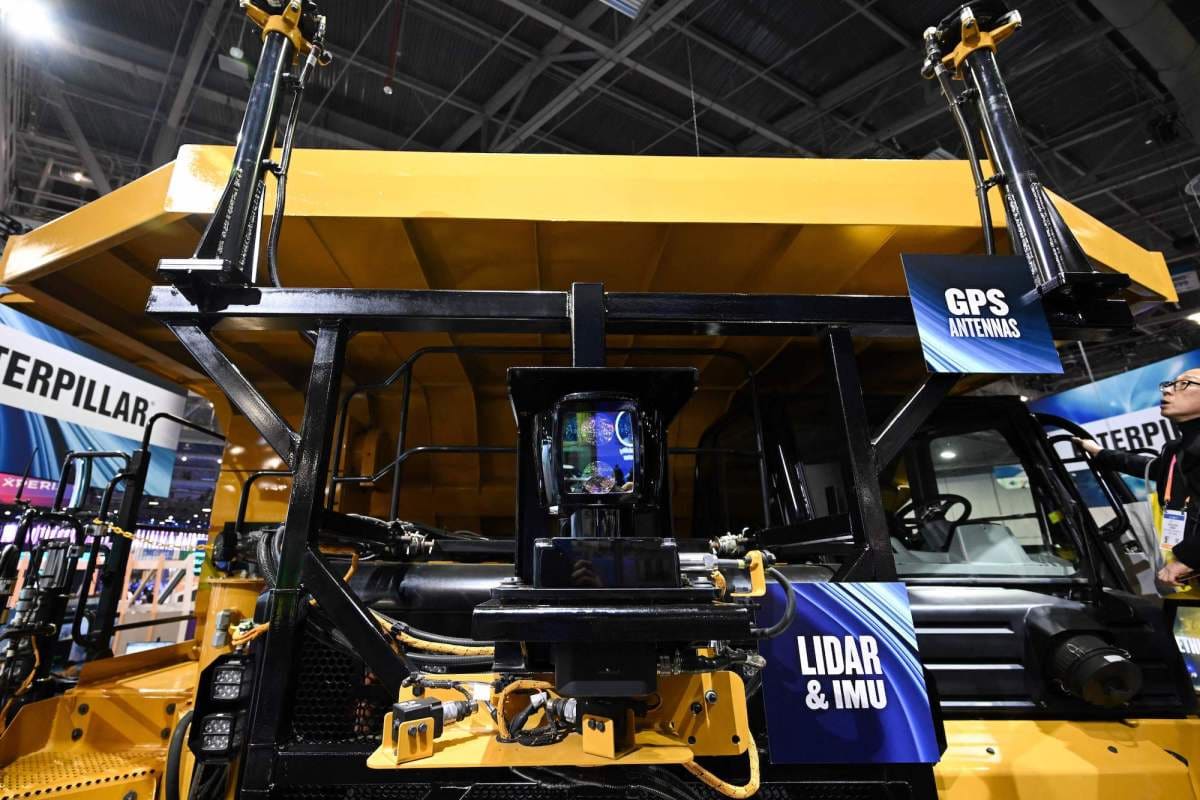
When Caterpillar first pushed into autonomous mining equipment, the rationale was straightforward: labor was scarce, conditions were dangerous, and the economics made sense. What the company learned over those years, however, went far beyond robotics. It discovered that deploying physical automation required rethinking entire workflows, retraining operators, and embedding institutional knowledge into systems that could learn. Now, as enterprises everywhere wrestle with how to actually use AI in production environments, Caterpillar is applying that same operational playbook to software.
The manufacturer currently operates roughly 1.6 million connected assets worldwide, generating more than 16 petabytes of structured data. That corpus forms the backbone of tools like the Cat AI Assistant, a voice-activated system that lets field technicians query repair procedures, diagnose faults, and order parts without opening a manual. CTO Jaime Mineart described the assistant as part of a broader effort to move beyond pure automation in controlled settings and into what she calls "much more dynamic environments" - construction sites, quarries, and jobsites where conditions shift by the hour.
At DailyTechWire, we've tracked similar deployments across manufacturing and logistics, and the pattern is consistent: the companies that succeed treat AI as an operational transformation, not a software upgrade. Caterpillar's approach underscores that distinction.
The Operator Remains Central
One of the most instructive aspects of Caterpillar's autonomy work is its reliance on experienced operators to train AI systems. Rather than attempting to replace decades of tacit knowledge with sensor arrays and neural networks, the company uses operators as a training layer. Their decisions, honed over years in the field, become the data that informs how autonomous machines respond to edge cases - uneven terrain, equipment wear, weather shifts.
This philosophy is now extending into the AI assistant tools. Technicians using the system are not simply querying a database; they are interacting with a model trained on real repair workflows, part inventories, and failure modes observed across the global fleet. The result is a system that understands context in ways that generic large language models cannot.
As machines become more autonomous, some operators are transitioning from direct control to supervisory roles, overseeing multiple units from remote command centers. That shift is creating new skill requirements and, in turn, new training obligations. Caterpillar has committed $100 million over five years to upskill its 118,000-person workforce in AI, autonomy, and robotics. The investment reflects a recognition that technology adoption at scale is a human capital problem as much as an engineering one.
Beyond the Jobsite
Caterpillar is also deploying AI internally, using it to scan sites and generate digital twins for manufacturing analysis. The company employs AI agents to modernize legacy codebases, generate and test new software, and surface defects earlier in the development cycle. These are enterprise AI use cases that mirror those at software-first companies, but they are informed by the same operational discipline that guided the mining automation rollout: start with a specific workflow problem, embed the technology into existing processes, and measure success by productivity gains rather than model benchmarks.
Mineart emphasized that the hardest part of autonomy is not building the machine - it is integrating it into the customer's jobsite and workflows. The same holds true for AI. A voice assistant is only useful if technicians trust it, if it reduces repair time, and if it fits into the rhythm of their day. A code-generation agent is only valuable if it accelerates development without introducing new classes of bugs.
The discipline required to make those integrations work is, in many ways, what Caterpillar learned from mining. Autonomous haul trucks do not succeed because they drive themselves; they succeed because the entire mine is redesigned around them - traffic patterns, maintenance schedules, shift structures, and safety protocols all change. AI deployments in enterprise settings demand the same level of operational rethinking.
The Data Center Tailwind
Caterpillar's AI push is happening against a backdrop of surging demand for the company's power-generation equipment, driven by the data center build-out that generative AI has accelerated. Second-quarter revenue hit an all-time high of $20.5 billion, with the power-generation division posting a 72% jump in sales to $3.10 billion. CEO Joe Creed noted that demand for cloud computing and AI infrastructure shows no signs of slowing.
That revenue growth is funding the AI training investment and providing a financial cushion as the company experiments with new deployment models. It also creates a feedback loop: as Caterpillar sells more equipment into data centers, it gains more data on high-utilization environments, which in turn improves its predictive maintenance and fleet management tools.
What Industrial AI Looks Like
Caterpillar's trajectory offers a window into how AI deployment differs in industrial settings compared to consumer internet or SaaS environments. The stakes are higher - a failed autonomous drill or a misdiagnosed turbine can halt operations or endanger lives. The timelines are longer - equipment lasts decades, and customers expect support over that entire lifespan. And the integration surface is broader - AI touches not just software interfaces but physical machines, supply chains, operator training programs, and regulatory compliance frameworks.
The companies that navigate this complexity successfully tend to share a few traits. They treat operators and technicians as partners in the deployment process, not obstacles to be automated away. They invest heavily in training, recognizing that new technology requires new skills. They focus on workflow integration rather than feature lists. And they measure success in operational metrics - uptime, cycle time, cost per ton - rather than model accuracy alone.
Caterpillar's mining-to-AI journey illustrates all of these principles. The company spent years learning how to deploy physical automation in some of the most demanding environments on earth. Now it is taking those lessons and applying them to a new class of technology, one that is less visible but potentially more pervasive. The question for other enterprises is whether they can learn the same lessons without spending decades in the field first.