Meta Prototypes Ambient-Recording Glasses With Metadata-Only AI
The experimental wearable would capture images and audio continuously, but users wouldn't see the raw files - only what the AI infers from them.

The Return of Always-On Wearables
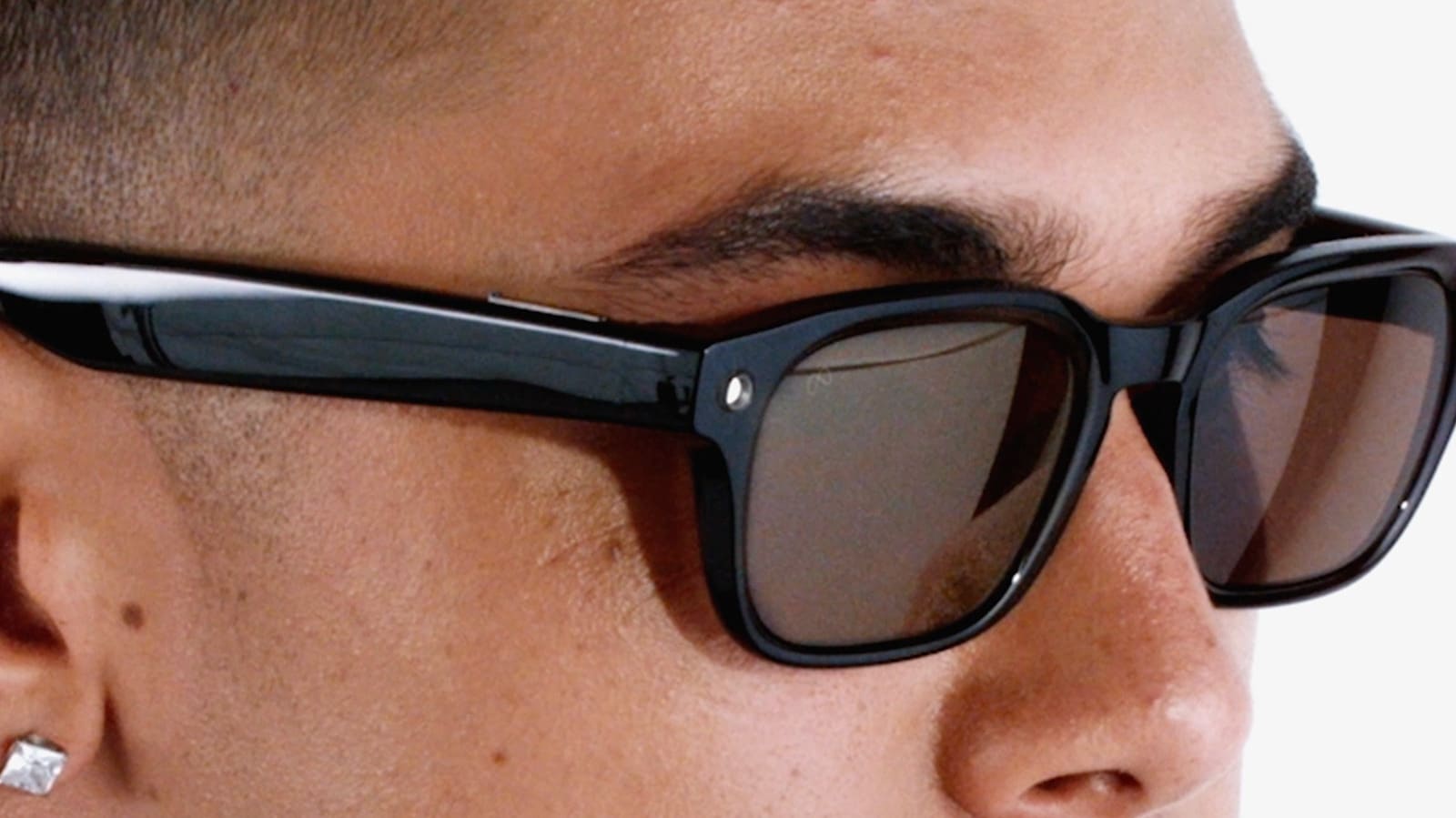
Meta is experimenting with smart glasses that would observe the wearer's surroundings non-stop, according to multiple people familiar with the initiative. The prototype system, internally described as "super sensing," would capture audio continuously and photograph the environment every few seconds. Users could query Meta AI about what the device has witnessed, but under at least one proposed architecture, they wouldn't retrieve the original recordings.
The distinction is deliberate. Instead of archiving video clips or audio files that users can play back, the system would extract metadata - summaries, labels, and contextual tags - then discard the raw material. Meta AI would answer questions based on those processed fragments, not the full sensory record. The approach sidesteps some storage and privacy pitfalls, yet it introduces others: users lose direct access to their own data, and the inference layer becomes the sole arbiter of what happened.
At DailyTechWire, we've tracked the wearable AI category through Humane's Ai Pin stumble and Rewind's desktop ambient recorder. Meta's move signals that the largest social platform believes always-on capture still has a viable path - if the data architecture changes.
Why Metadata-Only Matters
Storing raw video and audio creates two problems. First, the volume: continuous 1080p footage from even a single day can exceed hundreds of gigabytes, straining both device storage and cloud budgets. Second, the liability: archived recordings become subpoena targets, potential evidence in lawsuits, and honeypots for data breaches.
By keeping only inference outputs - transcripts, object labels, location tags, sentiment scores - Meta shrinks the footprint and diffuses some legal risk. The company would argue it never "stores" your conversations; it stores that a conversation occurred, involved two people, touched on travel plans, and registered neutral affect. Privacy advocates will counter that metadata is often more invasive than content, because it reveals patterns, relationships, and routines at scale.
The architecture also constrains what users can do. If you want to recall a recipe someone mentioned yesterday, you'd ask the AI, "What ingredients did Sarah suggest?" The system might return a bulleted list - or it might return nothing if the original audio wasn't clear enough to parse. You cannot rewind and listen again, because the audio no longer exists. The trade-off is fundamental: lower storage cost and nominally better privacy, in exchange for lossy memory and zero user control over the source material.
The Hardware and Interaction Model
Meta already ships Ray-Ban Meta smart glasses that capture photos and short videos on command. The super-sensing variant would remove the manual trigger. A small battery of sensors - camera, microphone array, possibly an inertial measurement unit - would feed data into an on-device AI chip that performs initial feature extraction. High-level features then move to the cloud, where larger models generate the queryable metadata graph.
The interaction layer is voice-first. Instead of scrolling through a timeline, you ask, "Where did I park?" or "What was the name of that café we passed?" Meta AI synthesizes an answer from location tags, image labels, and time-stamped waypoints. The experience resembles talking to a companion who remembers everything but can only paraphrase, never quote verbatim.
Form factor remains a constraint. Continuous recording demands more power than episodic capture, and adding a beefy battery to eyewear pushes weight and bulk past the threshold most people tolerate all day. Meta's industrial design team has spent two years trying to keep prototype glasses under 50 grams; early super-sensing builds reportedly exceed that, especially when packing the thermal management needed for constant inference.
Competitive Context and Regulatory Headwinds
Meta is hardly alone. Google experimented with always-on capture in Glass Explorer Edition a decade ago and retreated after backlash. Rewind Pendant, which records audio continuously and transcribes it locally, shipped to early adopters in late 2025 but has yet to reach mainstream distribution. Humane's Ai Pin promised ambient AI and stumbled on basic usability; the company sold to a Chinese automotive supplier in early 2026.
The difference this time is infrastructure. Transformer-based models can now generate useful embeddings on-device, and edge inference chips from Qualcomm and MediaTek have dropped below two watts at idle. Meta's Reality Labs has access to custom silicon - likely a variant of the chip that powers Quest 3 - and can tune the hardware-software stack in ways third-party developers cannot.
Regulation is the wild card. The European Union's AI Act, which entered force in mid-2025, classifies real-time biometric identification systems as high-risk and imposes transparency obligations on emotion-recognition and behavior-prediction models. If Meta's metadata layer infers who you're speaking to or how you feel, it may trigger additional disclosure and audit requirements. California's Delete Act, phased in through 2026, gives consumers the right to demand deletion of personal data; metadata derived from your recordings is arguably personal data, even if the recordings themselves are gone.
In Asia, where Meta's hardware ambitions hinge on growth in India and Southeast Asia, data-localization rules and consent frameworks vary widely. South Korea requires explicit opt-in for always-on recording devices in public spaces. Singapore's Personal Data Protection Act treats inferred data the same as collected data, closing the metadata loophole Meta might exploit elsewhere.
The Privacy Paradox
Meta's pitch - "We don't keep your recordings" - sounds reassuring until you consider what metadata reveals. A year of timestamped location tags, social-graph inferences, and activity labels is a near-perfect profile of your life. Researchers have demonstrated that four timestamped location points are enough to uniquely identify 95 percent of individuals in a metropolitan dataset. Add audio sentiment, object recognition, and interaction frequency, and re-identification becomes trivial even if names are stripped.
The company has not detailed retention policy for the metadata itself. Would summaries expire after 30 days, one year, or never? Would Meta train future AI models on aggregated metadata from millions of users? The answers will determine whether super-sensing glasses are a memory aid or a surveillance substrate.
There's also the bystander problem. Current Ray-Ban Meta glasses display a small LED when recording; users nearby can theoretically notice and object. Continuous capture with no LED indicator - or an LED that's always on and therefore ignored - erases that social signal. People around you have no way to know they're being encoded into someone else's metadata graph. Some jurisdictions may require audible recording tones; others may ban the devices outright in schools, hospitals, and government buildings.
What Comes Next
Meta has not announced a launch timeline, and people familiar with the project caution that many prototypes never ship. The company's history suggests it will test super-sensing internally, gather telemetry, and adjust the privacy model based on regulatory feedback and user acceptance.
If the glasses do reach production, they'll likely debut as an opt-in experimental feature within the existing Ray-Ban Meta lineup, similar to how multimodal AI rolled out in late 2025. Early adopters will tolerate rough edges; Meta will iterate based on usage logs and support tickets. The real test is whether mainstream users see enough value to wear a device that records everything but shows them nothing directly.
The broader question is whether ambient AI wearables can escape the uncanny valley. Humane and Rewind both struggled because the friction of querying an AI exceeded the friction of just checking your phone. Meta has distribution advantages - Reality Labs sold over eight million smart glasses in 2025, according to IDC - and the brand recognition to survive a rocky launch. But turning continuous capture into continuous utility requires more than better hardware. It requires trust that the metadata represents reality, and comfort with the idea that your memories are legible only through an algorithmic interpreter you don't control.
We'll be watching how Meta navigates consent, retention, and the bystander problem. The answers will set precedent not just for smart glasses, but for every ambient AI product that follows.