Meta Lets You Prompt Image Generation With Instagram Handles
Muse Image, the first output from Meta Superintelligence Labs, ships with conversational editing and cross-app integration across WhatsApp and Stories.
A Social Graph Becomes Training Data
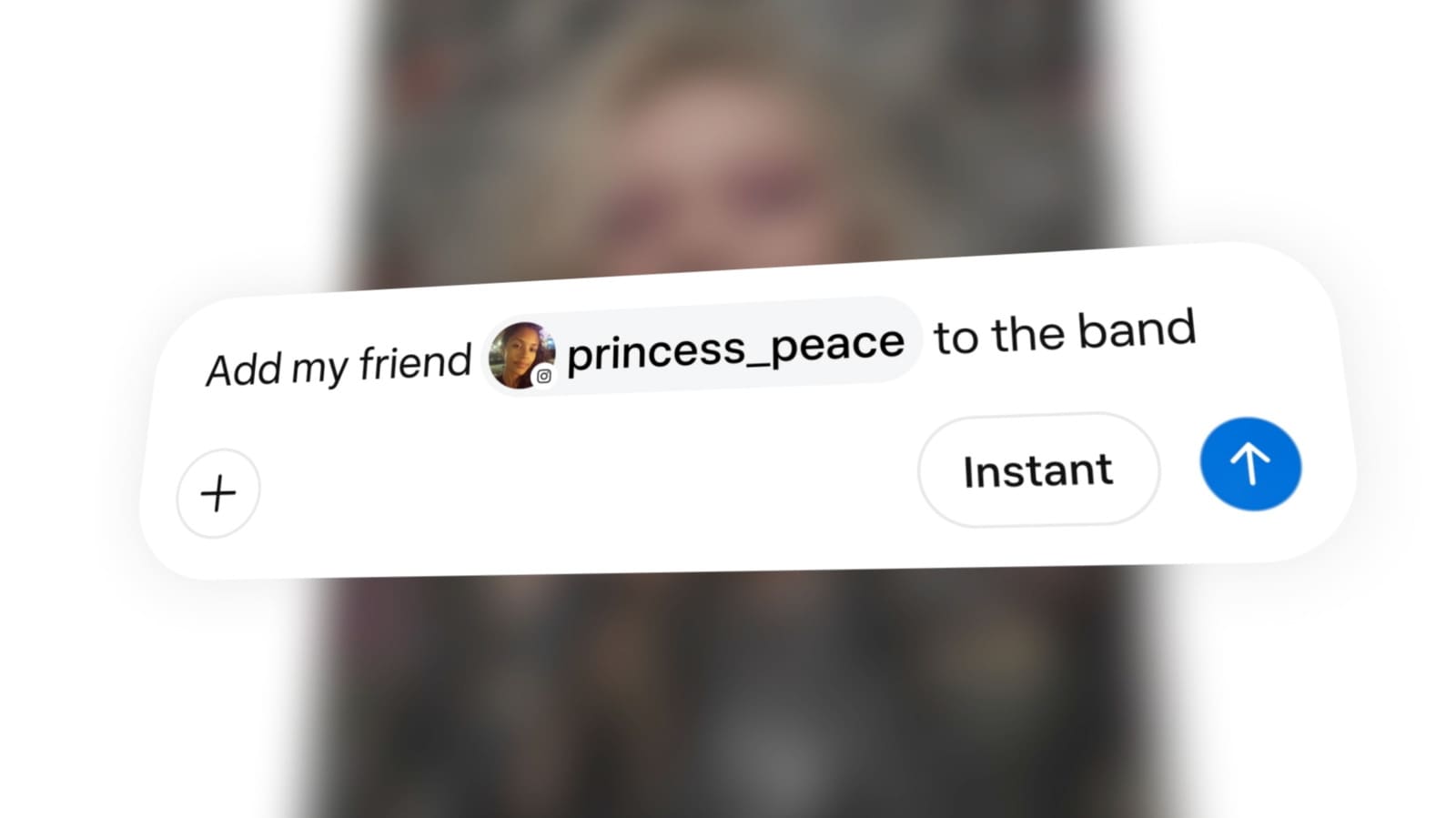
Meta Superintelligence Labs has begun rolling out Muse Image, an AI generation model that treats Instagram profiles as valid prompt inputs. Users in the United States can now tag a friend's account and watch the system pull their likeness into a generated photograph, blending social network metadata with multimodal synthesis in a way no other consumer platform currently offers at scale.
The mechanic is straightforward: open Meta AI, describe a scene, append an Instagram handle, and Muse Image retrieves stored profile imagery to construct a photorealistic composite. The same privacy controls that govern how your photos circulate on Instagram apply here, so users who have locked down resharing permissions remain outside the prompt pool. Meta confirmed the feature is live across the Meta AI app, Instagram, and WhatsApp in the US, with international expansion planned but not yet dated.
At DailyTechWire, we've tracked Meta's AI model family since the Muse Spark launch in April, and this image release marks the first time the company has directly tied generation to its social graph. That integration is both a technical advantage and a potential flashpoint: OpenAI's short-lived Sora app generated viral engagement by letting users deepfake friends into video clips, then shuttered amid moderation concerns. Meta is betting it can sustain the feature by leaning on existing Instagram privacy infrastructure.
Conversational Editing and Format Flexibility
Muse Image accepts natural-language instructions and can iterate on outputs without requiring users to rewrite entire prompts. Meta describes the system as capable of "advanced reasoning to understand complex prompts," a phrasing that suggests transformer-based instruction following rather than diffusion alone. The model handles style transfers, format changes, and multi-object composition within a single conversational thread.
One unusual capability: functional QR code generation. Meta claims Muse Image can produce scannable codes embedded in stylized images, with text rendering that matches the surrounding aesthetic. If accurate, that positions the model closer to design-tool territory than pure generative art, a niche that Midjourney and Stable Diffusion have largely avoided in favor of illustration and photography pastiche.
The editing interface includes preset filters and an "Ideas" tab that suggests follow-up modifications based on the current image state. Users can also draw or annotate directly on a photo to indicate desired changes, a gesture-based input method that echoes Adobe Firefly's scribble-to-image workflow but now embedded in a messaging app with three billion monthly actives.
Cross-Platform Utility and Marketplace Hooks
Muse Image does not exist in isolation. Meta has wired the model into product surfaces across its app portfolio, starting with over thirty new effects for Instagram Stories. One filter simulates disposable-camera grain and color shift; another, named "Puffer," remains unexplained in Meta's materials but appears to apply texture distortion. A new preview interface lets creators audition effects before committing, and users can prompt custom edits if the built-in library falls short.
In WhatsApp, Muse Image powers inline generation inside Meta AI chats, letting users request and refine images without leaving a conversation thread. That makes it the first widely deployed AI model to offer synchronous image creation in an end-to-end encrypted messaging context, though Meta has not clarified whether prompts and outputs remain encrypted or pass through separate inference infrastructure.
Perhaps the most commercially pointed feature: room redesign prompts that pull furniture listings from Facebook Marketplace and the open web. Snap a photo of your living space, ask Meta AI to redecorate, and the model composites product images into the scene. It is unclear whether these placements are paid or algorithmic, but the mechanic establishes a direct line from generative AI to Meta's classifieds business, a revenue stream the company has been nurturing as its core ads engine matures.
Usage Caps and the Meta One Upsell
Meta describes Muse Image access as free for "everyday creation," but the company has introduced a usage ceiling that varies by geography and app. Once a user exhausts their allotment, the system prompts a subscription to Meta One, the company's paid tier that bundles higher generation limits with other premium features. Meta declined to specify exact quotas, noting only that limits depend on "variables like which services users are accessing Muse Image from or their current location."
This tiered model mirrors OpenAI's ChatGPT Plus structure, where free users hit rate limits during peak demand and paid subscribers receive priority access. For Meta, the calculus is different: the company already monetizes two billion daily actives through advertising, so a subscription product must either drive meaningful incremental revenue or serve as a retention lever for power users. Early signals suggest the latter - Meta One is positioned as an unlock for creators and heavy messagers, not a mass-market play.
The reset cadence for free-tier limits remains undisclosed, leaving room for Meta to adjust throttle rates as compute costs fluctuate. Inference expense for large multimodal models remains high, and Meta's decision to offer any free tier at all reflects confidence that ad-supported engagement will offset infrastructure burn.
What Comes Next
Meta confirmed that Muse Video, a motion-generation counterpart to Muse Image, is in active development. No release window was provided, but the announcement telegraphs Meta's intent to own the full stack of consumer generative media, from still images to short-form video to eventual real-time synthesis.
The Instagram-handle prompt mechanic will likely draw the most scrutiny. While Meta insists existing privacy controls govern participation, the feature creates a new category of synthetic content where your likeness can appear in images you never posed for, distributed by people you may barely know. That raises questions about consent, context collapse, and whether opt-in privacy defaults are sufficient when the stakes shift from photo tagging to AI-generated scenarios.
For now, Muse Image is a US-only release, and Meta has not committed to a global timeline. Regulatory environments in the EU and parts of Asia may slow expansion, particularly as lawmakers finalize rules around synthetic media labeling and biometric data use in AI training. Meta's ability to scale this feature beyond its home market will hinge as much on policy navigation as on model performance.
In the near term, the company is betting that social graph integration gives it an edge over standalone tools like Midjourney or DALL-E, which lack direct access to billions of user profiles and photos. Whether that advantage translates to sustained engagement or becomes a liability under regulatory pressure will define Muse Image's trajectory through the rest of 2026.