Anthropic Adds Remote Oversight to Claude Cowork, But Not Mobile Automation
The AI company's latest update lets users monitor and approve desktop tasks from their phones, while background execution removes the need for constant connectivity.
A Monitoring Layer, Not a Mobile Agent
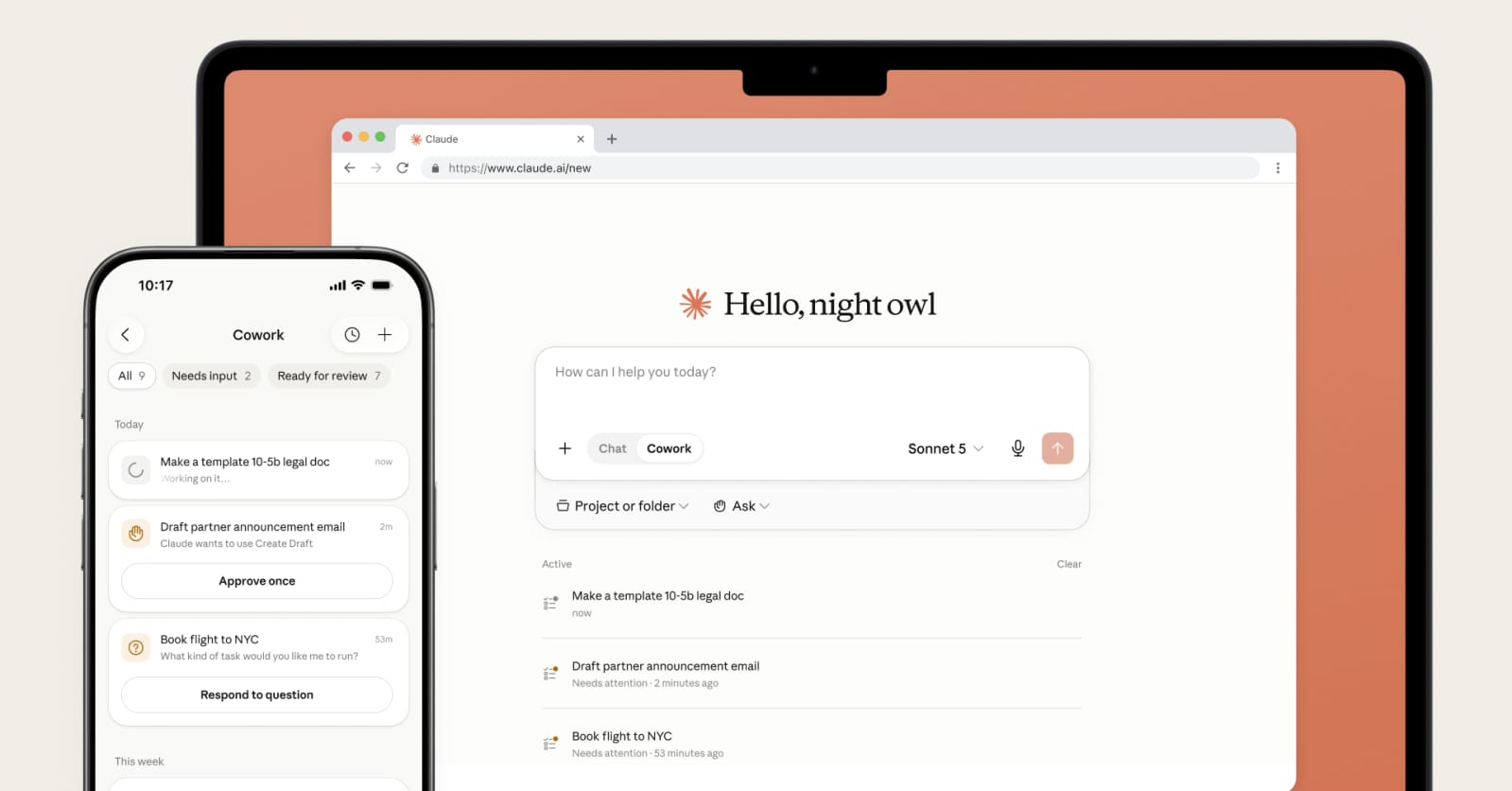
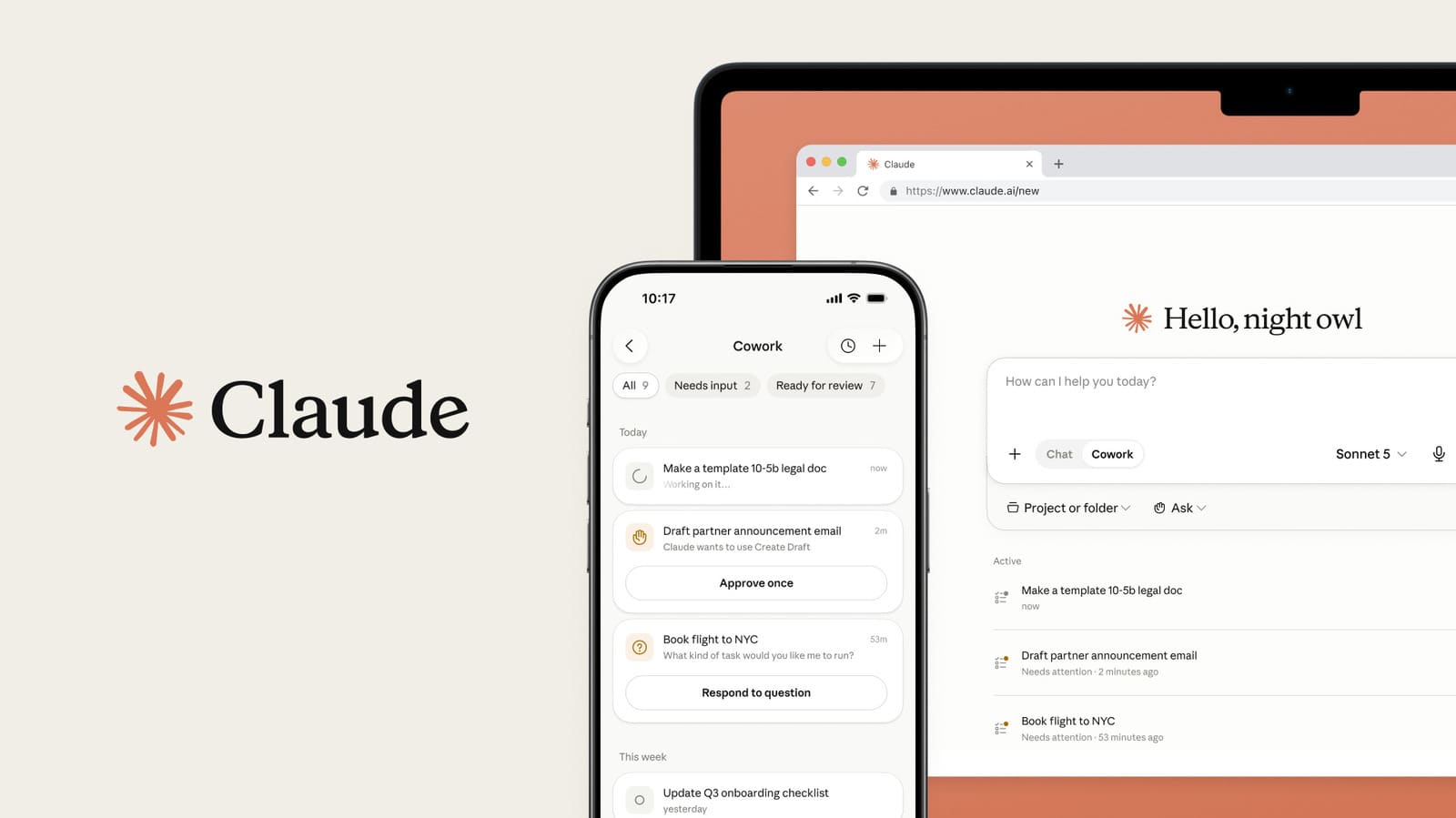
Anthropic has extended Claude Cowork's reach to smartphones, but the implementation is narrower than it might first appear. The latest update to the Claude mobile app on Android and iOS introduces a Cowork tab in the sidebar that functions as a remote dashboard for desktop activity. Users cannot trigger phone-based automation; instead, they gain visibility into what the agent is doing on a computer elsewhere and can approve actions when prompted.
The distinction matters in a market where the boundaries between agentic AI and traditional automation remain fuzzy. At DailyTechWire, we've tracked how coding agents and task-execution tools have evolved from single-shot commands to multi-step workflows that require human checkpoints. Anthropic's approach prioritizes oversight over autonomy, a design choice that reflects both regulatory caution and user-experience trade-offs in deploying agents beyond controlled environments.
Background Execution and the Connectivity Problem
Anthropic has also decoupled Cowork from real-time internet requirements. Earlier versions of the software demanded a stable connection throughout task execution; the agent would stall if a network hiccup occurred mid-workflow. The updated system allows Claude to continue background operations even when connectivity drops, then surface permission requests via mobile notification once a decision point is reached.
This shift addresses a practical friction point for users who want to initiate long-running tasks on a home or office machine, then step away. The notification-based approval flow means a user commuting or traveling can still keep workflows moving without needing to maintain an active desktop session. It also suggests Anthropic is preparing Cowork for enterprise environments where desktop uptime and mobile reachability vary widely across teams.
Unified Interface on the Roadmap
Anthropic has signaled that Cowork will eventually merge into the main Claude chatbot interface, eliminating the need to switch between conversational AI and task-execution modes. The company plans to roll out this unified experience first on its web client and desktop app, with mobile likely to follow once the interaction model is settled.
The consolidation mirrors patterns we've observed in other agent-forward platforms. Splitting chat and automation into separate tabs creates cognitive overhead; users must decide upfront whether a query is conversational or executable. A unified interface would let Claude interpret intent and route requests accordingly, though it also raises the bar for prompt disambiguation and error handling when a user's instruction straddles both categories.
Projects and Artifacts: A Push for Feature Adoption
Anthropic also intends to integrate Projects and Artifacts more tightly. Projects bundles related chats and files to maximize the utility of Claude's context window, a design pattern familiar to anyone who has wrestled with token limits in long-running conversations. Artifacts, by contrast, are self-contained mini-applications or games that Claude can generate on demand.
The planned convergence suggests Anthropic sees adoption gaps. Artifacts remain a niche feature despite the company's efforts to lower the barrier to sharing and iteration. Folding them into Projects could give the capability more surface area, especially if users can version and reference artifacts within a project's conversation history. It also hints at Anthropic's broader strategy: positioning Claude not just as a chatbot or coding assistant, but as a workspace orchestrator that spans text, code, and executable outputs.
Rollout and Access Tiers
The mobile oversight feature is live first for Max subscribers, with Anthropic planning to extend availability to other subscription tiers in the coming weeks. This staged rollout is consistent with how the company has managed capacity for compute-intensive features, particularly those that involve persistent background processes or multi-device state synchronization.
For teams evaluating agentic tools, the tiered access model underscores a familiar tension: features that promise the most workflow leverage often come with higher subscription costs and delayed general availability. Organizations piloting Cowork will need to weigh whether the mobile oversight layer justifies a Max-tier commitment, or whether the core desktop functionality suffices until broader rollout.
What Remains Unsolved
Anthropic's mobile update stops short of enabling on-device automation, a gap that reflects both technical and policy constraints. Running an agentic workflow on a smartphone involves navigating OS-level permissions, sandboxing, and app-store guidelines that are far stricter than desktop environments. It also raises questions about what tasks users would realistically want an agent to perform on a phone versus a computer with fuller access to file systems, development tools, and enterprise software.
The notification-based approval model also introduces latency. If a Cowork task hits multiple decision points, a user may need to respond several times before completion. For workflows that require tight iteration loops, this can become a bottleneck, particularly if the user is in a meeting or otherwise unable to monitor notifications closely.
Where Anthropic Fits in the Agent Race
The update arrives as the agent layer of the AI stack grows more crowded. Competitors are exploring everything from browser-based automation to IDE-integrated coding assistants, and the line between "agent" and "enhanced autocomplete" remains contested. Anthropic's emphasis on human-in-the-loop approval and background resilience positions Cowork as a tool for users who want automation without full delegation, a middle ground that may appeal to risk-averse enterprises but could feel slow to power users accustomed to more autonomous systems.
The roadmap items Anthropic has previewed also signal a shift from feature launches to feature integration. As the product matures, the challenge will be less about adding capabilities and more about making them discoverable and coherent within a single interface. Whether that consolidation happens fast enough to keep pace with competitors who are shipping unified agent experiences today will shape Anthropic's position in the market through the rest of the year.