Meta Bets Facial Recognition Can Separate Real Users From AI Slop
A free verification badge for Facebook users now relies on the same biometric tech the company once paid $650 million to settle lawsuits over.
The Identity Problem Meta Can No Longer Ignore
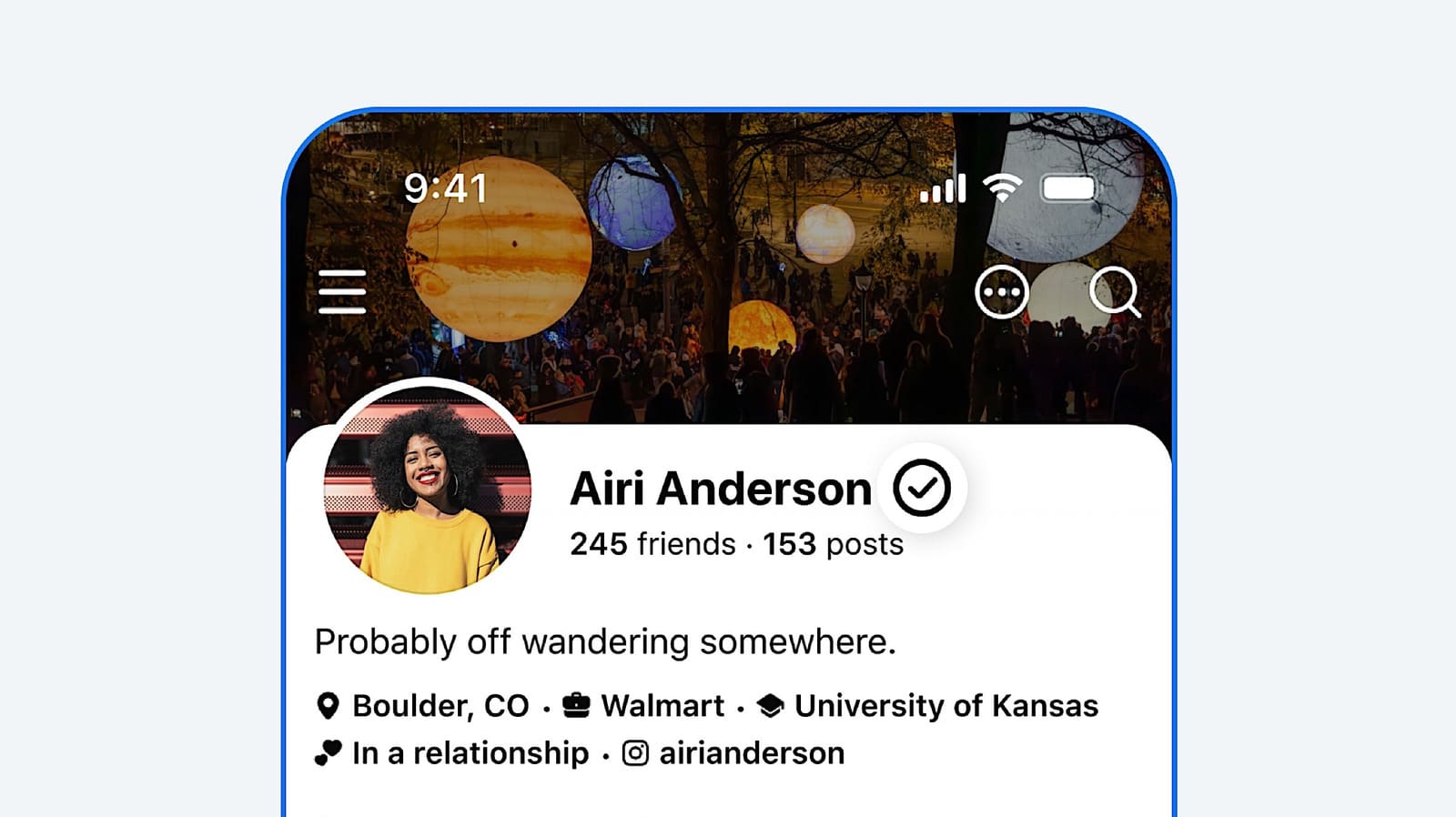
Facebook has begun rolling out a free verification system that asks users to submit a facial recognition selfie, then matches it against existing profile photos to confirm they are, in fact, human. The program launches as generative AI tools have made it trivially easy to create convincing fake profiles complete with realistic photos, coherent backstories, and automated messaging at industrial scale.
The stakes are straightforward: if a platform cannot credibly distinguish between a person and a bot, its entire social graph becomes unreliable. For a company that derives revenue from targeted advertising predicated on authentic user behavior, that is an existential risk dressed up as a moderation problem.
Meta announced the feature will begin rolling out Monday in select markets, with global expansion planned over the coming months. Users over 18 who meet Facebook's community standards can apply. Once approved, a verified badge appears across Marketplace, Dating, and other Facebook surfaces where identity fraud has become endemic.
Facial Recognition Returns, Quietly
The choice of biometric verification is striking. In 2021, Meta shut down its facial recognition system on Facebook and deleted the faceprint data of more than one billion users. That decision followed years of regulatory scrutiny and a $650 million settlement in Illinois over alleged violations of the state's Biometric Information Privacy Act, the largest privacy settlement ever secured under the statute at the time.
Two years later, facial recognition returned inside Ray-Ban Meta smartglasses, sparking another round of privacy concerns. Now it is baked into the identity layer of Facebook itself.
The distinction Meta is drawing this time is consent and scope. Users must actively opt in, the selfie is checked only against their own photos, and the company says the process takes just a few minutes. There is no mention of whether faceprint data is retained after verification, how long the verification remains valid, or what recourse exists if the system fails to recognize a legitimate user.
At DailyTechWire, we have tracked the uneven adoption of biometric identity systems across Asia and the West. In markets like India and Indonesia, government-backed digital identity schemes using biometrics have become infrastructure. In the U.S. and Europe, the same technology remains legally and culturally contested. Meta's calculated return to facial recognition reflects a bet that the threat of AI-driven fraud now outweighs the privacy blowback that sank the feature five years ago.
What Verification Does and Does Not Mean
Meta is explicit that the new badge confirms identity, not trustworthiness. A verified user is simply someone who has proven they control the face in their profile photo. They may still violate community standards, spread misinformation, or engage in coordinated inauthentic behavior. The badge is not an endorsement.
This is a narrower claim than the original Facebook verification, which was reserved for public figures, celebrities, and brands, and implied a degree of platform recognition. It is also distinct from Meta Verified, the paid subscription service launched in 2023 that bundles identity confirmation with account support and a blue badge, priced at $11.99 per month on web or $14.99 on mobile.
The new free verification is available only to individual profiles. Pages and ProMode accounts, used by creators and publishers, are excluded. That design choice reveals the program's true target: the Marketplace seller who might be a scammer, the Dating profile that might be catfishing, the stranger sending unsolicited messages who might be a bot farm.
The AI Slop Economy
Generative AI has industrialized deception. A competent prompt and a few API calls can now produce a profile photo that passes casual inspection, a bio that sounds plausible, and conversational replies that mimic human cadence. These tools are cheap, accessible, and improving faster than most platform defenses.
The result is what researchers have started calling "slop": low-effort, high-volume synthetic content designed to exploit trust, manipulate engagement, or extract value. On Facebook, slop manifests as romance scams, phishing schemes, fake Marketplace listings, and engagement bait that pollutes the feed and erodes user confidence.
Meta's verification program is a defensive play. It does not prevent AI-generated content, but it does create a credible signal that certain accounts are operated by humans. Over time, that signal could become a filter: users might choose to interact only with verified accounts, or the platform might down-rank unverified profiles in certain contexts.
The risk is that verification becomes a requirement in all but name, effectively gating access to Facebook's social and commercial features behind a biometric checkpoint. For users in regions with weak data protection laws or authoritarian governments, that is not a trivial privacy trade-off.
Full-Screen Video and the TikTok Tax
Alongside the verification rollout, Meta announced it is testing an "immersive video" experience that defaults to full-screen vertical video the moment users open the app. The language is careful, but the intent is transparent: this is another attempt to compete with TikTok's algorithmically curated video feed, which has redefined user expectations for mobile content consumption.
Meta has learned from past missteps. When Instagram aggressively pivoted to video in 2022, user backlash was swift and loud, forcing the company to partially roll back the changes. This time, the full-screen video interface will be optional. Users can revert to the traditional feed-first layout if they prefer.
The timing is notable. Meta is simultaneously asking users to verify their humanity and testing a feed that prioritizes passive video consumption over social interaction. The two moves are not contradictory, but they do reflect competing visions of what Facebook is becoming: a verified identity layer for commerce and trust, and an entertainment platform optimized for algorithmic distribution.
The Verification Arms Race
Other platforms have already moved in similar directions. X (formerly Twitter) tied verification to a paid subscription, then struggled with impersonation as the badge lost its credibility. LinkedIn uses workplace email addresses and professional networks as weak identity signals. Threads, Meta's own Twitter competitor, has yet to introduce verification at all.
In Asia, super-apps like WeChat and LINE have long integrated identity verification with payment systems, making real-name registration a precondition for financial transactions. The model works because the platforms offer services users cannot easily replicate elsewhere. Facebook's challenge is that its core social features are increasingly commoditized, and its reputation for privacy is deeply compromised.
The success of the new verification program will depend on adoption rates and whether users perceive the badge as valuable. If only a small fraction of the user base opts in, the signal is weak. If adoption is high but scammers find ways to game the system, trust erodes further.
Meta is betting that the threat of AI-driven fraud is now salient enough that users will voluntarily submit to biometric verification. That is a significant shift in the privacy calculus, and it may not hold everywhere. But in a platform economy where identity is infrastructure, doing nothing is no longer an option.