Lawrence Livermore Bets on Cornelis Omni-Path to Break Nvidia's Grip on HPC Networking
A 952-node DOE cluster sidesteps InfiniBand and Slingshot with revived Intel-era interconnect tech, now delivering 400 Gbps and 91% scaling efficiency for classified workloads.
A Quiet Challenge to the InfiniBand Monoculture
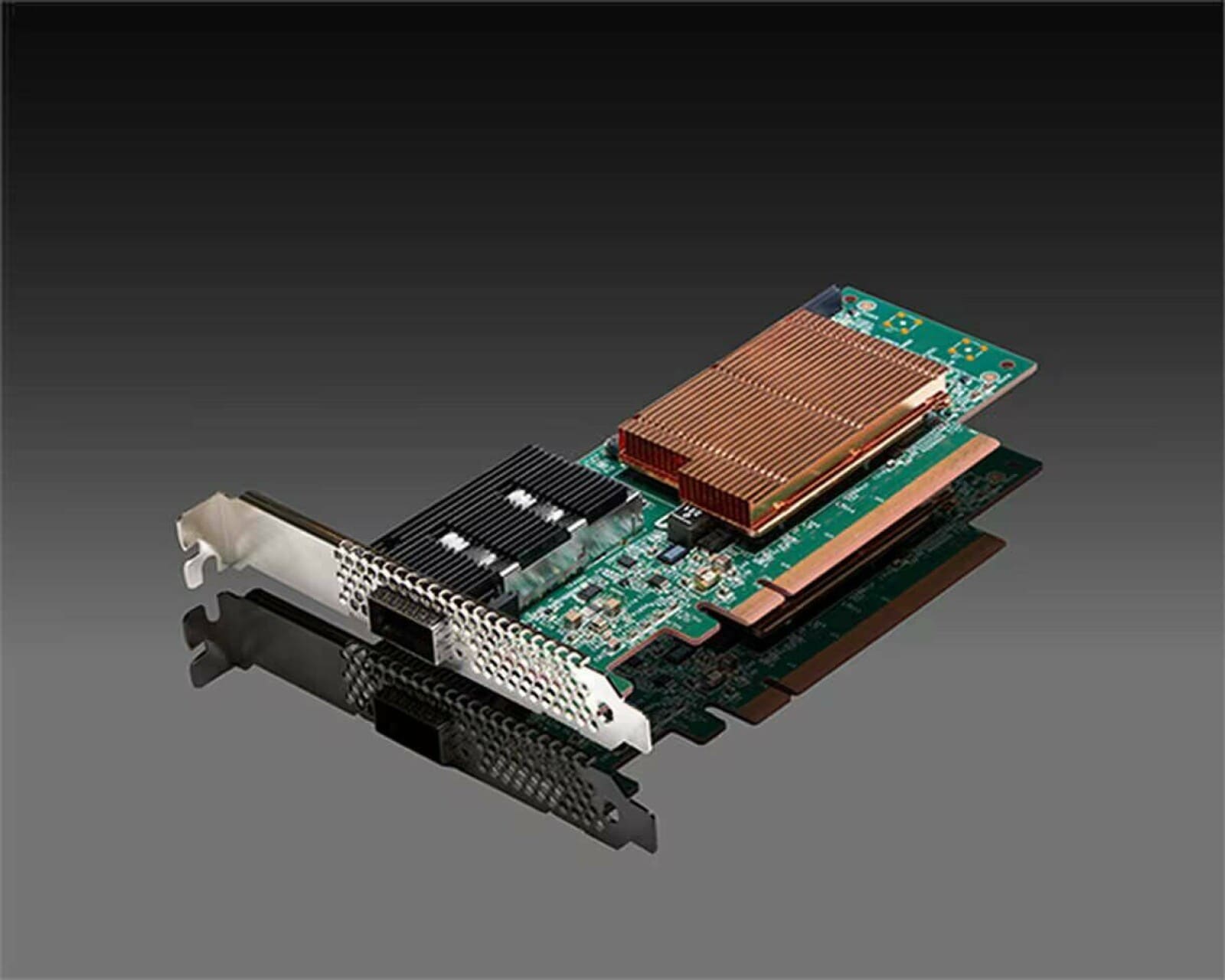
Lawrence Livermore National Laboratory just switched on a new supercomputer that makes an unusual architectural choice: it skips Nvidia's InfiniBand entirely. The Lynx system, commissioned by the National Nuclear Security Administration for classified simulation work, relies instead on Cornelis Networks' CN5000-series Omni-Path fabric, a lossless interconnect that traces its lineage back to Intel's abandoned HPC networking effort from the mid-2010s.
At DailyTechWire, we've tracked the consolidation of HPC networking around two dominant players - Nvidia's InfiniBand and HPE Cray's Slingshot. Lynx represents the first significant deployment of a third path, one that DOE labs are testing as both a hedge against supply constraints and a technical bet on scaling efficiency.
The machine itself is modest by national-lab standards: 952 Dell PowerEdge nodes powered by Intel's fourth-generation Xeon Scalable processors, the Sapphire Rapids generation now more than two years old. But the network fabric connecting those nodes is running at 400 Gbps per port, twice the bandwidth of most Cray Slingshot deployments in the DOE complex and delivering what Cornelis Networks claims is 91 percent scaling efficiency across the cluster.
That last number matters. In large-scale parallel computing, network bottlenecks erode performance faster than aging silicon. If Cornelis can sustain those efficiency figures at scale, Lynx may outperform newer clusters built on faster processors but hobbled by congested interconnects.
The Omni-Path Backstory: From Intel Ambition to Spin-Off Survival
Omni-Path first appeared in 2015 as Intel's answer to InfiniBand, designed specifically for tightly coupled HPC workloads where latency and message-passing performance determine whether a simulation runs in hours or days. Los Alamos National Laboratory's Trinity system and the Cori machine adopted early versions of the technology, giving Intel a foothold in the national-lab ecosystem.
Then Intel pulled the plug in 2019. The networking division was spun out in 2020 as Cornelis Networks, taking the intellectual property, a small engineering team, and the task of proving that a niche interconnect could survive outside the backing of a chip giant.
For several years, the story went quiet. Cornelis continued development work, but without major deployments or public customers, the company risked becoming a footnote. That changed in 2025 when Cornelis unveiled its CN5000 portfolio - switches and network interface cards capable of 400 Gbps throughput with what the company described as near-linear scaling across large fabrics.
The DOE took notice. Last summer, the agency selected Cornelis to supply the networking fabric for Lynx, a decision driven by both technical merit and strategic diversification. InfiniBand capacity is heavily allocated to AI training clusters, where hyperscalers and cloud providers are paying premium prices for anything that can move tensor data at speed. For DOE labs running simulation codes rather than transformer models, waiting in line behind AI demand is not an option.
Why the DOE Needs Alternatives
The Department of Energy operates some of the world's most demanding compute environments, running weapons simulations, climate models, and materials science codes that require predictable, low-latency communication across tens of thousands of cores. Most of those systems today run on either HPE Cray Slingshot or Nvidia InfiniBand, with Slingshot installations typically capped at 200 Gbps per port.
InfiniBand can technically scale higher - Nvidia ships 400 Gbps and has demonstrated 800 Gbps prototypes - but supply is constrained. The same interconnect that powers Frontier and other exascale machines is now the backbone of nearly every large-scale AI training cluster, from OpenAI to Anthropic to the hyperscaler fleets in Virginia and Iowa. When a technology becomes the default for two distinct, capital-intensive markets, procurement timelines stretch and prices rise.
Cornelis offers the DOE a third option, one that is not competing for wafer starts with AI accelerators or fighting for assembly capacity alongside data-center switch builds. The CN5000 family is built on a mature silicon process, uses commodity optics, and is manufactured by partners with spare capacity in the HPC supply chain.
Matt Leininger, senior principal HPC strategist at Lawrence Livermore, framed the Lynx deployment as the result of sustained collaboration between the NNSA's Advanced Simulation and Computing program and Cornelis. That partnership language signals more than a one-off procurement; it suggests the agency views Cornelis as a strategic supplier worth nurturing.
Scaling Efficiency as a Competitive Moat
Cornelis CEO Lisa Spelman points to the 91 percent network scaling efficiency figure as the key technical differentiator. In a large cluster, achieving linear scaling - where doubling the node count doubles aggregate performance - is nearly impossible. Network congestion, routing overhead, and protocol latency all conspire to erode efficiency as systems grow.
At 91 percent, Lynx is performing well above the typical threshold for HPC fabrics at this scale. Spelman told industry observers that she expects Lynx to outperform similarly sized clusters built on newer processors simply because the interconnect is not a bottleneck. That claim is bold, but the physics supports it: a faster CPU waiting on network I/O delivers less useful work than a slower CPU fed by a well-tuned fabric.
The Lynx deployment also serves as a proof point for Cornelis as it courts additional customers. The company is working on deployments that will push Omni-Path to 2,000 nodes, then 5,000, then 10,000, testing whether the architecture can maintain efficiency at the scales required for next-generation DOE systems and eventually exascale-class machines.
Spelman hinted that some of those future systems will incorporate non-traditional accelerators, a category that likely includes FPGA-based compute, custom ASICs for specific simulation domains, or emerging AI inference chips that need low-latency interconnects but are not well-served by InfiniBand's AI-centric roadmap.
The 800 Gbps Roadmap and the PCIe 6.0 Dependency
Cornelis is not standing still. The company is developing the CN6000 series, targeting 800 Gbps per port and timed to coincide with the arrival of PCIe 6.0-compatible processors from Intel, AMD, and other vendors later this year. PCIe 5.0, the current standard in most servers, effectively caps conventional network interface cards at 400 Gbps due to bandwidth limits on the host connection.
Nvidia and some competitors have worked around this constraint by embedding large PCIe switches directly into their NICs, aggregating multiple PCIe lanes to push more data. That approach works but adds cost, power draw, and design complexity. Cornelis is betting that waiting for PCIe 6.0 will yield a cleaner, cheaper architecture - one that relies on the platform itself to deliver the necessary bandwidth rather than engineering around its limitations.
The CN6000 family will also introduce Ethernet compatibility, allowing Omni-Path fabrics to interoperate with standard data-center networks. That move broadens Cornelis' addressable market beyond pure HPC into hybrid environments where simulation, AI inference, and traditional enterprise workloads share infrastructure.
Timing will be critical. If Cornelis can ship 800 Gbps gear in the second half of this year while InfiniBand supply remains tight and Slingshot roadmaps remain conservative, the company has a narrow window to win additional design wins in the DOE complex and potentially in large research universities and national labs outside the United States.
The Geopolitics of Interconnect Diversity
There is a geopolitical dimension to the DOE's interest in Cornelis, though it is rarely stated explicitly. Nvidia's dominance in AI compute has made InfiniBand a single point of dependency for both AI and HPC workloads. Export controls, supply chain disruptions, or strategic decisions by Nvidia could ripple across the national-lab ecosystem in ways that are difficult to mitigate if no alternatives exist.
Cornelis, as a U.S.-based spin-off with manufacturing partnerships that avoid the most contested nodes in the semiconductor supply chain, offers the DOE a degree of strategic autonomy. The company's interconnect does not rely on cutting-edge process technology, does not compete directly with AI accelerator production, and is not subject to the same export-control complexities that govern high-end GPUs and InfiniBand switches destined for frontier AI research.
For the DOE, that diversification is worth the investment. The agency has historically supported multiple vendors in critical technology areas - compute, storage, networking - to avoid lock-in and to ensure that a single supplier's roadmap does not dictate the pace of scientific discovery.
Lynx is the first tangible result of that strategy in the networking domain. If the system performs as expected over the next year, and if Cornelis can scale its technology to the thousands of nodes required for next-generation weapons simulations and climate models, the company will have carved out a durable niche in one of the world's most demanding compute markets.
What Comes Next
The HPC networking market is not large by data-center standards, but it is strategically important. The same fabrics that connect supercomputers also underpin AI training clusters, and the architectural choices made today will shape the next decade of compute infrastructure.
Cornelis is betting that there is room for a third player, one that can deliver the performance and scaling efficiency the DOE requires without the supply constraints and AI-market competition that plague InfiniBand. The Lynx deployment is the first proof point. The next will come when the company scales to thousands of nodes, integrates non-traditional accelerators, and demonstrates that Omni-Path can compete not just as a fallback option but as a first choice for HPC architects.
For now, the DOE has what it needs: a working alternative, a 400 Gbps fabric that scales efficiently, and a technology partner willing to invest in a market that the larger players are increasingly neglecting in favor of AI. Whether that is enough to break Nvidia's grip on HPC networking remains an open question, but the physics and the procurement strategy are both pointing in the right direction.