Kutcher Splits From Sound Ventures to Back AI Infrastructure With Beller
The actor-turned-investor is pivoting from established AI labs toward the energy and hardware layer that powers them, signaling where early-stage capital is moving next.
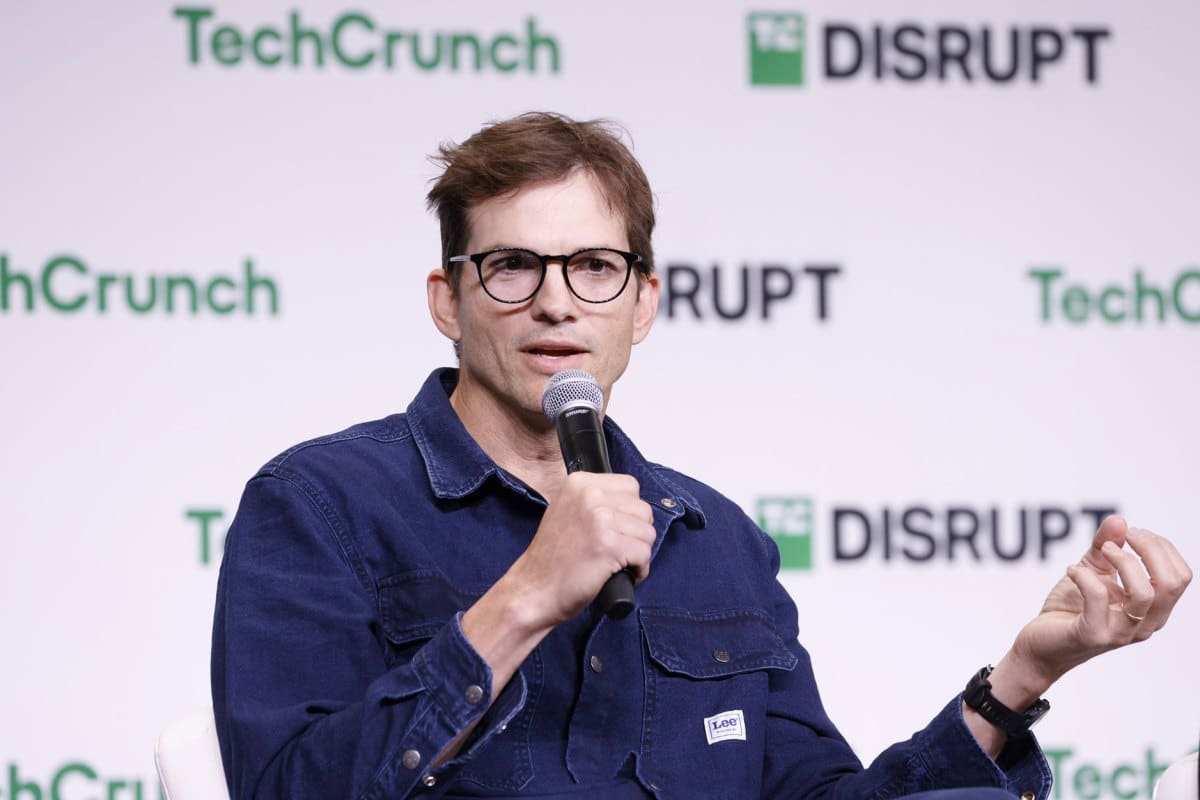
A Founder's Exit That Isn't About Failure
Ashton Kutcher is walking away from Sound Ventures, the firm he built alongside Guy Oseary over the past decade. The departure comes not from underperformance but from a strategic divergence: Kutcher wants to chase the foundational layer of the AI stack, while Sound has increasingly gravitated toward later-stage bets on proven category leaders.
Kutcher is teaming up with Morgan Beller to launch a new venture fund. Beller brings a resume that spans Andreessen Horowitz, where she worked as a partner, and NFX, where she served as a general partner until recently. Before entering venture, she co-led Libra, Meta's cryptocurrency project that ultimately stalled under regulatory pressure. The name of the new firm has not yet been disclosed.
Sound Ventures, which Kutcher co-founded in 2015, has built a strong track record. The firm backed Brex and Gusto early, and was an early investor in OpenAI, Anthropic, and Fei-Fei Li's World Labs. Stanford finance professor Ilya Strebulaev, who tracks top-performing venture investors, noted that Kutcher consistently ranks among the top unicorn investors. The firm's success makes the split all the more revealing: it points to a bet on where the next wave of value creation in AI will emerge.
The Infrastructure Thesis
At DailyTechWire, we've tracked a growing appetite among early-stage investors for the picks-and-shovels layer of AI. While Sound Ventures made its name backing the large model labs themselves, Kutcher and Beller are positioning their new fund to invest in the infrastructure, energy systems, and deep tech startups that underpin those models.
Deep tech refers to companies built around hard science and engineering breakthroughs rather than software alone. Think advanced chip architectures, novel cooling systems for data centers, or battery chemistry that can support the energy demands of training runs. These are longer development cycles and higher capital intensity than software startups, but they also promise durable moats if the technology works.
The divergence in investment philosophy between Kutcher and Sound Ventures centered on stage and sector focus. Sound has drifted toward backing companies that have already established product-market fit and are scaling, while Kutcher prefers to enter at the earliest stages, where risk is higher but ownership can be larger. That preference aligns well with infrastructure and energy, where early bets can secure meaningful stakes before the market fully prices in the opportunity.
Beller's Background and the Crypto Connection
Morgan Beller's involvement adds another dimension. Her time at Meta working on Libra exposed her to the regulatory and technical challenges of building infrastructure for decentralized systems. While Libra never launched, the project forced her to think deeply about scalability, energy efficiency, and the politics of large-scale technical coordination. Those lessons map cleanly onto AI infrastructure, where similar questions around compute allocation, power consumption, and governance are now front and center.
At NFX, Beller focused on seed-stage investments, which means she's accustomed to writing smaller checks into unproven teams and helping them navigate the early product-market fit phase. That experience will be critical for a fund targeting infrastructure startups, where technical risk is high and commercial traction can take years to materialize.
The partnership also reflects a broader pattern in venture: celebrity investors who started as brand names are increasingly building substantive track records and partnering with operators who bring technical credibility. Kutcher's relationship with Sam Altman, which dates back to Altman's days running Loopt, has given him early access to some of the most consequential AI companies of the past decade. Pairing that access with Beller's operational background creates a fund that can both source well and add value post-investment.
What Stays Behind
Despite the departure, Kutcher will remain an adviser to Sound Ventures, and Oseary and Sound general partner Effie Epstein will advise the new fund. This structure suggests the split is amicable and that both parties see value in maintaining cross-pollination. It also means Kutcher retains a window into Sound's portfolio, which includes some of the most valuable AI companies in the world.
For Sound Ventures, the loss of Kutcher is symbolic but not necessarily damaging. Oseary and Epstein have been active in deal-making, and the firm's brand is strong enough to continue attracting founders. The firm's early positions in OpenAI and Anthropic alone have likely generated returns that anchor the fund's performance for years.
The Energy Bottleneck
The focus on energy is particularly timely. Training large models requires enormous amounts of electricity, and inference at scale is only increasing that demand. Data centers are already straining regional power grids in parts of the U.S. and Asia, and utilities are scrambling to add capacity. Startups working on more efficient cooling, renewable energy integration, or novel power delivery systems are seeing increased investor interest as a result.
Kutcher's pivot toward this layer reflects a broader recognition that the next generation of AI winners may not be the labs themselves, but the companies that solve the constraints those labs face. If compute becomes a limiting factor, the startups that can deliver more of it, or make existing compute more efficient, will capture outsized value.
The same logic applies to chip design, where custom silicon tailored for specific workloads can offer performance gains that general-purpose hardware cannot match. Several Asian chip startups have raised significant capital in recent months, betting that vertical integration around inference or training will unlock new business models. Kutcher and Beller's fund will likely be watching that space closely.
What This Says About the Venture Market
The formation of Kutcher and Beller's fund is also a signal about the maturation of AI venture capital. Early investors in OpenAI, Anthropic, and similar labs captured extraordinary returns, but those opportunities are now priced accordingly. Follow-on rounds for leading labs are competitive, and ownership percentages are shrinking.
Investors looking for the next wave of outsized returns are moving down the stack. Infrastructure and energy offer earlier entry points, less competition from mega-funds, and the potential for strategic exits to the labs themselves or to hyperscalers building out their own infrastructure. It's a playbook that echoes earlier cycles in cloud computing, where companies like Cloudflare and Fastly built valuable businesses by solving infrastructure problems for the application layer above them.
For founders building in AI infrastructure, the emergence of funds like Kutcher and Beller's is good news. It means more capital is flowing into a part of the stack that has historically been underfunded relative to the application layer. It also means more investors who understand the long development cycles and technical risk inherent in hardware and deep tech, and who are willing to be patient as those companies scale.
The Asia Angle
While Kutcher and Beller are U.S.-based, their infrastructure thesis has clear implications for Asia. The region is home to some of the world's most advanced semiconductor fabs, battery manufacturers, and energy startups. South Korea, Taiwan, and China have all made national-level investments in AI infrastructure, and startups in those markets are benefiting from both government support and a deep talent pool in hardware engineering.
If Kutcher and Beller's fund is serious about backing the energy and chip layer of AI, they will need to engage with Asia. The region's manufacturing capacity, technical expertise, and willingness to invest in long-cycle projects make it a natural fit for the kind of deep tech bets the new fund is targeting.
The split from Sound Ventures also comes at a moment when cross-border venture activity is under pressure from export controls and geopolitical tension. Funds that can navigate those constraints while maintaining deal flow in both the U.S. and Asia will have a structural advantage. Whether Kutcher and Beller's fund will pursue that strategy remains to be seen, but the infrastructure thesis they're building around would benefit from it.