Japan Targets 10,000 Autonomous Vehicles by 2030 with Nationwide Network Plan
Tokyo's infrastructure push aims to bridge automakers and telecom firms in Asia's most ambitious self-driving deployment roadmap yet
Infrastructure Before Vehicles
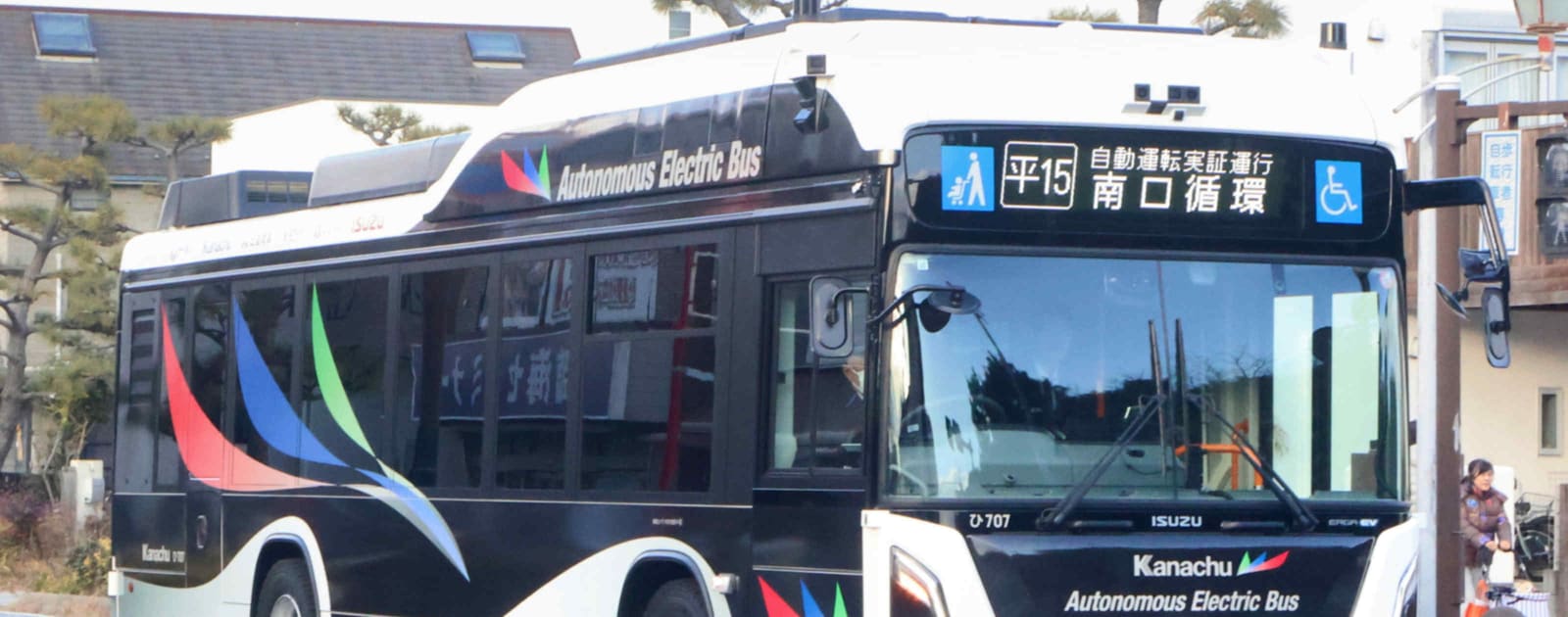
Japan's government has set a concrete target: 10,000 self-driving vehicles operating across the country by fiscal year 2030, supported by dedicated communication infrastructure spanning the archipelago. The plan represents a significant policy bet that the bottleneck in autonomous mobility isn't just vehicle technology, but the digital backbone required to make fleets talk to each other and to road systems in real time.
At DailyTechWire, we've tracked autonomous vehicle deployments across Asia for three years, and this marks one of the region's first attempts to architect connectivity infrastructure before mass deployment rather than retrofitting it afterward. The approach contrasts sharply with the patchwork rollouts in cities like Singapore, where autonomous taxi trials have expanded without nationwide coordination, and China's provincial permit systems that create regulatory fragmentation.
The fiscal 2030 timeframe is aggressive but not impossible. It implies scaling from today's handful of test routes to hundreds of commercial corridors within four years, a pace that will require resolving not just technical integration but also liability frameworks, insurance models, and local government buy-in across prefectures with vastly different road conditions.
Cross-Industry Coordination as Policy
The government's strategy centers on fostering cooperation between two historically siloed industries: automotive manufacturers and telecommunications providers. This isn't a trivial ask. Automakers in Japan have long operated within vertical keiretsu structures, developing proprietary systems and guarding intellectual property fiercely. Telecom operators, meanwhile, have been racing to monetize 5G investments and are wary of becoming commoditized infrastructure for another sector's profits.
Tokyo's role will likely involve convening standards bodies, subsidizing pilot corridors, and possibly mandating interoperability protocols. The 10,000-vehicle target suggests a mix of passenger cars, delivery vans, and public transit buses, each with different latency and reliability requirements. A robotaxi navigating Shibuya's pedestrian-heavy intersections needs millisecond-level decision support; a highway freight truck between Osaka and Nagoya can tolerate slightly higher latency but demands rock-solid uptime over hundreds of kilometers.
The infrastructure in question almost certainly involves Vehicle-to-Everything (V2X) communication, edge computing nodes at intersections, and high-definition map updates delivered over mobile networks. Japan's major carriers have been testing these elements in isolated zones, but stitching them into a national fabric will require capital expenditure in the tens of billions of yen and coordinated spectrum allocation.
Regional Context and Competitive Pressure
Japan's push unfolds against a backdrop of accelerating autonomous deployments elsewhere in Asia. Singapore has expanded trials for driverless taxis, leveraging its compact geography and centralized regulatory authority. China, despite recent permit suspensions following safety incidents, still leads in sheer scale of testing, with cities like Beijing and Shenzhen logging millions of autonomous kilometers annually.
For Japan, the stakes extend beyond transportation efficiency. The country's automotive sector employs millions and accounts for a significant share of exports. Ceding leadership in autonomous technology to Silicon Valley or Shenzhen would erode not just industrial competitiveness but also the intellectual property moats that Japanese OEMs have relied on for decades. A government-coordinated infrastructure play is, in part, an industrial policy aimed at keeping domestic players relevant.
The 10,000-vehicle figure also reflects demographic realities. Japan's aging population and shrinking workforce make labor-intensive transportation models increasingly untenable. Rural bus routes are shuttering; taxi drivers in regional cities are retiring without replacements. Autonomous shuttles and on-demand microtransit could fill these gaps, but only if the cost structure works, which requires shared infrastructure rather than bespoke systems for each operator.
Technical and Regulatory Hurdles Ahead
Reaching the 2030 target will hinge on resolving several interlocking challenges. First, Japan's complex road environment, dense urban cores interspersed with mountainous rural areas, presents edge cases that stress current perception and planning algorithms. Snow, typhoons, and narrow village streets with irregular signage are conditions that autonomous systems trained primarily on California highways struggle with.
Second, liability and insurance frameworks remain underdeveloped. When a Level 4 autonomous vehicle is involved in an accident, determining fault between the vehicle manufacturer, software provider, telecom operator, and road authority becomes legally intricate. The government will need to clarify these boundaries or risk chilling private investment.
Third, public acceptance is uneven. Test runs in cities like Hiratsuka have generated local curiosity, but broader surveys show Japanese consumers remain cautious about riding in vehicles without human drivers. Building trust will require not just safe operations but also transparent incident reporting and consumer education, neither of which Japan's traditionally opaque corporate culture handles well.
Finally, the economics must pencil out. Autonomous vehicles promise lower operating costs over time, but upfront capital for sensors, compute hardware, and network subscriptions is steep. For the 10,000-vehicle target to materialize, fleet operators need to see clear unit economics, which likely means government subsidies in the early years and volume discounts as scale builds.
What This Means for Asia's Mobility Map
If Japan succeeds in deploying a coordinated autonomous vehicle network by 2030, it will offer a model distinct from both Singapore's city-state approach and China's fragmented provincial experiments. A nationwide system with interoperable standards could become an export template for other mid-sized, geographically diverse markets in Europe and Latin America.
For automakers and tech firms watching from Seoul, Bangalore, and San Francisco, Japan's plan signals that the next phase of the autonomous race won't be won by the company with the best lidar or the most training data alone. It will be won by ecosystems that can integrate vehicles, connectivity, policy, and public trust at scale. That's a more complex game, and one where patient capital and government coordination matter as much as algorithmic breakthroughs.
The 2030 deadline is now four years away. Whether Japan meets it will depend less on any single innovation and more on the durability of cross-industry collaboration in a country where corporate rivalries run deep and regulatory change moves slowly. The infrastructure buildout starting now will reveal, in real time, whether Tokyo can orchestrate the kind of industrial choreography that once made Japan synonymous with manufacturing excellence.