AI Boom Reshapes Japan's Topix as Memory Chipmakers Crowd Out Smaller Stocks
Kioxia's tenfold valuation surge and soaring tech caps are tightening the roster of Tokyo's benchmark index, accelerating the exit of mid-tier firms.
A Tenfold Jump in Six Months
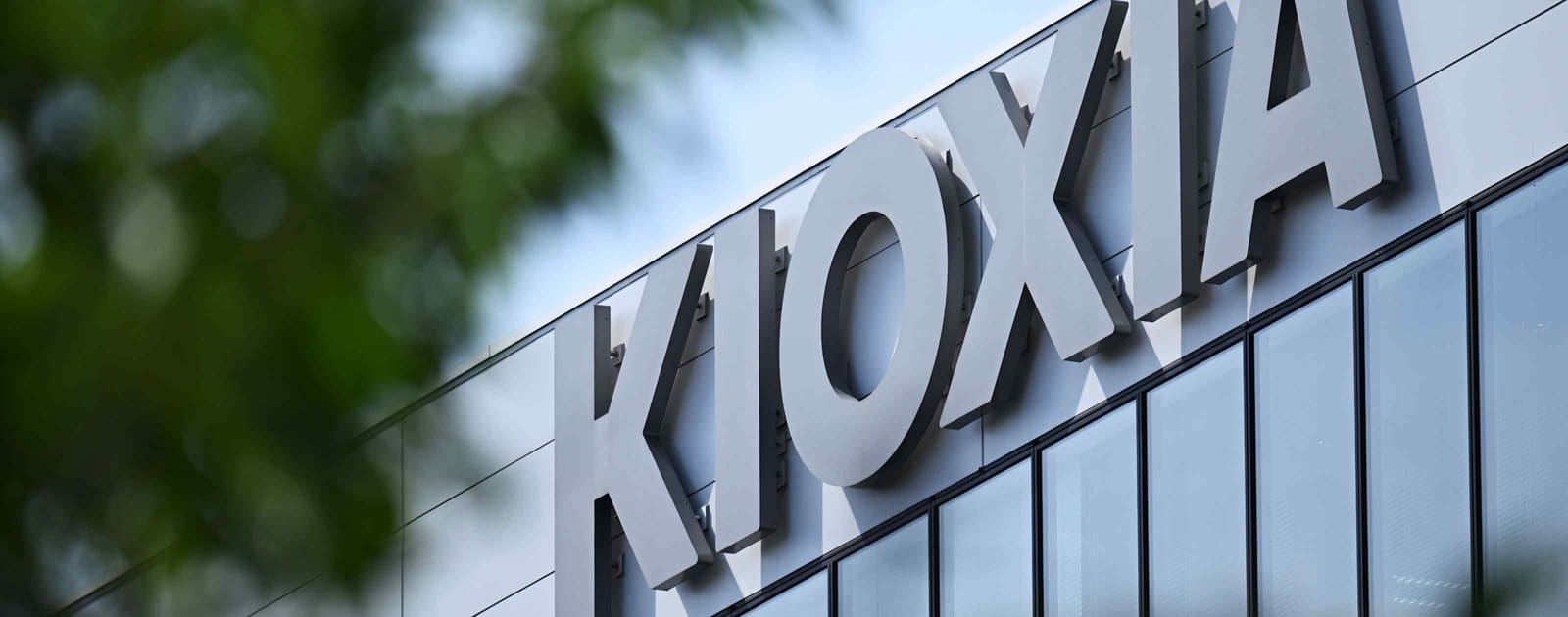
By mid-2026, Kioxia Holdings' market capitalization had climbed to more than ten times its level from late 2025. The memory chipmaker's ascent reflects a broader surge across Japan's AI-exposed equities, one that is now redrawing the composition of the Tokyo Stock Exchange's Topix index. At DailyTechWire, we've tracked similar valuation spikes in Seoul and Taipei, but Tokyo's structural reforms have given the rally a peculiar twist: the benchmark is set to shrink materially, as small- and mid-cap names are displaced by a handful of companies riding the inference and data-center buildout wave.
Kioxia, which supplies NAND flash to hyperscalers and appliance makers alike, has benefited from tighter supply discipline and accelerating orders for high-capacity modules used in training clusters. Murata Manufacturing, a specialist in ceramic capacitors and power-management components, has seen similar momentum as cloud operators race to expand capacity. Both firms now command market values large enough to claim a greater weight in the Topix, which reconstitutes on the basis of free-float-adjusted capitalization. That mathematical reality is forcing the index provider to cull smaller constituents to make room.
The Mechanics of a Shrinking Roster
The Topix tracks all domestic common stocks listed on the TSE's Prime Market, subject to liquidity and free-float thresholds. When a clutch of names balloon in size, the index does not simply expand; instead, the weighting algorithm compresses the influence of smaller members, and periodic reviews can lead to outright deletions if a stock falls below minimum criteria or if structural reforms tighten those criteria. Tokyo's push to consolidate listings and raise governance standards has already nudged hundreds of firms toward voluntary delistings or mergers. The AI rally has accelerated the churn by widening the valuation gap between the top decile and the rest.
For portfolio managers who benchmark against the Topix, the shift poses a rebalancing headache. Funds must sell positions in departing stocks and chase the newly enlarged tech names, often at elevated multiples. The dynamic mirrors what happened in Taiwan when TSMC's weight in the TAIEX crossed forty percent, though Japan's index construction spreads concentration risk across more names. Still, the direction is clear: liquidity and capital are pooling in a narrower set of plays.
Why Memory and Passives Are the Winners
Kioxia's rally is not purely a sentiment story. The company emerged from bankruptcy protection in 2022 and has since retooled its fabs to emphasize high-density 3D NAND, a category where demand from AI inference workloads is outpacing legacy enterprise storage. Hyperscalers are ordering modules with capacities north of thirty terabytes per unit, and Kioxia's Yokkaichi and Kitakami lines are among the few globally that can deliver at scale. The firm's partnership with Western Digital on process technology has also allowed it to share R&D costs, improving margins as ASPs recover.
Murata's story is adjacent but distinct. The Kyoto-based manufacturer dominates the market for multilayer ceramic capacitors, which stabilize voltage in GPUs, AI accelerators, and power-delivery networks. A single high-end server board can carry thousands of Murata's tiny components. As rack densities climb, so does the bill of materials. The company has also expanded into GaN power modules and thermal-management substrates, both critical for next-generation data centers. Investors have repriced the stock to reflect a multi-year visibility that was absent during the smartphone-led cycle of the 2010s.
Smaller Firms Caught in the Undertow
The flip side of this concentration is a widening valuation discount for companies outside the AI supply chain. Regional banks, retailers, and industrial conglomerates with limited exposure to semiconductors or cloud infrastructure have seen their Topix weights decline even when earnings are stable. Some have chosen to delist voluntarily, citing the cost of compliance with the TSE's new governance code and the difficulty of attracting analyst coverage. Others are being acquired by private-equity sponsors who see value in taking them off the public market and restructuring without quarterly scrutiny.
The index provider has not disclosed the exact number of deletions expected in the next reconstitution, but market participants estimate that the Topix could lose between fifty and seventy names by year-end if current trajectories hold. That would represent the most significant contraction since the exchange's 2022 segmentation reform, which created the Prime, Standard, and Growth tiers and set higher liquidity bars for top-tier membership.
Regional Context and Policy Implications
Japan's experience sits within a broader Asian pattern. In South Korea, the KOSPI has become increasingly Samsung Electronics-heavy as the chaebol's logic and foundry divisions capture AI capex. In Taiwan, TSMC's dominance is even more pronounced. What distinguishes Tokyo is the policy overlay: the government and the TSE have explicitly encouraged buybacks, dividend increases, and price-to-book improvements, measures designed to attract foreign capital and break the deflationary mindset that plagued Japanese equities for decades. The AI boom has turbocharged those reforms, but it has also exposed a tension. Concentration may lift the index's headline level, but it narrows participation and can amplify volatility when sentiment shifts.
Regulators are aware of the trade-off. The Financial Services Agency has floated the idea of tiered weighting caps or sector buffers to preserve diversity, though no formal proposal has been tabled. For now, the market is being allowed to run its course. Foreign investors, who bought a record sixty billion dollars of Japanese equities in the first half of 2026 according to exchange data, have shown little concern about concentration risk. Their focus remains on earnings growth and the yen's relative stability, both of which favor the current winners.
What This Means for Investors and Issuers
For active managers, the reconstitution creates both risk and opportunity. Stocks on the cusp of deletion often trade at distressed valuations in the weeks before the official announcement, as index-tracking funds preemptively sell. Conversely, names entering the Topix or seeing their weights rise can experience a technical bid that persists for months. The challenge is distinguishing between a genuine improvement in fundamentals and a temporary flows-driven rally.
Issuers outside the AI complex face a starker choice. They can pursue operational changes, share buybacks, or strategic mergers to lift their market caps above the threshold. Or they can accept a future as private or Standard Market entities, with lower compliance costs but reduced access to capital. The TSE's reforms were designed to force exactly this sort of decision, and the AI surge has simply accelerated the timeline.
At DailyTechWire, we see this as a case study in how technology cycles interact with market structure. The Topix is not shrinking because of a bear market or regulatory crackdown; it is shrinking because a subset of its constituents has captured an outsize share of global capital flows, and the index methodology is mechanical. Whether that concentration proves durable depends on how long the AI infrastructure buildout lasts and whether the next wave of applications, edge inference and on-device models among them, can broaden the beneficiary base. For now, memory chipmakers and passive-component specialists are the clear winners, and the index is adjusting accordingly.