Itochu Commits Hundreds of Billions of Yen to Data Center Build-Out in Japan
The trading conglomerate plans to construct and lease roughly ten facilities by decade's end, riding the infrastructure wave driven by AI workloads and hyperscale demand.
A Trading House Pivots to Digital Infrastructure
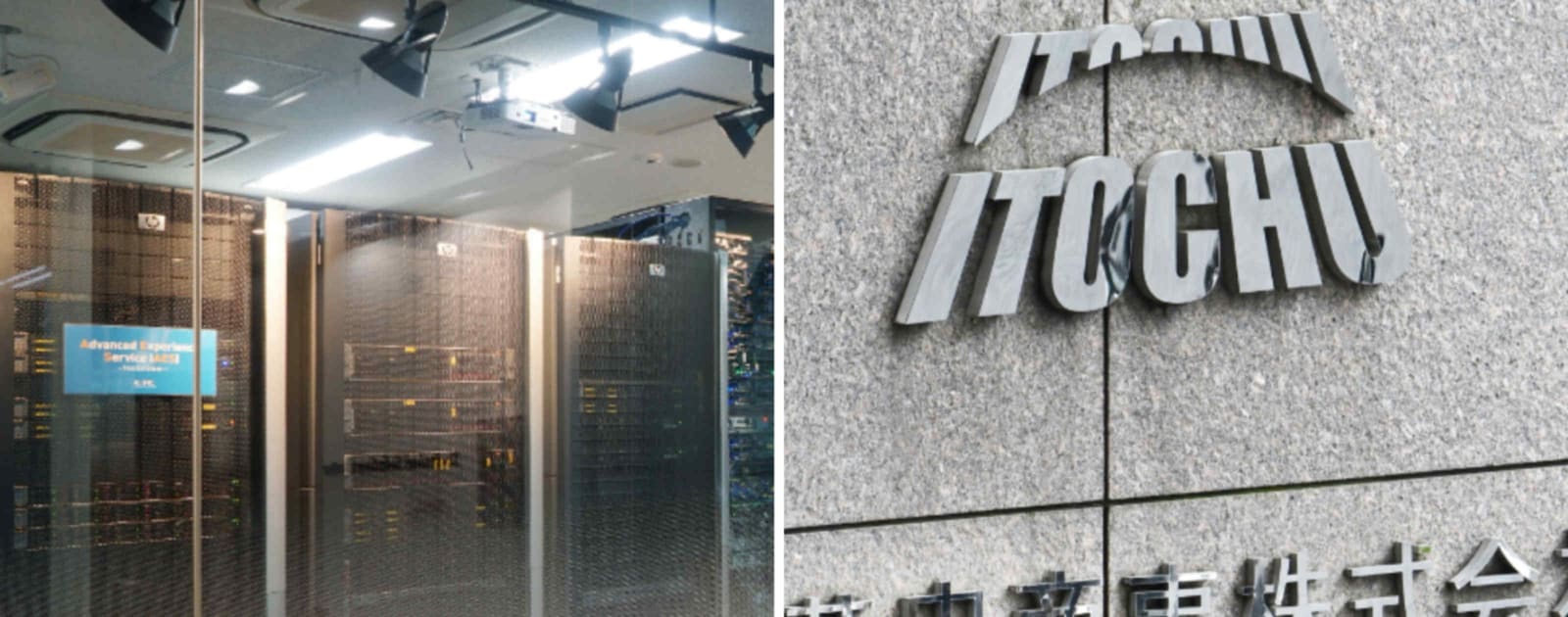
Itochu, one of Japan's largest trading conglomerates, is placing a substantial bet on data center infrastructure. The company announced plans to invest several hundred billion yen by 2030, constructing approximately ten facilities across Japan that will be leased to major technology companies, particularly U.S. hyperscalers. The move signals a strategic pivot for a firm traditionally anchored in commodities, textiles, and logistics, now seeking exposure to the infrastructure layer powering artificial intelligence and cloud computing.
At DailyTechWire, we've tracked a pronounced shift among Asia's trading houses over the past eighteen months. Companies once content to finance energy pipelines or mineral exports are now eyeing the data economy's physical backbone. Itochu's entry is notable not merely for its scale but for the operational model it has chosen: build, lease, and eventually exit. The plan calls for Itochu to develop the facilities, secure anchor tenants among leading tech firms, and then monetize the assets through sale once stabilized. That approach mirrors real estate investment trusts more than traditional infrastructure holdings, and it reflects a calculated view that data center valuation multiples will remain elevated as AI training and inference workloads proliferate.
The Economics of Build-Lease-Sell
Itochu's strategy hinges on capturing value at two inflection points. First, the construction and lease-up phase allows the company to deploy capital into high-demand assets while interest rates in Japan remain historically low. Second, the eventual sale to infrastructure funds or REITs locks in gains once occupancy and revenue streams are proven. According to Itochu, the timeline targets completion of the initial tranche of facilities before the end of the decade, with leasing agreements likely signed during or shortly after construction.
The investment quantum is significant. Several hundred billion yen translates to a range that could approach or exceed one billion U.S. dollars, depending on land acquisition costs, power infrastructure, and cooling architecture. Japan's data center market has seen land prices in suburban Tokyo and Osaka climb steadily, driven by proximity to fiber backbones and reliable power grids. Itochu has not disclosed specific site selections, but industry observers expect a mix of metropolitan-adjacent locations that balance latency requirements with land availability.
Lease agreements with U.S. technology giants and other hyperscale operators are central to the business case. These anchor tenants typically sign multi-year commitments, providing predictable cash flows that underpin asset valuations. For Itochu, securing such contracts early in the development cycle reduces leasing risk and enhances the attractiveness of the facilities to eventual buyers. The build-lease-sell model also allows the conglomerate to recycle capital more rapidly than a hold-and-operate strategy, funding subsequent projects or returning cash to shareholders.
JR East and the Rail-Adjacent Opportunity
Itochu has indicated interest in collaborating with East Japan Railway Company, commonly known as JR East, through a prospective joint venture. JR East controls extensive landholdings near major transit hubs, and its electrical infrastructure, originally built to power train networks, offers potential synergies for data center operations. Rail operators in Japan have begun exploring non-fare revenue streams, and data centers represent a high-value use case for underutilized parcels.
The logic is straightforward: rail corridors often run parallel to fiber routes, and substations can be adapted or expanded to supply the megawatt-scale power that modern data centers require. JR East's involvement would also streamline permitting and site preparation, reducing the lead time from groundbreaking to commissioning. While formal terms of the joint venture have not been announced, the partnership would position both companies to capitalize on Japan's push to localize data processing amid rising concerns over data sovereignty and latency-sensitive AI applications.
Japan's Data Center Landscape and Regional Dynamics
Japan's data center capacity has historically lagged behind Singapore, Hong Kong, and Australia in terms of total colocation supply, but momentum is shifting. Domestic cloud adoption, stricter data residency regulations, and the computational demands of generative AI are converging to drive new construction. The Japanese government has also signaled support for digital infrastructure, viewing it as essential to economic competitiveness and national security.
Itochu's entry adds a new category of investor to the market. Traditionally, data center development in Japan has been led by specialized operators, telecom carriers, and a handful of global REITs. Trading houses bring different capabilities: deep relationships with industrial suppliers, experience in large-scale project finance, and a tolerance for greenfield risk. If Itochu's model proves successful, it may prompt peers such as Mitsubishi Corporation, Mitsui & Co., and Marubeni to explore similar plays.
From a regional perspective, Japan offers certain advantages. Power reliability is among the highest globally, natural disaster preparedness is well-developed, and the regulatory environment for foreign investment in digital infrastructure is relatively open. However, cooling costs are non-trivial, particularly in humid summer months, and land scarcity in metro areas constrains site options. Itochu's ability to navigate these trade-offs will be closely watched by both local and international players.
The AI Infrastructure Tailwind
The proximate driver for Itochu's investment is the surge in demand for compute capacity tied to artificial intelligence. Training large language models, running inference at scale, and supporting edge AI workloads all require purpose-built facilities with high power density, low-latency networking, and robust cooling. Hyperscale operators are racing to secure capacity, and many are willing to commit to long-term leases in markets where supply is constrained.
Japan's AI ecosystem is still maturing relative to the United States and China, but investment is accelerating. Local universities, corporate research labs, and startups are expanding their use of machine learning, while multinational tech companies are establishing regional AI hubs. Data center capacity is a prerequisite for this growth, and Itochu's bet is that supply will remain tight through the end of the decade.
Yet the AI narrative also carries risks. Workload patterns are evolving rapidly, and it remains uncertain whether today's data center designs will meet the requirements of next-generation AI architectures. Liquid cooling, direct-to-chip thermal management, and modular power distribution are all areas of active innovation. Itochu's facilities will need to incorporate flexibility to accommodate shifting tenant needs, or risk obsolescence before the planned sale horizon.
What This Signals for Trading Houses in the AI Era
Itochu's data center ambition is part of a broader recalibration among Japan's trading conglomerates. These firms have historically acted as intermediaries, connecting resource producers with manufacturers and distributors. As commoditized goods yield thinner margins and geopolitical tensions disrupt supply chains, trading houses are seeking higher-margin, asset-light, or strategically positioned businesses. Digital infrastructure fits that profile.
The move also reflects a view that the value chain in AI is bifurcating. On one side are the model builders, chip designers, and software platforms capturing headlines and venture capital. On the other side is the physical infrastructure: power, cooling, real estate, and connectivity. The latter may offer lower revenue growth but delivers more predictable returns and benefits from long-term structural demand. For a conglomerate like Itochu, with patient capital and a multi-decade investment horizon, that trade-off is attractive.
Whether this strategy will deliver the returns Itochu anticipates depends on execution, market timing, and the willingness of infrastructure buyers to pay premium valuations for stabilized assets. But the signal is clear: Japan's trading houses are no longer content to sit on the sidelines of the digital economy. They are building the infrastructure that will underpin it.