IP68 Doesn't Mean Your Phone Can Swim
Water-resistance ratings are tested under sterile lab conditions, not pool parties. And most warranties won't cover the damage anyway.
The Summer Surprise Nobody Wanted
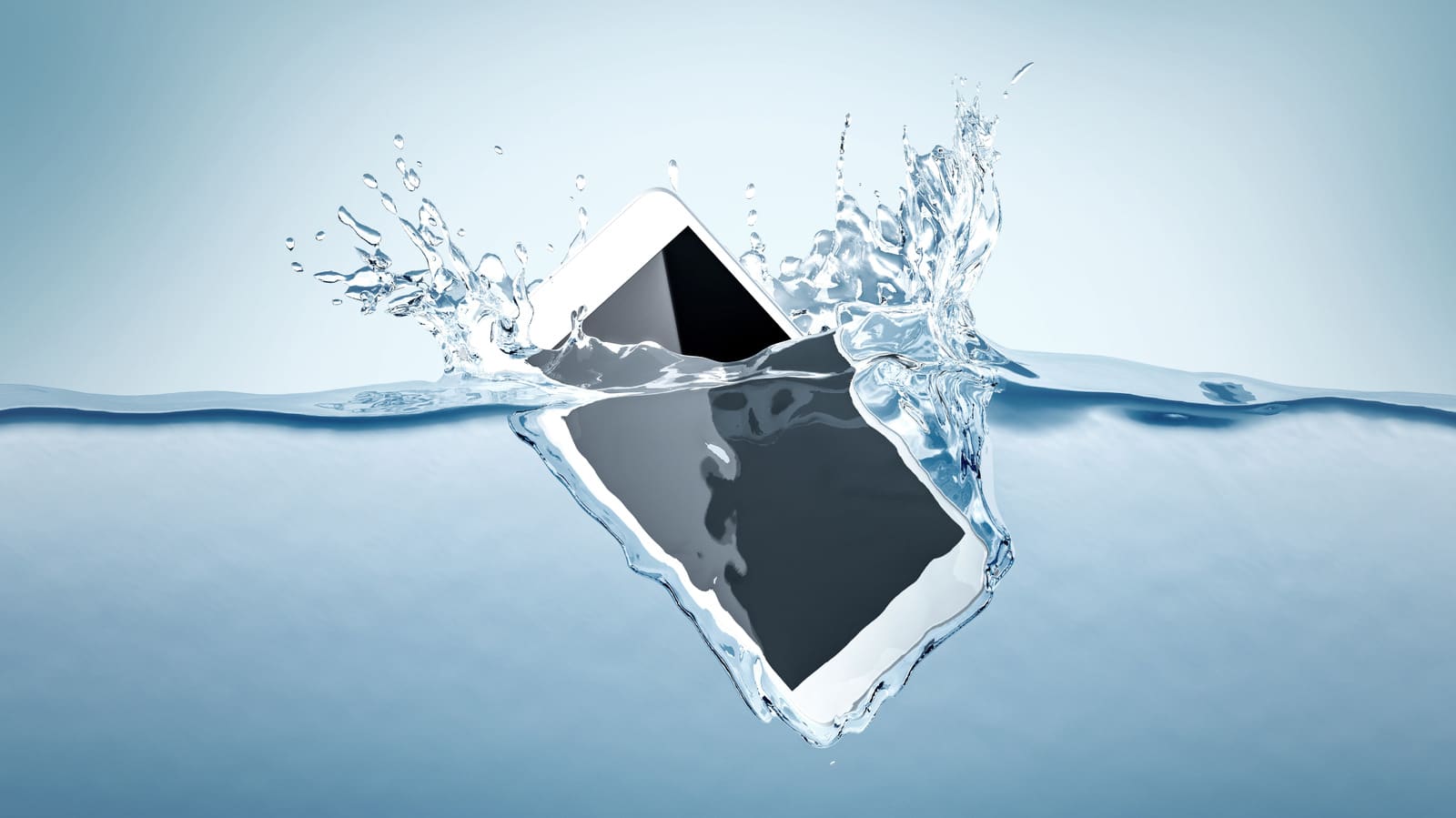
Pull a flagship Android or recent iPhone from your pocket and you'll likely find an IP68 sticker somewhere in the spec sheet. Marketing materials promise peace of mind: drop it in the sink, survive a rainstorm, maybe even snap underwater photos. But before you cannonball into the pool clutching your device, consider this - every year, repair shops fill with phones whose owners believed the hype. The disconnect isn't malice; it's how Ingress Protection standards translate from controlled lab benches to messy, unpredictable real life.
At DailyTechWire, we've tracked the gap between certification and consumer expectation across dozens of device launches. The issue isn't that manufacturers lie outright - it's that the IP system was never built to promise what most buyers assume it does. And when things go wrong, warranty clauses make sure the cost falls squarely on the user.
What IP68 Actually Certifies
The International Electrotechnical Commission designed the Ingress Protection code as a two-digit shorthand. The first digit runs from zero to six and measures defense against solid particles, with six meaning total dust-tight construction. The second digit covers liquids, scaling from zero to nine. An "X" in either position signals that particular test wasn't performed.
Here's where clarity ends. While IP67 specifies immersion up to one meter for thirty minutes, IP68 offers only a floor: deeper than one meter, longer than thirty minutes - or both. Manufacturers self-declare the rest. Apple states that newer iPhones tolerate six meters for half an hour, but earlier models with the same IP68 badge maxed out at two to four meters depending on generation. Samsung, OnePlus, and Xiaomi each publish their own thresholds, none of which appear on the rating itself.
That ambiguity isn't an oversight. The standard assumes buyers will consult detailed documentation; in practice, shoppers see "IP68" and move on, believing all such ratings are equivalent.
The Lab Versus the Lake
Certification tests submerge devices in fresh, still water at room temperature. No chlorine, no salt, no sediment. The phone descends slowly, rests motionless, then ascends. There are no waves, no temperature swings, no jets of water forced into charging ports by a diving motion.
Real-world immersion rarely resembles that protocol. Pool water carries chemicals that can degrade seals. Seawater is corrosive. Rivers carry particulates that scratch protective coatings. Even a bathtub introduces soap residue. High-velocity entry - like a phone slipping from your hand as you jump off a dock - generates pressure spikes the test chamber never simulates.
Temperature matters, too. Hot tub water can soften adhesive gaskets. Condensation from moving between air-conditioned indoors and humid outdoors stresses internal seals in ways a static tank cannot replicate. The test uses a pristine unit; yours has been dropped, flexed in a pocket, charged hundreds of times with slightly misaligned cables, and possibly cracked in ways invisible to the naked eye. Each micro-trauma chips away at the integrity the rating assumed.
The Warranty Trapdoor
Even brands that build rugged reputations - OnePlus markets "military-grade" durability on some models - routinely void warranties the moment liquid-damage indicators trip. Those tiny stickers inside the SIM tray or charging port change color on contact with moisture, and repair centers check them first.
The logic is circular: IP68 proves the device can survive water under specific conditions, but any water damage proves the conditions weren't met, so the failure is user error. Manufacturers point to clauses buried in warranty booklets that exclude "misuse," a term broad enough to encompass almost any real-world scenario that diverges from the test standard.
This creates an uncomfortable asymmetry. Marketing departments lead with water resistance as a tentpole feature, complete with glossy footage of phones emerging unscathed from fountains. Legal departments draft policies that assume zero liability the moment a user takes that promise at face value.
IP69 Isn't the Escape Hatch
A small cohort of devices - mostly ruggedized models aimed at construction or industrial users - carry IP69 certification. The nine sounds superior, and in one narrow sense it is: those phones survive high-pressure, high-temperature water jets, the kind used in industrial washdown. But the test involves surface spray, not submersion. An IP69 device might shrug off a pressure washer yet fail in a swimming pool, because the rating says nothing about prolonged immersion depth.
This inversion confuses buyers who assume higher numbers equal better all-around protection. In reality, IP69 and IP68 address different threat models. A phone built for factory floors may prioritize jet resistance and sacrifice the gasket design needed for underwater photography. Unless a device explicitly lists both IP68 and IP69, you're choosing between scenarios, not stacking protections.
How Damage Accumulates Invisibly
Brand-new units pass certification because every seal, every adhesive bead, every gasket sits exactly as designed. After six months of ownership, that's no longer true. Dropping a phone onto tile can compress internal components by fractions of a millimeter - not enough to crack the screen, but enough to create gaps. Thermal cycling from charging, sunlight, and cold pockets expands and contracts materials at different rates, subtly deforming the chassis.
Dust and lint work their way into ports, preventing covers from seating flush. Scratches on oleophobic coatings create channels for water to wick along. Even opening the SIM tray repeatedly can wear the tiny rubber O-ring that keeps moisture out. None of these changes are catastrophic on their own, but cumulatively they erode the tolerances the IP rating relied upon.
The test assumes a perfect specimen. Your phone, by definition, is not.
Practical Guidance for Device Owners
If water resistance matters to your workflow - you shoot video near rivers, work in humid industrial environments, or simply want insurance against spills - treat IP68 as a last line of defense, not a license. Use a waterproof pouch for intentional submersion. Rinse with fresh water immediately after any saltwater or chemical exposure, then dry the device thoroughly, ports facing down. Avoid extreme temperature differentials that cause condensation inside sealed cavities.
When shopping, dig past the IP rating into manufacturer specs. Look for exact depth and duration claims, and note whether the brand covers water damage under warranty. Some extend protection if you purchase added insurance plans; others never do. That policy tells you more about real-world durability expectations than the two-digit code ever will.
The Certification That Promises Too Much and Too Little
The Ingress Protection system serves engineers well - it's precise, reproducible, and rooted in measurable physics. But somewhere between the test lab and the retail shelf, those technical nuances get flattened into a single, misleading reassurance: your phone is waterproof. It isn't. It's water-resistant under a narrow set of conditions that daily life rarely honors.
Until the standard tightens its definitions or marketing learns to communicate uncertainty, the gap will persist. In the meantime, the safest assumption remains the simplest one: electronics and water don't mix, no matter what the badge says. Treat every dunk as a gamble, and you'll be far less likely to find yourself staring at a black screen and a voided warranty, wondering where the promise went wrong.