India Orders WhatsApp to Justify Username Feature or Face Regulatory Action
Ministry of Electronics gives Meta three days to respond as government cites impersonation risks in world's largest WhatsApp market
A 72-Hour Clock Starts Ticking
On July 1, India's Ministry of Electronics and Information Technology sent WhatsApp a letter that set a tight deadline: three days to explain why the platform should not face regulatory action over its planned username feature. The ministry also instructed the Meta-owned service to halt the rollout until New Delhi grants approval.
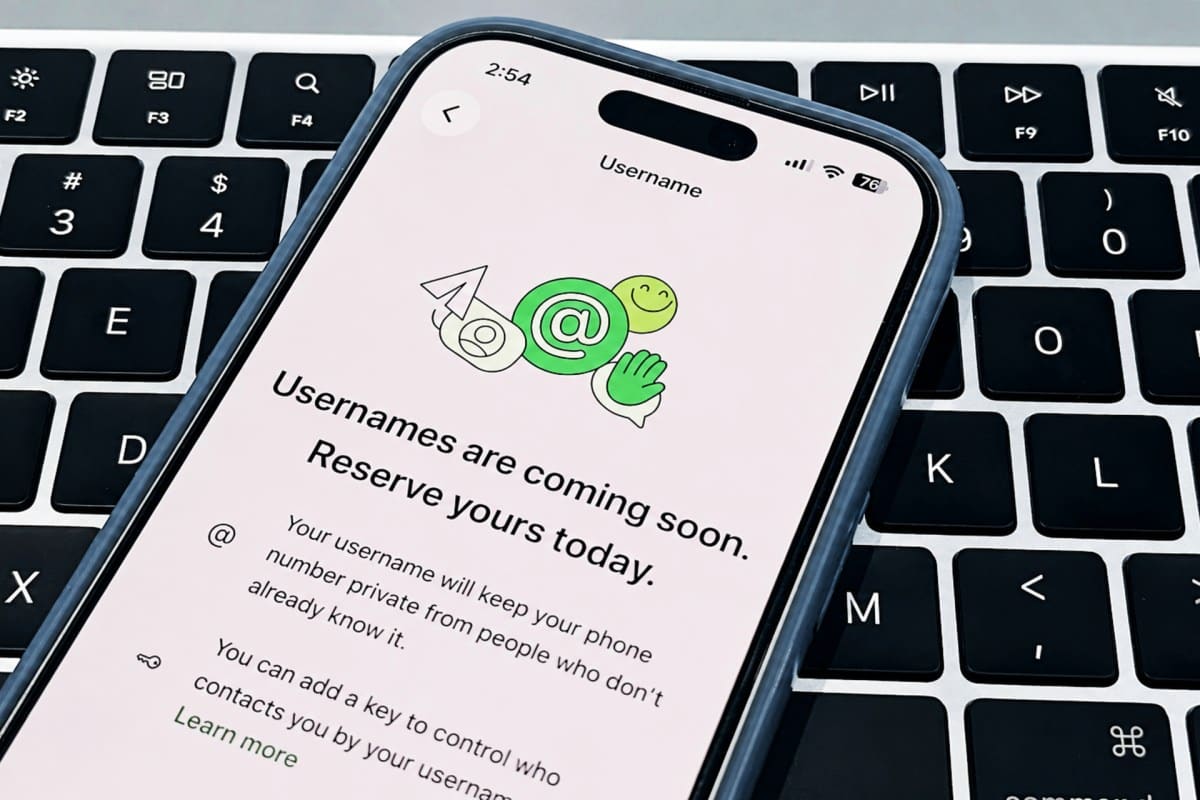
The directive comes just days after WhatsApp announced on June 29 that it would allow users to reserve usernames for messaging without exposing their phone numbers. The feature, slated to launch later this year, aims to give people more privacy when connecting with classmates, neighbors, professional contacts, or group chats.
For India, home to more than 850 million WhatsApp users and the platform's largest market globally, the stakes are different. Officials worry the username system will open new avenues for fraud at a scale the country's overstretched enforcement apparatus cannot handle.
The Government's Case
MeitY's concern centers on impersonation. Without a visible phone number as a first point of contact, attackers could more easily pose as government departments, financial institutions, or public authorities. The ministry cited two legal frameworks: the Information Technology Act 2000 and the 2021 Intermediary Guidelines and Digital Media Ethics Code. Both, it argues, give the government grounds to intervene when a platform feature may "increase cybercrimes," including phishing and so-called digital arrest scams, where fraudsters impersonate law enforcement to extort victims.
India has reason to be wary. WhatsApp-based fraud is already endemic across the country, with scammers routinely impersonating family members, officials, and organizations to extract money or personal data. The platform's end-to-end encryption makes investigation difficult, and the sheer volume of users means even a small uptick in scam success rates translates to millions of potential victims.
The ministry's letter reflects a broader tension in Indian tech policy: how to balance user privacy and platform innovation against the government's desire for control and traceability. At DailyTechWire, we've tracked similar standoffs across Asia, from Thailand's LINE encryption debates to Vietnam's data localization mandates. India's approach tends to be more interventionist, often citing public safety as justification for regulatory demands that would be unthinkable in other democracies.
Legal Basis Under Question
Not everyone agrees the government has the authority it claims. The Internet Freedom Foundation, a digital rights organization, obtained and shared a copy of the ministry's letter. The IFF argues that neither the IT Act nor the 2021 rules provide a clear legal basis for blocking a feature before it launches. The organization called the move "regulatory overreach" and compared it to a March 2024 advisory in which MeitY attempted to require AI companies to seek government approval before releasing models to the public. That earlier directive was widely criticized and withdrawn within two weeks after industry pushback.
The IFF noted that this latest notice goes further: it names a single company, imposes a three-day response window, and bars the feature's launch indefinitely. The organization's analysis suggests MeitY is effectively trying to build a pre-approval regime without explicit legislative authority, a pattern that has emerged repeatedly in Indian internet governance over the past two years.
Whether WhatsApp will comply, push back, or negotiate a middle ground remains to be seen. Meta has historically been willing to accommodate Indian regulatory demands, including appointing local compliance officers and building content moderation infrastructure tailored to the country's requirements. But a blanket halt to a global feature rollout would set a precedent the company may find harder to accept.
WhatsApp's Defense
In a statement, WhatsApp emphasized the multiple safeguards it has embedded in the username system. When someone messages a user via username for the first time, the recipient will see whether the sender is a new account, already in their contacts, shares mutual groups, or is located in a different country. This contextual information, the company argues, allows users to assess risk before responding.
WhatsApp also said it has pre-reserved high-profile usernames for legitimate organizations and individuals, and built technical barriers against lookalike registrations. Users still need a phone number to create an account, and the platform will limit how many new contacts an account can reach, block repeated attempts to guess username identifiers, and deploy pattern-detection systems to flag impersonation and abuse.
The company's approach mirrors strategies used by Telegram, which has long allowed public usernames and faced similar fraud challenges. Telegram's experience in India has been rocky; the platform was temporarily banned in June over concerns that exam questions were circulating ahead of the NEET-UG medical entrance test. The ban was lifted after the exam was rescheduled, but the episode underscored how quickly Indian authorities will act when they perceive a platform as enabling harm, whether financial fraud or academic integrity violations.
A Market Too Big to Lose
WhatsApp claims more than 3 billion users worldwide, and India represents roughly 28 percent of that total. Losing access to the Indian market, even temporarily, would be catastrophic for Meta's messaging ambitions in Asia. But the company also cannot afford to let a single government dictate product design for a global feature, particularly when other large markets, including Indonesia, Brazil, and Nigeria, may be watching to see whether regulatory pressure works.
The username feature is part of a broader shift in messaging platforms toward pseudonymity and reduced reliance on phone numbers, which are increasingly seen as vectors for spam, harassment, and surveillance. Signal, Telegram, and even Apple's iMessage have experimented with similar approaches. For WhatsApp, the feature is a way to compete with rivals while maintaining its core value proposition: secure, accessible communication.
India's intervention reflects a different calculation. In a country where digital literacy is uneven, law enforcement is under-resourced, and scam losses run into billions of dollars annually, the government sees privacy features as potential enablers of crime. The challenge for policymakers is distinguishing between tools that genuinely increase risk and those that simply make existing problems more visible.
What Happens Next
WhatsApp has until July 4 to respond to the ministry's letter. The company could offer technical concessions, such as additional friction in the username registration process for Indian users, or enhanced reporting tools for suspected fraud. It could also push back legally, arguing that MeitY lacks the statutory authority to impose a pre-launch ban. A third option is delay: rolling out the feature in other markets first while negotiating with New Delhi behind the scenes.
The outcome will likely set a precedent for how other platforms handle similar features in India. If WhatsApp capitulates, expect other messaging services to face similar pre-approval demands. If it resists and wins, it may embolden companies to challenge other instances of what they see as regulatory overreach.
For now, the clock is ticking. And in a market where 850 million users depend on WhatsApp for everything from family chats to business transactions, the stakes extend far beyond a single feature. This is a test case for who gets to decide how digital tools evolve in the world's most populous democracy: the companies that build them, or the government that regulates them.