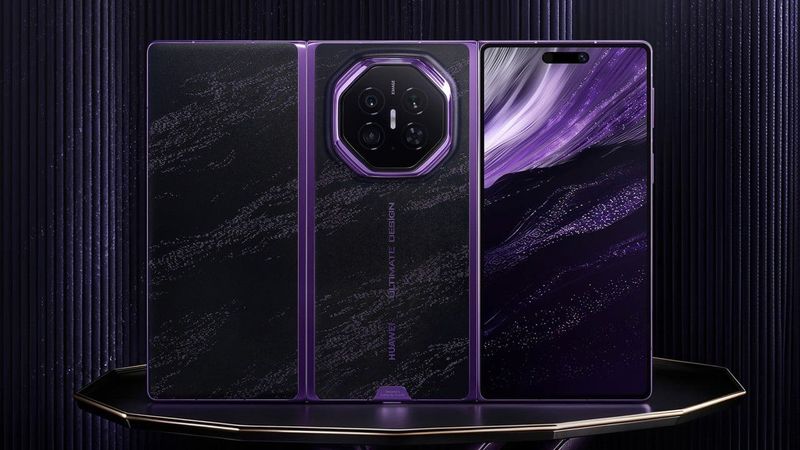
Huawei Bets on Vertical Stacking to Outrun Export Controls
The Kirin 9050 Pro debuts LogicFolding, a 3D architecture that trades node shrinks for layered circuits - and a path around American sanctions.
A New Axis for Performance
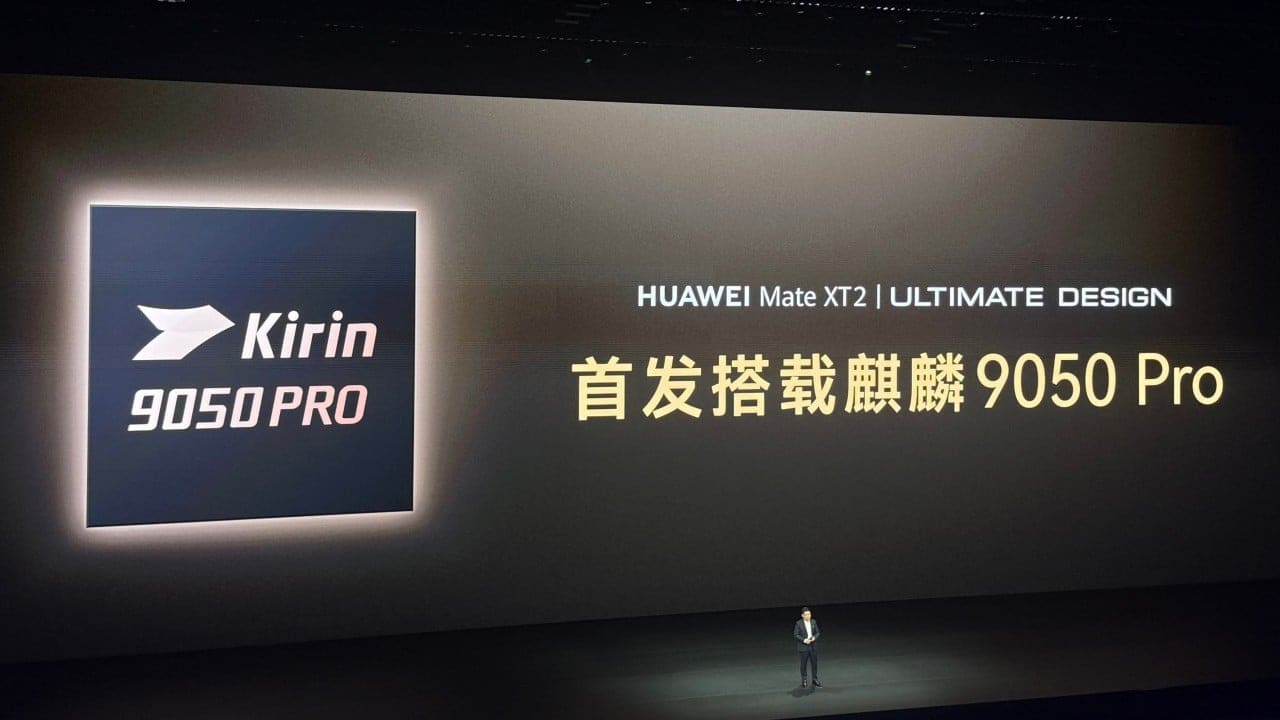
Huawei's newest mobile processor does not chase smaller transistors. Instead, it stacks them. The Kirin 9050 Pro, unveiled this week, is the first chip to ship with LogicFolding - a vertical architecture that layers logic circuits atop one another rather than etching them side by side on a single plane. For a company locked out of cutting-edge lithography equipment by US export rules, the approach offers a rare degree of freedom: more performance without needing the next node.
At DailyTechWire, we have tracked Huawei's silicon roadmap since the Entity List designation in 2019, and LogicFolding represents the clearest articulation yet of the company's Plan B. Where TSMC and Samsung pursue 3-nanometer and 2-nanometer processes with extreme ultraviolet lithography, Huawei is betting that vertical integration - literal stacking of transistor layers - can deliver comparable gains in compute density and power efficiency. The question is whether the physics and the economics hold up at scale.
What LogicFolding Actually Does
Traditional chip design places all active transistors on a single silicon wafer, then connects them with metal interconnects above. LogicFolding splits logic circuits across two or more vertically bonded die, connected by through-silicon vias. Each layer can be manufactured on a mature process node - 14-nanometer or even 28-nanometer - yet the aggregate transistor count per unit area rivals what a 7-nanometer planar design might achieve.
The technique is not entirely new. AMD's 3D V-Cache and Intel's Foveros have explored vertical stacking, but those implementations typically reserve the upper layers for cache memory or I/O die. Huawei's architecture, according to analysts, places compute logic - cores, neural-processing units, even portions of the GPU - on stacked layers. That introduces harder thermal and signal-integrity challenges, because active transistors generate heat and switching noise on multiple planes.
Early benchmark leaks suggest the Kirin 9050 Pro delivers single-thread performance within 10 percent of Qualcomm's Snapdragon 8 Gen 4, despite being built on an older foundry process. Multi-threaded workloads and on-device AI inference show larger gains, likely because the stacked design shortens interconnect paths between the CPU and NPU.
The Export-Control Calculus
Huawei's pivot to 3D architectures is a direct response to the denial of ASML's EUV scanners and the tightening of restrictions on advanced packaging equipment. Without access to the lithography tools that enable sub-7-nanometer manufacturing, the company cannot follow the industry's primary roadmap. Stacking mature-node die offers a workaround - one that relies on equipment already installed in Chinese fabs and does not trigger the same export-license thresholds.
Yet the strategy is not sanction-proof. Advanced packaging tools - die bonders, hybrid bonding aligners, metrology systems for through-silicon vias - are themselves subject to export controls, particularly when destined for military or surveillance end-users. Huawei's ability to scale LogicFolding depends on domestic suppliers filling those gaps, and the yield and precision of Chinese packaging lines remain below the levels TSMC and Samsung achieve.
The geopolitical stakes are higher in AI. Huawei has publicly stated that LogicFolding will underpin its next generation of Ascend AI accelerators, positioning the architecture as a foundation for training and inference workloads that do not rely on Nvidia's CUDA ecosystem. If the company can deliver competitive performance at lower cost - by stacking older-node chiplets - it could capture share in markets where US export restrictions on H100 and A100 GPUs leave a vacuum.
Thermal and Yield Headwinds
Stacking active logic introduces thermal density that planar designs avoid. Each transistor layer dissipates heat, and the vertical distance between layers is measured in micrometers. Without aggressive thermal management - microfluidic cooling, diamond heat spreaders, or novel thermal-interface materials - hotspots can throttle performance or degrade reliability.
Huawei has not disclosed the cooling solution in the Kirin 9050 Pro, but industry observers note that the chip is rated for lower sustained clock speeds than competing flagship processors. That suggests thermal constraints are real, and that the company has prioritized burst performance over continuous high-frequency operation. For mobile devices, where workloads are bursty and power budgets tight, the trade-off may be acceptable. For data-center Ascend chips, it is a harder problem.
Yield is another variable. Bonding two or more die with sub-micron alignment precision is difficult, and defects in any layer can render the entire stack unusable. If one die in a three-layer stack has a flaw, the entire assembly is scrap. That multiplies manufacturing cost and limits the economic advantage of using mature nodes. TSMC's 3D packaging yields are in the high 80s for cache stacking; logic-on-logic stacking is believed to be lower.
What This Means for the AI Stack
Huawei's ambitions extend well beyond smartphones. The company has earmarked LogicFolding for its Ascend 920 and future AI accelerators, aiming to close the performance gap with Nvidia's Hopper and Blackwell architectures. Stacking allows Huawei to place HBM controllers, tensor cores, and interconnect logic in close vertical proximity, reducing latency and power consumption for matrix operations.
The broader implication is that China's AI hardware ecosystem may diverge architecturally from the West's. While US and European chip designers optimize for leading-edge nodes and monolithic die, Chinese firms are investing in heterogeneous integration - chiplets, 3D stacking, photonic interconnects - that work around lithography constraints. That divergence will shape software frameworks, developer tools, and the portability of AI models between ecosystems.
For companies building AI products in Asia, the question is no longer whether Chinese accelerators are fast enough - it is whether the software stack around them is mature enough. Huawei's MindSpore framework and CANN compiler toolchain have improved, but they lack the breadth of libraries, pre-trained models, and third-party support that CUDA enjoys. LogicFolding may solve the hardware problem; the software moat remains.
The Roadmap Ahead
Huawei has signaled that LogicFolding is a multi-generation strategy. The Kirin 9050 Pro is a two-layer design; internal roadmaps reportedly explore three- and four-layer stacks for future Ascend chips. The company is also investigating monolithic 3D integration, where transistors are built sequentially on the same wafer rather than bonded post-fabrication. That approach, still in research phases globally, could push transistor density beyond what any planar process achieves.
The competitive landscape is shifting. Intel is ramming up Foveros Direct, TSMC is expanding its System-on-Wafer offerings, and Samsung is pursuing hybrid bonding for logic stacking. If 3D architectures become the industry's next frontier, Huawei's early investment in LogicFolding may pay off - not as a sanction workaround, but as a legitimate performance path.
For now, the Kirin 9050 Pro is a proof point. It demonstrates that vertical stacking can deliver flagship-class performance without the newest lithography. Whether it can do so at scale, at acceptable yield, and with the thermal headroom for sustained AI workloads, will determine whether LogicFolding is a stopgap or a strategic advantage. The funding rounds we have followed across the region suggest other Chinese chip designers are watching closely - and preparing their own stacking plays.