Huawei Bets on Tau Scaling Law to Power Its Newest Mobile Chip
The Kirin 9050 Pro marks the Chinese giant's latest effort to advance processor performance while navigating semiconductor export restrictions.
A New Path for Mobile Silicon
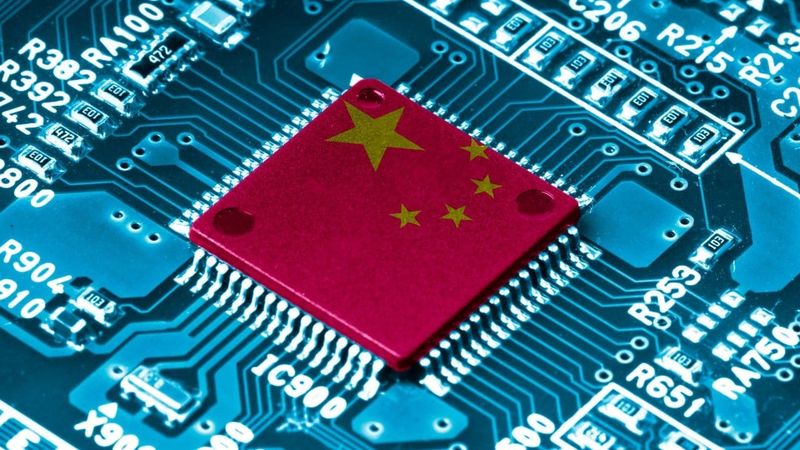
Huawei's latest smartphone processor landed in Guangzhou on Monday with a promise that will sound familiar to anyone tracking Asia's semiconductor race: more performance, less dependence on Western tooling. The Kirin 9050 Pro, according to Richard Yu Chengdong, who leads Huawei's consumer division, is the most capable mobile chip the company has ever designed. What sets this generation apart is not just raw speed but the architecture underneath. Huawei has built the 9050 Pro on what it calls the Tau Scaling Law, a proprietary framework for squeezing efficiency and compute gains from silicon without necessarily shrinking transistors to the bleeding edge of process nodes.
For context: traditional Moore's Law has long been the north star of the chip industry, predicting that transistor density doubles roughly every two years, delivering predictable leaps in performance. But as nodes approach 3 nanometers and below, that cadence has become prohibitively expensive and technically complex. Huawei, locked out of the most advanced lithography machines by export controls, has little choice but to innovate around the problem. Tau Scaling Law appears to be its answer, a set of design principles that optimize power, thermal management, and instruction throughput within the constraints of older process technology.
What Tau Scaling Law Actually Means
At DailyTechWire, we've tracked a growing number of Asian chipmakers exploring alternative scaling strategies. Tau Scaling Law is Huawei's entry in that conversation. While the company has not published a full technical white paper, the concept centers on maximizing efficiency per watt and per millimeter of die area. Instead of chasing the smallest transistor, Huawei's engineers are rethinking cache hierarchies, data pathways, and how cores communicate with memory. The result, in theory, is a chip that can compete on benchmarks even if it is not manufactured on a 5-nanometer or 3-nanometer line.
This approach aligns with trends we see across Shenzhen, Seoul, and Hsinchu, where designers are turning to heterogeneous compute, chiplet architectures, and custom instruction sets to differentiate. Huawei's bet is that software optimization and architectural cleverness can close much of the gap left by restricted access to ASML's extreme ultraviolet lithography systems. Whether that holds true under sustained workloads, particularly for AI inference and gaming, remains an open question.
The Trifold Device and Consumer Strategy
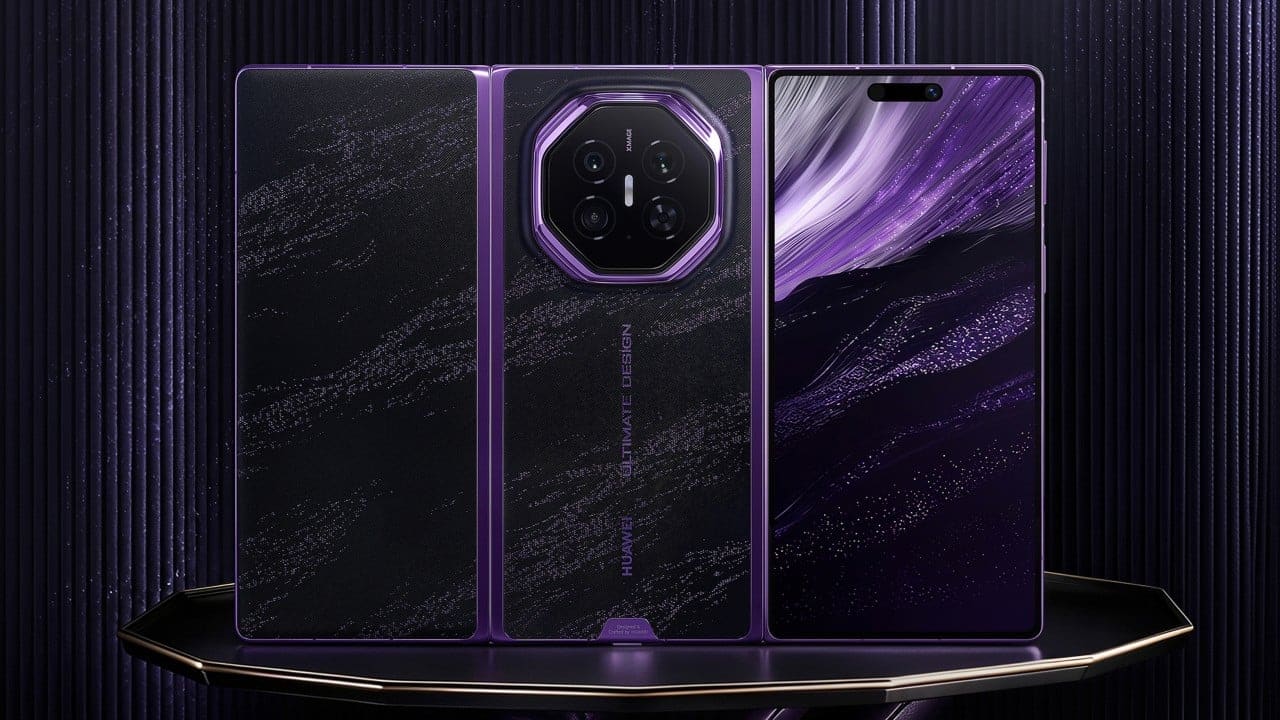
The Kirin 9050 Pro will debut inside a new trifold smartphone, a form factor that has drawn curiosity and skepticism in equal measure. Trifold designs offer more screen real estate than conventional foldables but introduce new challenges around hinge durability, weight distribution, and app compatibility. Huawei has been iterating on foldable hardware for several years, and this launch suggests the company sees trifolds as a viable category, not just a concept piece.
For Huawei's consumer business, the stakes are high. The brand has clawed back domestic market share in China after years of pressure from sanctions, but international expansion remains severely constrained. Premium devices like the trifold phone and flagship chips like the 9050 Pro are aimed squarely at retaining high-value users in tier-one Chinese cities and select markets in the Middle East and Southeast Asia where Huawei still has distribution. The Kirin 9050 Pro is as much a statement of technical resilience as it is a product specification.
Semiconductor Independence and Its Limits
Huawei's push for chip self-reliance is part of a broader Chinese strategy to build a domestic semiconductor ecosystem that can withstand geopolitical friction. The company has invested heavily in design talent, tooling partnerships with Chinese equipment makers, and its own HiSilicon subsidiary, which designs the Kirin line. But self-reliance has limits. Even with Tau Scaling Law and architectural innovation, Huawei still depends on fabrication partners that themselves face equipment restrictions. SMIC, China's leading foundry, has demonstrated it can produce 7-nanometer chips using older deep ultraviolet tools and multi-patterning techniques, but yields are lower and costs are higher than comparable nodes produced with EUV.
The real test for the Kirin 9050 Pro will come in sustained real-world use. Can it handle on-device large language model inference with acceptable latency? Does it throttle under heavy multitasking or high-refresh-rate gaming? And crucially, how does it compare in efficiency to Qualcomm's Snapdragon 8 Gen 4 or MediaTek's Dimensity 9400, both built on TSMC's advanced nodes? Huawei's engineers have bought themselves time and credibility with clever design, but they are still playing on an uneven field.
What This Signals for the Region
We see this launch as part of a larger pattern. Across Asia, companies are diversifying their chip strategies in response to supply-chain volatility and export policy. Samsung is accelerating its foundry ambitions. India is incentivizing domestic packaging and testing. Vietnam and Malaysia are courting backend assembly. Huawei's Tau Scaling Law is one data point in a much larger story about how the region is adapting to a world where access to the best tools is no longer guaranteed.
For now, the Kirin 9050 Pro and its trifold host device will serve as a showcase of what Huawei can achieve within current constraints. Whether that showcase translates into sustained competitiveness depends on factors beyond architecture: yield improvements at SMIC, software ecosystem support, and whether export controls tighten or relax in the next two years. Huawei has shown it can design ambitious chips. The question is whether the ecosystem around it can scale to match.