Hua Hong Bets $2 Billion on Wuxi Fab to Sidestep Export Controls
China's second-largest foundry expands specialty capacity as domestic AI demand collides with Washington's semiconductor restrictions
A $2 Billion Wager on Self-Reliance
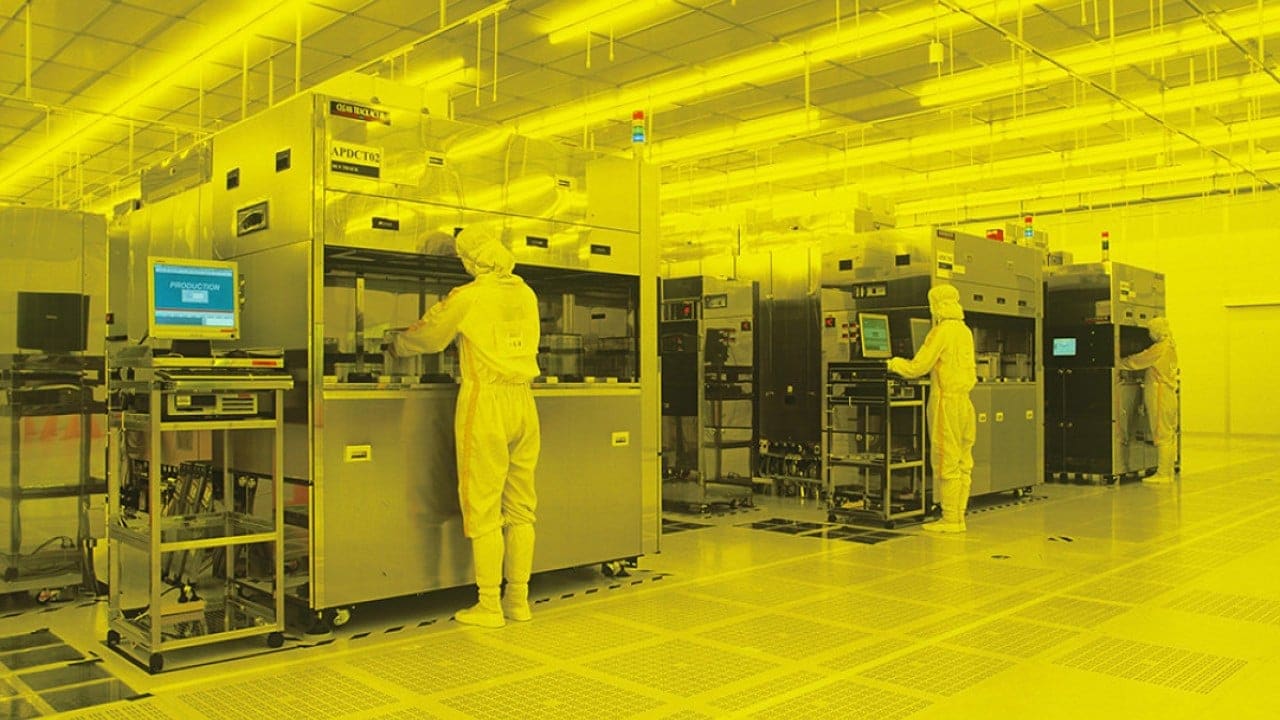
Hua Hong Grace Semiconductor is placing a $2 billion bet on domestic capacity, announcing plans for a third 12-inch specialty wafer fabrication plant in Wuxi, the eastern Chinese city that has emerged as a critical node in the country's semiconductor ambitions. The investment, disclosed in a Hong Kong stock exchange filing this week, reflects the dual pressures reshaping Asia's foundry landscape: surging internal demand for AI infrastructure and the tightening grip of US export controls on advanced chipmaking tools.
At DailyTechWire, we've tracked how Washington's successive rounds of restrictions have forced Chinese foundries into a strategic corner. Rather than compete head-on in leading-edge logic, players like Hua Hong are doubling down on specialty processes - power management ICs, RF components, analog mixed-signal - that sit outside the most aggressive sanctions yet remain essential to everything from data center power distribution to edge AI inference accelerators.
Specialty Process as Strategic Moat
The new Wuxi line will focus on 12-inch wafers, the industry standard for modern high-volume manufacturing. But unlike TSMC's bleeding-edge 3nm nodes or Samsung's gate-all-around architectures, Hua Hong's sweet spot lies in mature and specialty nodes: 90nm to 40nm processes optimized for automotive, industrial, and increasingly, the analog front-ends of AI systems.
This positioning is deliberate. Specialty fabs require less extreme ultraviolet lithography and fewer restricted materials, sidestepping the chokepoints that have hobbled SMIC's sub-7nm ambitions. At the same time, China's domestic AI build-out - spanning hyperscale cloud training clusters, municipal smart-city deployments, and factory automation - generates relentless demand for power management, voltage regulators, and sensor interfaces. Hua Hong's capacity expansion targets precisely this mid-stack opportunity, where geopolitical friction is lower but margin pressure remains intense.
Wuxi's Expanding Foundry Ecosystem
Wuxi has quietly consolidated its status as China's second-tier semiconductor hub, trailing only Shanghai in foundry concentration. The city's government has rolled out subsidies, streamlined environmental approvals, and co-invested in shared infrastructure - clean rooms, chemical supply chains, packaging test facilities - that lower the barrier for fab expansions.
Hua Hong's first two Wuxi facilities already anchor a regional cluster that includes equipment suppliers, design service partners, and logistics nodes optimized for just-in-time wafer delivery. The third fab will leverage this ecosystem, shortening ramp timelines and reducing per-wafer cost structures. For chipmakers locked out of Taiwan and South Korea by export license delays, Wuxi's integrated supply chain offers a compelling, if technologically constrained, alternative.
The AI Demand Vector
China's AI infrastructure spending has accelerated despite - and in some ways because of - restricted access to Nvidia's H100 and A100 GPUs. Domestic players are fielding alternative architectures: inference-optimized ASICs, heterogeneous compute tiles, and chiplet-based designs that distribute workloads across multiple smaller dies. Each of these approaches multiplies the need for specialty analog and power ICs, the unglamorous but mission-critical components that regulate voltage, filter noise, and manage thermal envelopes.
Hua Hong's expansion aligns with this shift. While headlines fixate on training clusters and frontier models, the operational reality of deploying AI at scale - across retail, logistics, manufacturing, and municipal services - demands thousands of edge devices, each requiring robust power management and sensor integration. The foundry's roadmap emphasizes high-voltage processes and embedded flash, both tailored to edge AI and automotive applications that China's government has prioritized in its latest five-year plan.
Export Control Dynamics and Fab Economics
Washington's October 2022 and subsequent 2023 semiconductor rules targeted not just advanced logic but also the tools required to scale any high-performance manufacturing: certain deposition systems, advanced metrology, and EUV scanners. Yet the restrictions are tiered, leaving older-generation equipment and mature-node processes largely untouched.
Hua Hong's strategy exploits this tiering. By concentrating investment in 12-inch specialty lines rather than sub-10nm logic, the company can source equipment from Japanese and European vendors still permitted to ship to China, albeit with longer lead times and higher compliance overhead. The $2 billion outlay also signals confidence that the current regulatory ceiling will hold - or at least that incremental tightening will spare the mature-node segment.
Competitive Pressure and Margin Reality
The move comes as Hua Hong faces intensifying competition from SMIC, which retains scale advantages and deeper ties to national champion projects, and from a cohort of regional foundries in Southeast Asia and India that are courting multinational fabless customers wary of geopolitical risk. Hua Hong's niche lies in specialty processes that require domain expertise - automotive-grade reliability, high-voltage tolerance, mixed-signal integration - rather than raw transistor density.
Yet specialty foundries operate on thinner margins than leading-edge players. Customers demand rigorous qualification cycles, and process customization limits economies of scale. The $2 billion investment will need to ramp quickly to achieve acceptable utilization rates, a challenge compounded by softening global semiconductor demand outside AI-related segments. If utilization lags, the financial burden could weigh on Hua Hong's balance sheet, especially as it competes for design wins against TSMC's mature-node capacity and GlobalFoundries' automotive-qualified lines.
Regional Implications and Supply Chain Reconfiguration
Across Asia, the foundry landscape is fragmenting along geopolitical lines. Taiwan remains the undisputed leader in advanced logic, South Korea dominates memory, and China is carving out specialty and mature-node capacity insulated from the most severe export restrictions. Hua Hong's Wuxi expansion is a data point in this broader reconfiguration: a bet that China's domestic market is large enough, and its policy support durable enough, to sustain a parallel semiconductor ecosystem.
For multinational customers, the calculus is fraught. Sourcing specialty chips from Hua Hong offers cost advantages and faster lead times for China-focused products, but it introduces supply chain concentration risk and potential future export compliance headaches if US rules extend to end-products containing Chinese-made components. Some are hedging by dual-sourcing - qualifying both Hua Hong and a non-China foundry - but that strategy doubles engineering overhead and dilutes volume commitments.
Forward Look
Hua Hong's $2 billion commitment underscores a broader truth: Asia's semiconductor map is being redrawn not by technology alone but by the interplay of policy, capital, and market access. The Wuxi fab will take years to reach full production, and by then, export controls may have tightened further, or domestic AI demand may have plateaued. Yet for now, the investment reflects a calculated wager that specialty processes, insulated from the most extreme geopolitical friction, can sustain margin and growth even as the industry's leading edge splinters.
Whether that wager pays off will depend on execution - ramp speed, yield stability, customer wins - and on forces beyond any single company's control: the trajectory of US-China tech policy, the resilience of China's AI build-out, and the willingness of global customers to navigate an increasingly bifurcated supply chain. At DailyTechWire, we'll be watching utilization rates, customer mix, and the next round of Washington's semiconductor rules to gauge whether Hua Hong's Wuxi expansion is a defensive necessity or a genuine growth play.