Honor Magic V6 Pushes Foldable Specs Without Redefining the Category
The latest book-style foldable claims three hardware records, but incremental gains reveal how mature the format has become - and how hard it is to stand out in 2026.
Three Records, One Question
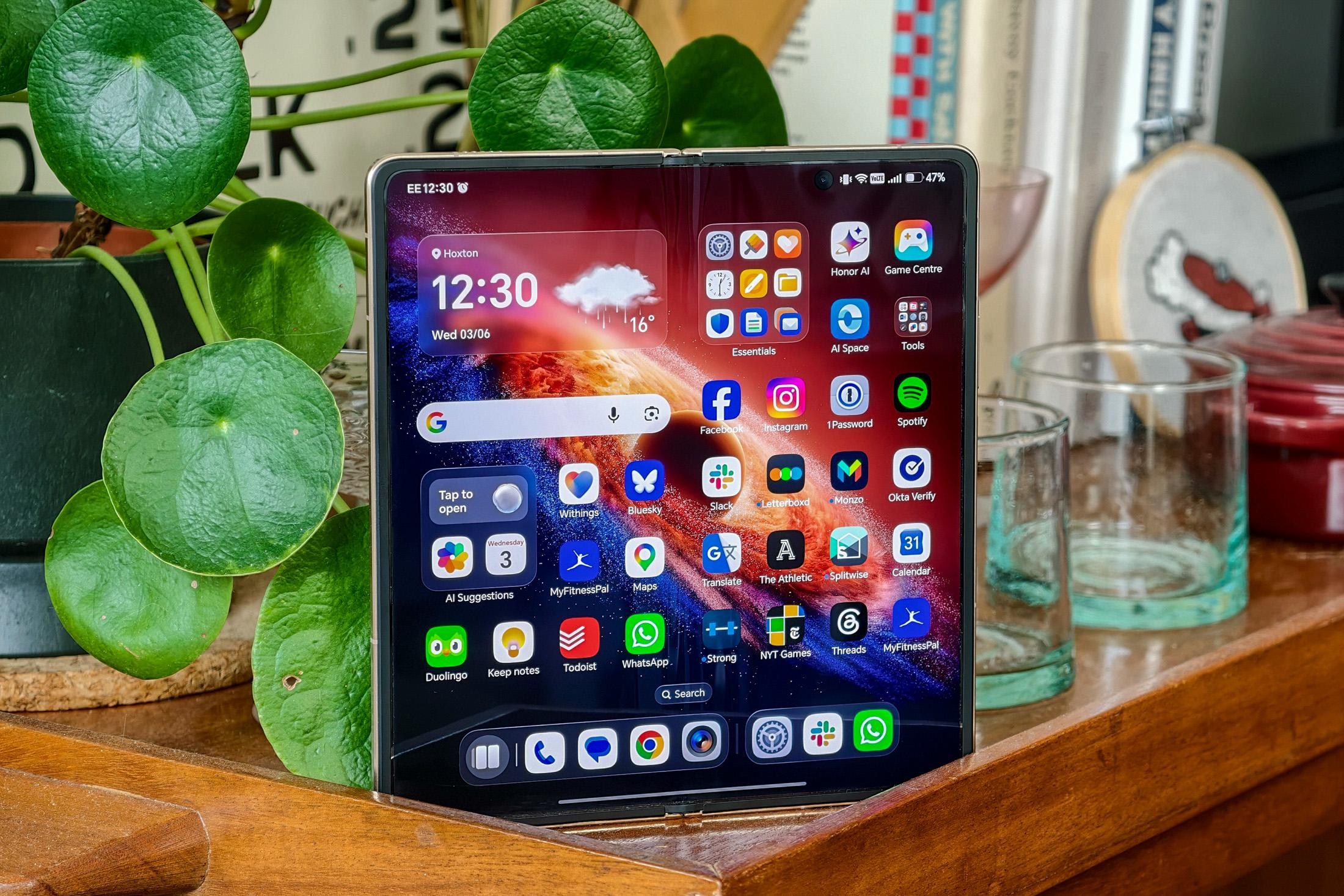
Honor has shipped the Magic V6 with a trio of hardware superlatives: the slimmest profile ever measured on a book-style foldable, the highest-capacity battery in the category, and an IP rating that surpasses every predecessor. On a spec sheet, it reads like a clean sweep. In the hand, the story fractures. The battery endurance delivers a noticeable uplift over last-generation devices; the other two milestones feel more like rounding errors than breakthroughs.
At DailyTechWire, we've tracked the foldable roadmap across Shenzhen, Seoul, and Suwon for three years, and the Magic V6 lands at an inflection point. The hardware delta between annual releases has compressed to the point where a tenth of a millimeter in chassis thickness or half an IP grade in sealing no longer translates into a day-to-day experience gap. What remains is a well-executed flagship that underscores how mature the book-style form factor has become - and how much harder it is for any single manufacturer to claim a decisive lead.
The Thinness Dividend That Wasn't
Honor positions the Magic V6 as the thinnest foldable to date. Fold it shut and the calipers confirm the claim, though the margin over the previous record-holder is narrow enough that most users would struggle to perceive it without a side-by-side comparison. Unfolded, the device sits comfortably flat on a desk, and the hinge mechanism operates with the sort of damped precision that has become table stakes in the premium tier.
Where thinness might have mattered - pocketability, one-handed grip comfort - the gains prove marginal. Foldables crossed the threshold of "thin enough" somewhere around mid-2025, when several models dipped below the psychological barrier that made them feel bulkier than slab flagships. The Magic V6 shaves additional fractions off that baseline, but it does not fundamentally alter the ergonomic proposition. Carrying it in a jacket pocket or a small crossbody bag feels no different than carrying any other current-generation book-style device.
The engineering required to achieve that final sliver of thinness is non-trivial - tighter component stacking, thinner glass, revised hinge geometry - but the user perceives none of the underlying complexity. It is a spec-sheet victory that lives mostly on paper.
Battery Capacity as the Real Differentiator
The largest battery ever fitted into a foldable, according to Honor, sits inside the Magic V6. The company has not disclosed the exact milliampere-hour figure, but real-world endurance testing suggests a step change over devices released in the previous twelve months. A full day of mixed use - email triage on the cover screen, video calls on the inner display, navigation, messaging - leaves enough reserve for a second lighter day, a pattern that was difficult to sustain on earlier models without a midday top-up.
This improvement matters. Foldables have historically lagged slab flagships in battery life because the dual-display architecture and complex hinge assembly leave less internal volume for cells. Closing that gap even partially makes the Magic V6 more viable as a primary device for users who travel frequently or work long hours away from a charger. It also signals that battery chemistry and cell packaging have advanced enough to offset some of the form-factor penalty.
In markets across Asia, where all-day endurance without charging infrastructure is often a hard requirement, this upgrade carries weight. The thinness record and the waterproofing improvement are nice-to-haves; the battery is a tangible shift in capability.
Water Resistance and the Incremental IP Climb
Honor claims the Magic V6 achieves the highest ingress-protection rating of any foldable. The exact grade has not been independently verified at the time of writing, but assuming the company's assertion holds, the practical benefit remains modest. Most recent foldables already tolerate rain, splashes, and brief submersion; moving one step higher on the IP scale adds theoretical margin but rarely changes how owners use the device day to day.
The challenge with waterproofing a foldable is the hinge. Any moving part introduces potential ingress points, and sealing them without adding bulk or compromising hinge feel requires careful material selection and manufacturing precision. Honor appears to have threaded that needle, but so have its competitors. The result is a crowded field in which every flagship can survive a downpour, and the incremental improvement from one IP grade to the next fades into background noise.
A Mature Category in Search of the Next Wedge
The Magic V6 arrives in a foldable landscape that has settled into predictable rhythms. Huawei experimented with an unconventional aspect ratio on the Pura X Max earlier this year, a design choice that industry observers expect Samsung and Apple to explore in upcoming releases. Tri-fold prototypes continue to circulate at trade shows, though volume production remains elusive. Meanwhile, the book-style format - two screens, one hinge, a roughly square inner display - has coalesced into a de facto standard.
When the hardware plateau is this flat, differentiation migrates to software, ecosystem integration, and price. Honor has historically competed on value, offering near-flagship specifications at a discount to Samsung's Z Fold series or Huawei's premium tier. The Magic V6 continues that strategy, but the gap is narrowing as component costs fall and competitors adjust their pricing.
The crease remains visible under certain lighting angles, a reminder that no manufacturer has yet solved the physics of folding glass without some compromise. It is less pronounced than on early-generation devices, but still present - a small, persistent tell that you are holding a foldable rather than a slab. For some users, that crease is a dealbreaker; for others, it vanishes into the background after a few days of use. The Magic V6 does not move the needle either way.
Regional Implications and the Asia-First Playbook
Honor's release cadence follows a pattern common among Shenzhen-based manufacturers: launch in China first, expand to Southeast Asia and Europe in subsequent quarters, and treat North America as a long-term ambition rather than an immediate priority. The Magic V6 will likely see its strongest uptake in markets where Honor's brand equity is highest - mainland China, Malaysia, parts of the Middle East - and where carrier subsidy structures favor outright purchases over installment plans.
In those regions, the combination of a larger battery, competitive pricing, and a spec sheet that holds its own against Samsung and Huawei gives Honor a credible pitch. The device is unlikely to disrupt market share in a dramatic way, but it reinforces the company's position as a tier-one foldable player outside the traditional Samsung-Huawei duopoly.
The foldable segment in Asia is also more price-sensitive than in North America or Western Europe. A foldable that undercuts the Z Fold 7 by fifteen or twenty percent while delivering comparable hardware can capture buyers who want the form factor but balk at ultra-premium pricing. Honor has executed that playbook successfully with previous Magic V iterations, and the V6 continues the approach.
What Comes After the Hardware Plateau
The Magic V6 is a well-built device that pushes three hardware boundaries - thinness, battery, water resistance - without fundamentally changing the foldable experience. That outcome reflects the state of the category as much as it does Honor's engineering choices. When every flagship foldable already feels complete, incremental spec gains matter less than they did two or three years ago.
The next meaningful leap will likely come from somewhere other than chassis dimensions or IP ratings. Foldable-native software that takes full advantage of the dual-display paradigm, tighter integration with wearables and tablets, or a breakthrough in crease elimination - any of those could redefine what a foldable offers. Until then, devices like the Magic V6 represent refinement rather than revolution, and that is not necessarily a criticism. Mature categories reward execution, and Honor has delivered a foldable that meets the current standard without pretending to exceed it by a wide margin.
For buyers in the market for a book-style foldable in mid-2026, the Magic V6 merits consideration alongside the usual suspects. It will not convert skeptics, but it gives existing foldable users one more credible option - and in a category this competitive, that may be achievement enough.