Hong Kong IPO Filing Reveals Young Founder's Strategy at Direct Drive Tech
At 31, the CEO has guided the precision motor manufacturer through listing approval as mainland firms eye offshore capital amid evolving cross-border funding dynamics.
A Mainland Manufacturer's Offshore Play
Direct Drive Tech received clearance from the Hong Kong Stock Exchange in the last days of June, moving the precision motor manufacturer one step closer to a Main Board debut. The company intends to offer approximately 122 million H shares, according to its prospectus, with CITIC Securities serving as sole sponsor.
At DailyTechWire, we've tracked a steady stream of mainland industrial tech firms pivoting toward Hong Kong listings over the past eighteen months, a pattern driven by tighter onshore valuations, the appeal of international investor bases, and regulatory pathways that favor established revenue models over early-stage speculation. Direct Drive Tech's filing sits squarely in that trend, yet the youth of its founder and the niche it occupies in motion-control hardware add texture to an otherwise familiar narrative.
Steering from the Founder's Seat
The founder and CEO, now 31 years old, has spent the better part of a decade building Direct Drive Tech into a supplier of direct-drive motors and motion-control systems. These components are critical in automation, robotics, and precision manufacturing applications where belt-driven or geared systems introduce latency and wear. The technology itself is well understood, but execution hinges on tight tolerances, thermal management, and the ability to customize torque profiles for varied industrial workloads.
Leadership age is rarely a headline in hardware, where founders often emerge from decades of engineering or supply-chain roles. A CEO in his early thirties steering a capital-equipment business through an IPO is less common in the motion-control segment, where customer relationships and iterative product refinement typically reward patience over speed. The prospectus does not detail the founder's technical background or the timeline of product development, but the regulatory approval suggests the company has demonstrated sufficient revenue history and governance structure to satisfy Hong Kong's Main Board criteria.
The Direct-Drive Advantage and Market Position
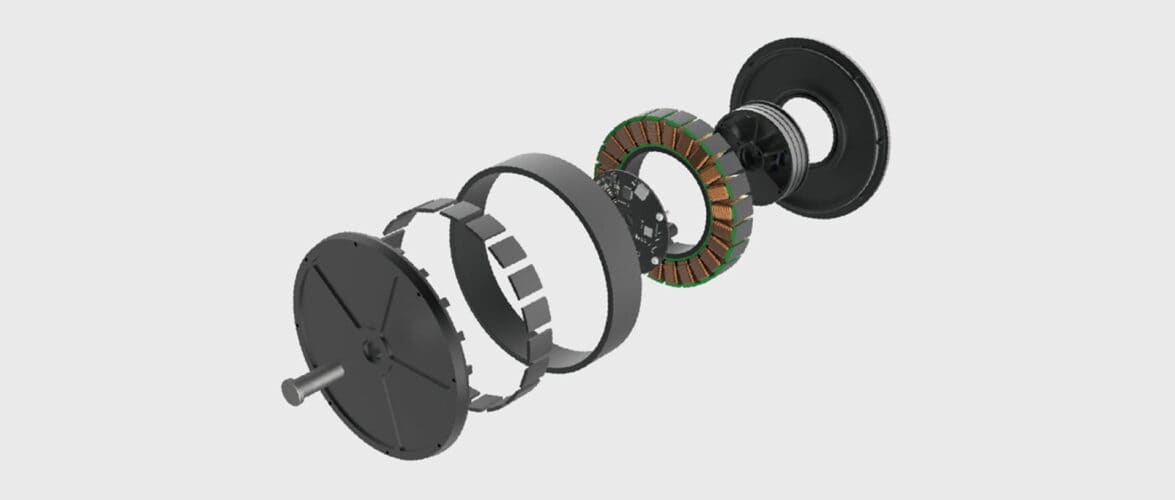
Direct-drive motors eliminate mechanical transmission between the motor and the load, reducing points of failure and improving positional accuracy. This architecture has gained traction in semiconductor fabrication tools, CNC machining centers, and collaborative robots, all of which demand repeatable sub-micron precision and minimal downtime. Direct Drive Tech's customer base likely spans these verticals, though the prospectus excerpt available does not break out revenue by end market or geography.
China's domestic automation push, codified in successive industrial policy documents, has created demand for locally sourced motion-control components as manufacturers seek to reduce dependence on Japanese and European suppliers. At the same time, export controls and technology-transfer restrictions have made it harder for mainland firms to access certain high-end servo and encoder technologies, opening a window for domestic players who can meet performance thresholds without triggering compliance red flags. Direct Drive Tech appears positioned to benefit from both dynamics, though its growth will depend on whether it can match the reliability benchmarks set by incumbents like Yaskawa, Siemens, and Kollmorgen.
Why Hong Kong, Why Now
Hong Kong's Main Board offers several advantages for a mainland industrial firm at this stage. Onshore A-share markets have grown more selective, with regulators scrutinizing profitability, sector concentration, and the presence of state-backed investors. Hong Kong provides a faster approval cycle for companies with clean financials and established operations, and it connects issuers to a deeper pool of institutional capital familiar with hardware economics.
The timing also reflects broader capital-market conditions. After a turbulent 2023 and early 2024, Hong Kong IPO activity has stabilized, with smaller offerings in the USD 50 million to USD 200 million range finding reasonable reception. Direct Drive Tech's 122 million share target suggests a modest raise by historical standards, likely aimed at funding capacity expansion, R&D in higher-torque motor designs, and working capital to support longer payment terms for tier-one automation OEMs.
CITIC Securities' role as sole sponsor signals confidence in the deal's viability. The Beijing-headquartered investment bank has guided a string of industrial and technology listings over the past two years, and its involvement typically indicates strong pre-IPO investor interest and a stable equity story.
Risks in the Motion-Control Value Chain
Despite the regulatory milestone, Direct Drive Tech faces headwinds common to hardware startups scaling in a capital-intensive sector. Component costs, particularly for rare-earth magnets used in high-performance motors, remain volatile. Supply-chain disruptions, while less acute than during the pandemic, continue to affect lead times for precision bearings and encoders. And customer concentration is a perennial risk: if a significant share of revenue comes from a handful of large automation integrators, any shift in their purchasing priorities or financial health can ripple through the supplier base.
Competition is intensifying as well. Established multinational vendors are localizing production in China to defend market share, while a cohort of younger mainland firms is targeting the same automation OEMs with aggressive pricing. Differentiation will hinge on service responsiveness, customization capabilities, and the ability to co-develop motor architectures tailored to next-generation robotics platforms, particularly in collaborative and mobile form factors where weight and power efficiency are paramount.
What Comes After the Listing
Assuming the IPO proceeds on schedule, Direct Drive Tech will join a growing roster of mainland precision-component makers with Hong Kong listings. The real test will be execution: whether the company can deploy capital efficiently, expand its engineering team without diluting product quality, and build the service infrastructure needed to support multinational customers who demand 24-hour technical response and multi-year warranties.
For the founder, the listing represents both validation and a new set of pressures. Public markets reward consistent revenue growth and margin expansion, metrics that can be difficult to sustain in hardware businesses where product cycles are long and customer switching costs are high. The next twelve months will reveal whether Direct Drive Tech's motion-control technology and go-to-market strategy can deliver the performance that institutional investors expect from a Main Board industrial stock.
The broader narrative, though, is about the maturation of China's automation supply chain. A decade ago, most domestic motion-control firms were confined to low-end applications; today, a 31-year-old founder can credibly steer a direct-drive specialist toward an international listing. That shift, more than any single IPO, underscores the pace at which technical capability and market access are converging in the region's industrial sectors.