Google Bets Big on Solar-Battery Hybrid in Arkansas While xAI Runs Unpermitted Gas Turbines
The 1.8-gigawatt Steel River project highlights a widening divide in how hyperscalers power AI infrastructure - and who bears the cost of speed.
The Infrastructure Divergence
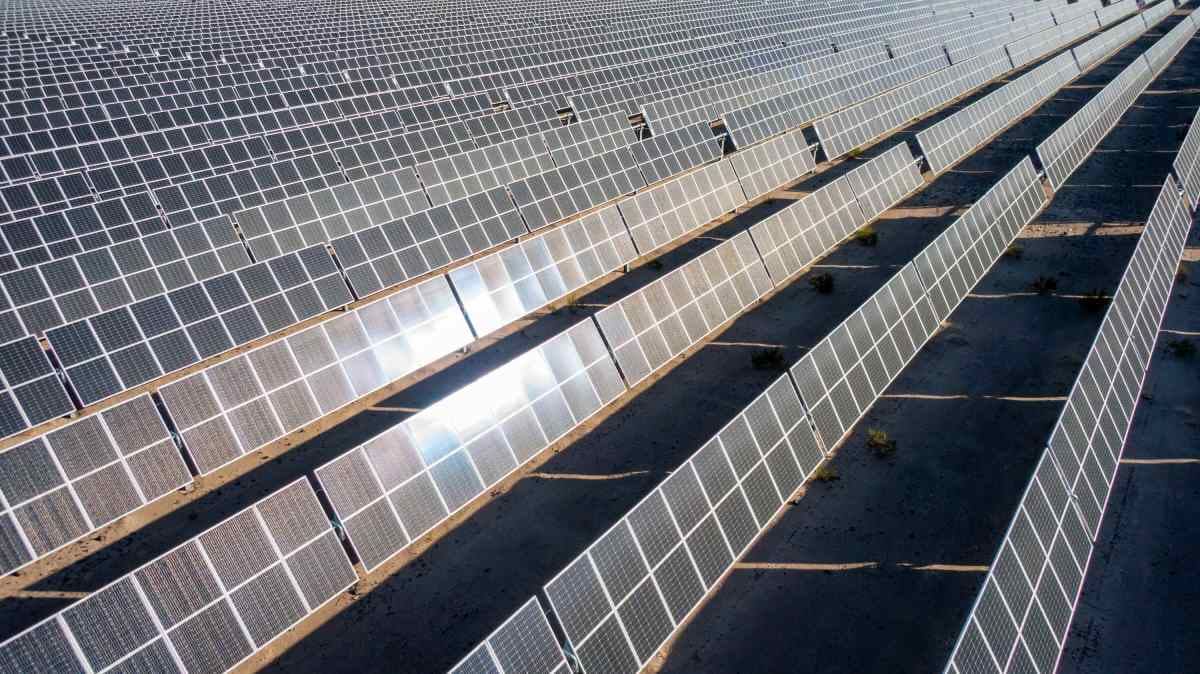
Two data center operators are taking radically different paths to solve the same problem: how to keep AI workloads running without waiting years for grid connections. Google announced this week it will invest in and purchase power from the Steel River Energy Center, a 1.8-gigawatt solar facility paired with 2.9 gigawatt-hours of battery storage in northeastern Arkansas. Forty miles to the south, xAI operates nearly 60 natural gas turbines without federal clean air permits, powering its Colossus data centers in Mississippi.
The contrast is stark, and it arrives at a moment when hyperscalers face mounting pressure to reconcile their climate commitments with the energy demands of large language models and inference clusters. At DailyTechWire, we've tracked procurement strategies across the region for two years; this deal marks the clearest signal yet that hybrid solar-battery plants can compete on speed and scale with fossil-fueled shortcuts.
What Google Is Building
Steel River's first two phases will add 1 gigawatt of solar capacity and 1.9 gigawatt-hours of storage, enough to meet roughly 6 percent of Arkansas's peak demand, according to Google. Developer Cypress Creek Energy secured $3.5 billion in financing for these phases, with the third phase scheduled to connect to the grid in 2029. When complete, the facility will be the largest solar installation in the United States.
Google is both an equity investor and the offtaker for the first two phases, meaning all electricity generated flows directly to the grid to offset consumption at its data centers. By pairing panels with large-scale batteries, the plant can dispatch power around the clock, not just during daylight hours. That capability is central to Google's goal of matching electricity use with clean generation on an hourly basis, a far more stringent standard than annual renewable energy credits.
The project sits about 30 miles north of Memphis, Tennessee, in a corridor that benefits from strong solar irradiance and relatively streamlined interconnection queues. Cypress Creek has a track record of delivering utility-scale solar on aggressive timelines; the fact that nearly 2 gigawatts will come online within three years underscores how quickly battery-backed renewables can now be deployed when financing and permitting align.
The xAI Alternative
XAI's approach could not be more different. The company operates close to 60 natural gas turbines at its Mississippi site without the federal clean air permits typically required under the Clean Air Act. A recent investigation found that pollution from the facility disproportionately affects predominantly Black neighborhoods nearby, raising environmental justice concerns that have drawn scrutiny from state regulators and advocacy groups.
Elon Musk has defended the decision to rely on gas, arguing that speed trumps process when racing to train frontier models. The company recently acquired APR Energy, a developer specializing in modular gas turbines that can be trucked to a site and operational within weeks. For xAI, the calculus appears straightforward: waiting for grid-scale renewables or navigating permit workflows would delay Colossus by quarters, if not years.
Yet the move sits uneasily alongside Musk's role at Tesla, which manufactures both solar panels and utility-scale battery packs. The cognitive dissonance has not gone unnoticed in energy and policy circles. While Tesla pitches Megapack storage as a grid solution, xAI bypasses that hardware entirely in favor of combustion turbines that can be switched on without regulatory approval.
Why the Split Matters
The divergence between Google and xAI is not merely about corporate values or PR posture. It reflects two competing theories of how to manage the collision between AI's energy appetite and the physical constraints of the grid.
Google's bet is that hybrid solar-battery plants, when financed at scale and paired with long-term offtake agreements, can deliver gigawatt-scale capacity on timelines that rival fossil assets - without the permitting risk or community blowback. The company has committed publicly to 24/7 carbon-free energy by 2030, and Steel River is a cornerstone of that strategy. Hourly matching, rather than annual offsets, forces operators to build dispatchable clean capacity, not just buy RECs.
XAI's bet is that regulatory forbearance and modular gas give it a first-mover advantage in the race to scale inference and training clusters. The company is willing to absorb reputational risk and potential enforcement action in exchange for months of lead time. Whether that calculus holds depends on how aggressively federal and state authorities pursue enforcement, and whether competitors can close the speed gap with renewable alternatives.
Google's Gas Detour
It is worth noting that Google has not sworn off fossil infrastructure entirely. The company partnered with Crusoe to build a 933-megawatt gas plant in West Texas, a move that surprised observers given Google's renewable portfolio. That project remains something of an outlier; the company has otherwise leaned heavily on wind, solar, and geothermal to meet its expansion needs.
The West Texas plant may have been driven by specific grid dynamics in ERCOT, where interconnection queues for renewables have ballooned and where gas can be brought online with fewer procedural hurdles. Still, the existence of that facility complicates any narrative that paints Google as a pure clean-energy actor. What distinguishes the company from xAI is less absolute purity than a willingness to invest in long-duration storage and accept longer lead times when renewables are viable.
The Financing and Developer Landscape
Cypress Creek's ability to mobilize $3.5 billion for Steel River's first phases signals robust appetite among infrastructure investors for solar-plus-storage at scale. The financing likely combines tax equity, project debt, and balance-sheet capital, structured to monetize investment tax credits and depreciation benefits under the Inflation Reduction Act.
For developers, the shift from standalone solar to hybrid plants represents both opportunity and execution risk. Battery costs have fallen sharply, but integrating storage adds complexity to engineering, procurement, and commissioning workflows. Cypress Creek's timeline suggests that these challenges are now manageable at gigawatt scale, a threshold that was aspirational as recently as two years ago.
The success of Steel River will be closely watched by other hyperscalers evaluating their own pipeline. If the project hits its 2029 completion target without major cost overruns or performance shortfalls, expect a wave of similar announcements from AWS, Microsoft, and Meta, all of which face the same hourly-matching pressure and the same need to avoid the permitting minefields that have ensnared xAI.
What Comes Next
Google has signaled that renewables and storage will remain its primary strategy for new capacity, and Steel River's deployment speed gives that strategy credibility. The three-year timeline from announcement to full operation is competitive with gas projects that navigate permitting properly, and it avoids the air-quality and environmental-justice liabilities that now shadow xAI.
For xAI, the path forward is less clear. The company could seek retroactive permits for its Mississippi turbines, a process that would likely require emissions controls and monitoring equipment that add cost and delay. Alternatively, it could continue operating without permits and gamble that enforcement remains slow or lenient. Neither option is appealing, and both carry risk that could have been avoided with upfront planning.
The broader lesson for the industry is that the supposed trade-off between speed and sustainability may be narrowing faster than many operators assume. Hybrid solar-battery plants are no longer a future technology; they are being financed, built, and connected to the grid at gigawatt scale today. The operators who recognize that shift early will avoid the regulatory and reputational costs that come with cutting corners on air permits and community engagement.
Steel River will not be the last project of its kind. It may, however, be remembered as the moment when solar-plus-storage proved it could match the speed of gas without the permitting gamble - and when the choice between those paths stopped being about technology and started being about values.