Apple Clears China AI Hurdle After Two-Year Wait
Regulatory registration paves the way for Intelligence features to reach one of the iPhone maker's most important markets, powered by Baidu and Alibaba models.
Registration Without Fanfare
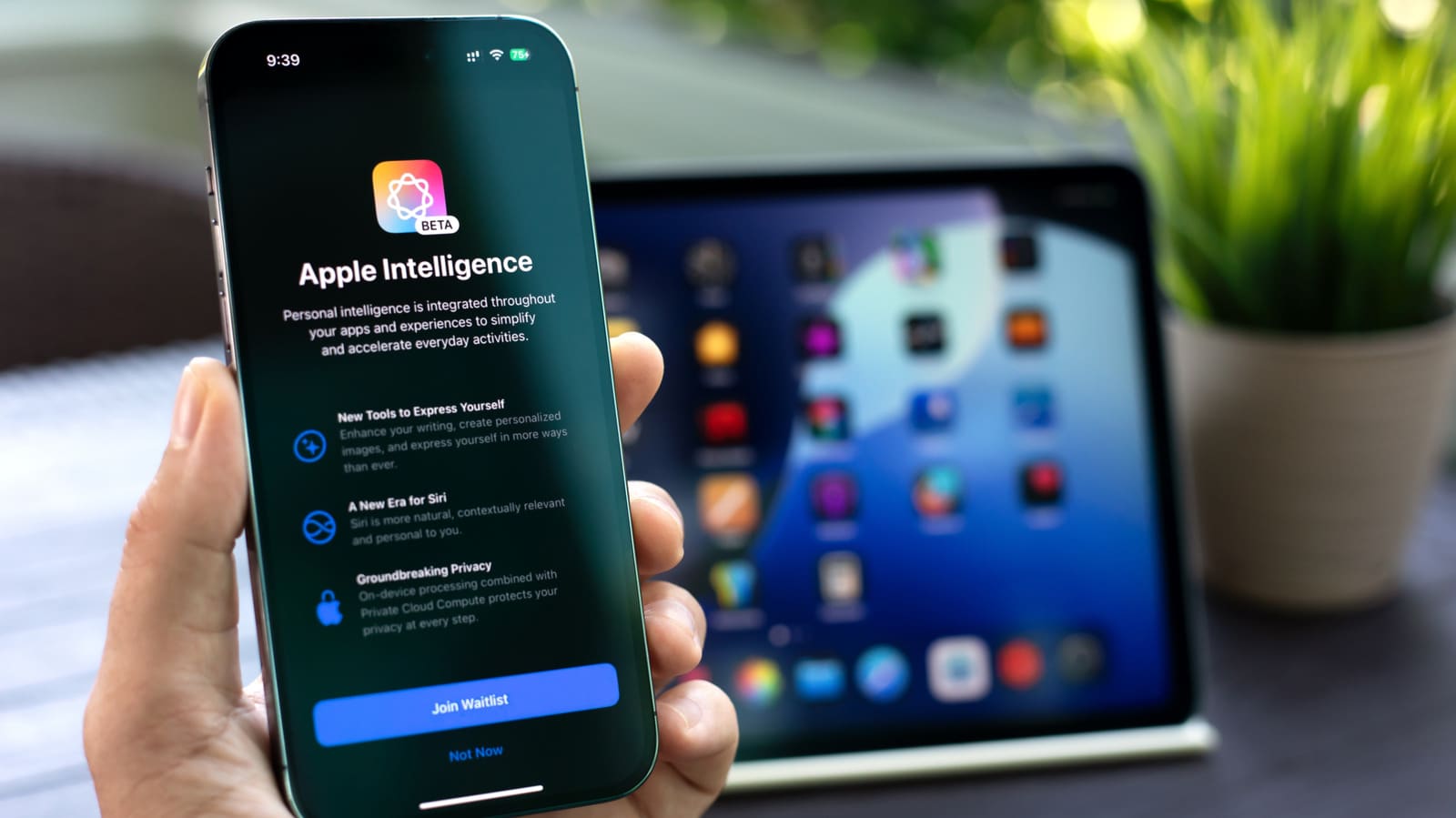
Apple Intelligence has quietly crossed a threshold that matters more than any product launch: registration with China's cyberspace authority. The move ends a standoff that has kept the company's AI features out of one of its three largest revenue territories for nearly 24 months, even as competitors embedded generative capabilities across their device lineups.
The Cupertino giant has not issued public comment, but the regulatory filing signals that iPhones, iPads, Macs, and Vision Pro headsets sold in China will soon carry a fundamentally different AI stack than their counterparts elsewhere. Where US devices lean on Apple's proprietary large language models and infrastructure, Chinese units will route requests through systems built by Baidu and Alibaba, according to company statements confirming their participation.
Localization as Regulatory Compliance
China's AI governance framework mandates that any generative model accessible to mainland users undergo security review and content-moderation vetting. Foreign companies cannot simply deploy US-trained models; they must either partner with domestic providers who hold the necessary licenses or apply for approval themselves, a process that can stretch years and offers no certainty of success.
Apple chose partnership. Alibaba confirmed that its Qwen large language model will power portions of the Intelligence feature set shipping in China. Qwen, which the e-commerce and cloud giant has positioned as a multilingual, multimodal foundation model, already underpins a range of consumer and enterprise applications across Asia. Integrating it into iOS, iPadOS, macOS, and visionOS means Apple can satisfy regulatory requirements without building a parallel training infrastructure inside China's borders.
Baidu's role remains less defined. A spokesperson acknowledged involvement in "developing features" for the Chinese variant but did not specify whether that means contributing a separate model, handling on-device processing, or managing cloud inference for particular workloads. Baidu operates Ernie, one of the country's most established generative AI platforms, and has spent the past two years positioning itself as the default partner for foreign tech firms navigating China's approval maze.
The Cost of a Two-Year Delay
Apple launched Intelligence features in the United States in late 2024, bundling them into iOS 18 and macOS Sequoia updates. The rollout brought redesigned Siri interactions, context-aware text generation, photo search using natural language, and priority notification sorting. For users in North America and Europe, these capabilities became table stakes; for users in China, they remained inaccessible, even on hardware technically capable of running them.
The delay has commercial consequences. China represents roughly 20 percent of Apple's annual revenue, and the smartphone market there has grown intensely competitive. Domestic brands including Xiaomi, Oppo, and Vivo have all integrated generative AI features, often highlighting them in marketing to emphasize local relevance and compliance. By sitting on the sidelines, Apple ceded a messaging advantage and risked appearing out of step with consumer expectations around intelligent assistants and productivity tools.
Early reports of Apple's negotiations with Alibaba and Baidu surfaced in the first quarter of 2025, but talks stretched longer than anticipated. Regulatory approval processes in China are opaque, and companies rarely receive clear timelines. The fact that registration has now been secured suggests that technical integration, content-moderation protocols, and data-handling agreements have all passed muster with authorities.
What Changes for Users
Chinese buyers of new iPhones or Macs will encounter an Intelligence experience that looks familiar on the surface but operates differently underneath. Siri requests, text summarization, and image generation will flow through Qwen and potentially Ernie rather than Apple's own models. That introduces questions about feature parity: will Chinese users receive the same capabilities on the same schedule, or will updates lag as localized models require separate tuning and approval?
Apple has historically maintained tight control over the user experience across geographies, but AI introduces dependencies the company cannot fully insulate. Model performance, language nuance, and content boundaries will now be shaped in part by Alibaba and Baidu engineering teams. If a feature relies on a specific capability that Qwen does not yet support, Apple will either need to wait, work around it, or accept a divergence in what Chinese and non-Chinese devices can do.
Privacy architecture may also differ. Apple has emphasized on-device processing and private cloud compute as pillars of its Intelligence design, aiming to minimize data exposure. Routing queries through third-party Chinese models complicates that narrative, especially if inference happens in Alibaba or Baidu data centers subject to local data-residency and surveillance rules. Apple has not disclosed how it will reconcile these tensions, and transparency around data flows will be critical to maintaining trust.
Competitive Pressure and Strategic Necessity
For Apple, bringing Intelligence to China is not optional. The company's hardware sales increasingly depend on software differentiation, and AI has become the primary vector for that differentiation. Without it, iPhones risk being perceived as expensive commodity devices in a market where software features, ecosystem integration, and local partnerships drive purchasing decisions.
At the same time, the partnership exposes Apple to execution risk. Alibaba and Baidu are collaborators today, but they are also competitors in adjacent markets, from cloud services to smart home devices. Any stumble in model performance, content moderation, or data security will reflect on Apple's brand, even if the underlying issue originates with a partner.
The regulatory approval also sets a precedent. If Apple can navigate China's AI rules through strategic partnerships, other foreign tech companies will likely follow the same playbook. That could accelerate the fragmentation of global AI services, with distinct model stacks, feature sets, and governance regimes emerging along national lines. For users, it means the "same" device may behave quite differently depending on where it was purchased and activated.
Timeline Still Uncertain
Registration with the cyberspace regulator is necessary but not sufficient for launch. Apple must still finalize software integration, conduct quality assurance across device families, and coordinate with Alibaba and Baidu on deployment infrastructure. The company has not announced a release date, and past experience suggests it will move cautiously, staging the rollout across regions and device types rather than flipping a switch nationwide.
Chinese customers have waited two years for features their counterparts elsewhere take for granted. How Apple manages the final stretch, communicates differences in functionality, and addresses privacy concerns will shape not only adoption rates but also the broader narrative around AI localization and regulatory compromise in the world's second-largest economy.