Google Rolls Out Facial Verification for Password Recovery
The company's new selfie-based authentication option lets users regain account access with a video recording - but not everyone qualifies.
A New Unlock Method Joins the Recovery Toolkit
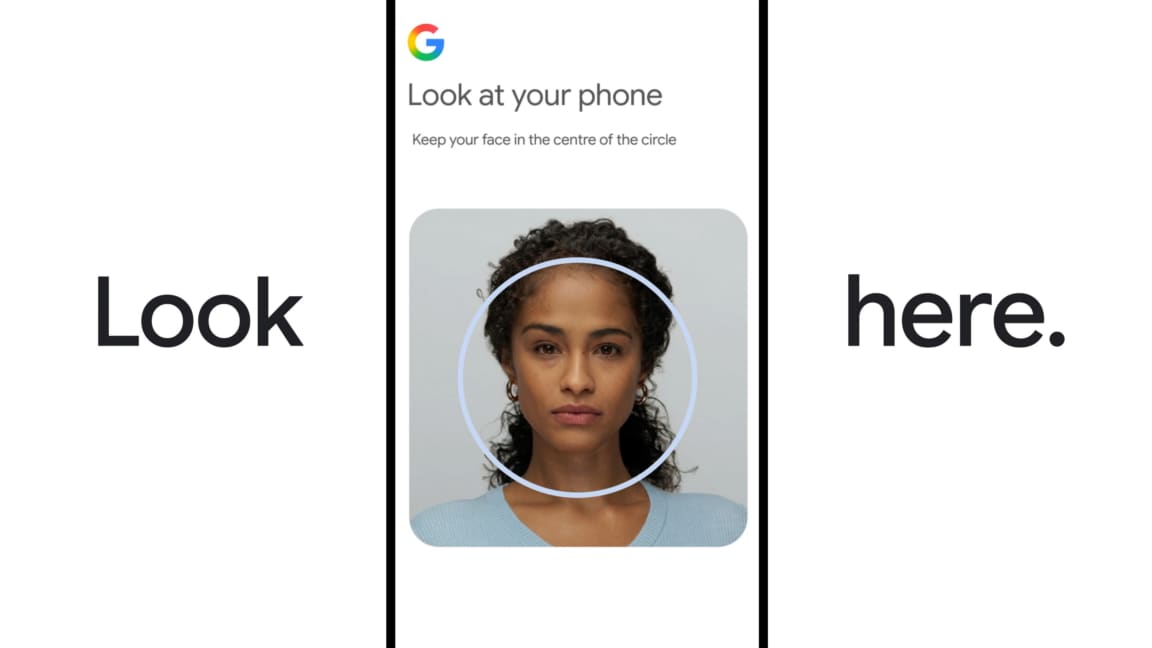
Account lockouts remain one of the more frustrating aspects of digital life. Google has quietly expanded its recovery arsenal with an option that feels decidedly contemporary: facial verification through a pre-recorded video selfie. The feature sits alongside existing methods like backup codes and recovery contacts, but it asks users to hand over something considerably more personal.
At DailyTechWire, we've tracked the steady march of biometric authentication across consumer platforms - from Apple's Face ID to payment apps scanning fingerprints - and this move signals Google's confidence that enough users will trade convenience for a new layer of biometric data storage.
How the System Works
Setup requires users to record a short video of their face, which Google stores on its infrastructure. When someone later needs to recover an account, they submit a fresh selfie; the platform compares the two and, if satisfied, restores access without requiring a password or two-factor token.
The mechanism is straightforward, but the eligibility list is narrow. Google excludes three categories outright: Workspace (business and education) accounts, child accounts managed under Family Link, and any account enrolled in the Advanced Protection Program - the company's highest-security tier designed for journalists, activists, and political campaigns. That last exclusion is telling; Google appears unwilling to expose high-risk users to the attack surface a stored facial template might create.
The Privacy Calculus
Google promises end-to-end encryption for stored videos and states it will not repurpose the data for advertising, machine-learning training, or any other function unless a user explicitly opts in. The language echoes assurances the company has made around other biometric features, such as the on-device processing of Pixel phone face unlock.
Still, the proposition is binary: either you trust Google's server-side encryption and access controls, or you rely on the older recovery paths. There is no middle ground where a user can store a facial template locally and present it on demand, the way passkeys work across devices. The video lives on Google's side, making it a potential target if an adversary ever breaches those servers or if a government issues a legal demand.
From a threat-modeling perspective, the trade-off makes sense for casual users who recycle passwords and lack backup codes. For anyone with elevated risk - activists in restrictive jurisdictions, executives handling sensitive IP, or people who simply prefer minimal biometric footprints - the older methods remain the safer bet.
Regional and Regulatory Context
Google has not disclosed which jurisdictions will see the feature first, but the rollout arrives as biometric privacy laws continue to fragment globally. The European Union's GDPR classifies facial scans as sensitive personal data, requiring explicit consent and strict retention limits. In the United States, Illinois's Biometric Information Privacy Act has already spawned class-action lawsuits against Meta and other platforms that collected face data without clear notice.
Asia presents a patchwork. South Korea's Personal Information Protection Act mandates that biometric identifiers receive the same protections as financial records, while India's draft Digital Personal Data Protection Bill would require companies to delete biometric data once the original purpose expires. China, meanwhile, has codified facial recognition into everything from subway turnstiles to school attendance, creating a regulatory environment where user consent is less central than state oversight.
Google's decision to exclude Workspace accounts suggests the company sees enterprise customers as too risk-averse - or too legally cautious - to embrace server-stored face templates. It also hints that regulators may scrutinize business use cases more aggressively than consumer ones.
What This Means for Authentication Architecture
The selfie recovery option does not replace passwords or passkeys; it simply adds another door into the account. That layering is both a strength and a vulnerability. More recovery paths mean fewer permanent lockouts, but each path is a potential intrusion vector if an attacker can spoof a selfie or socially engineer Google's support staff.
Deepfake technology has matured rapidly. Open-source tools can now generate convincing video from a handful of still photos, and liveness-detection algorithms - designed to catch pre-recorded or synthetic footage - are locked in an arms race with the models that try to fool them. Google has not detailed which liveness checks it applies, but the industry standard involves asking users to turn their head, blink, or smile on command. Even those measures can be defeated by adversaries with enough time and reference material.
The feature also raises questions about equitability. Facial-recognition systems have historically performed worse on darker skin tones and non-Western facial structures, a bias rooted in training datasets that skew toward lighter-skinned, Western subjects. If Google's liveness detection or matching algorithm carries similar biases, some users may find themselves locked out despite legitimate selfies - a failure mode that could disproportionately affect users in Africa, South Asia, and Southeast Asia.
The Bigger Trajectory
This launch fits a broader pattern. Microsoft already uses facial recognition in Windows Hello and Azure Active Directory. Apple has embedded Face ID across its hardware lineup. Payment networks are piloting biometric checkout in stores across Europe and Latin America. The underlying bet is that people will accept - or even prefer - the friction of recording their face once over the cognitive load of remembering yet another password.
But the momentum is not universal. Privacy advocates continue to push for alternatives like hardware security keys and decentralized identity frameworks that keep biometric templates on-device or under user control. The tension between convenience and sovereignty will likely define the next chapter of consumer authentication, and Google's selfie recovery is one more data point in that ongoing negotiation.
For now, the feature remains optional. Users who never configure it will never be prompted to submit a selfie, and those who do can presumably delete the stored video later. Whether that optionality persists as biometric authentication becomes table stakes - and whether competitors follow Google's lead - will reveal how much room remains for users who prefer to keep their faces out of the cloud.