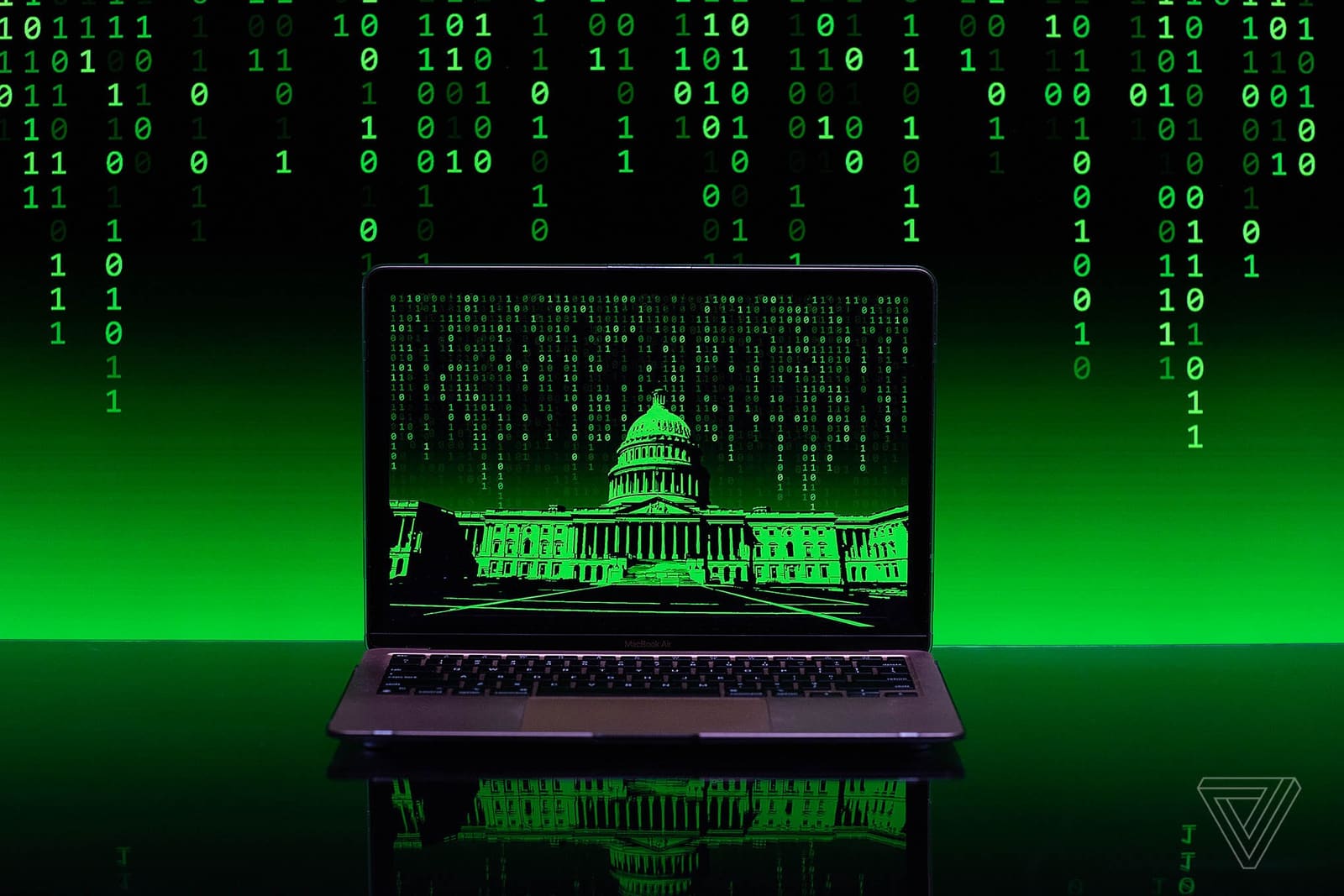
How a Fringe Theory on Tech Censorship Reached the White House
The "censorship-industrial complex" narrative, once confined to right-wing forums, is now influencing federal policy on content moderation and platform governance.
From Margins to Mainstream
A narrative that tech platforms, government agencies, and academic institutions are working in concert to silence conservative perspectives has traveled an unusual path. What began as a recurring claim in partisan online communities has evolved into a framework cited in policy discussions at the federal level. The velocity of that migration tells us something important about how ideas move through digital ecosystems and into legislative chambers.
At DailyTechWire, we've tracked similar patterns across Asia, where allegations of platform bias frequently precede regulatory intervention. The US trajectory follows a different script but shares common elements: a perceived imbalance in moderation enforcement, distrust of institutional intermediaries, and a demand for transparency that often doubles as a call for structural change.
The core allegation is straightforward. Advocates of the "censorship-industrial complex" theory argue that content moderation decisions on major platforms are not made independently but are influenced by a web of actors including federal agencies, fact-checking organizations, university research labs, and civil society groups. The claim is that these entities coordinate to suppress speech that challenges progressive orthodoxy, particularly on topics like election integrity, public health mandates, and climate policy.
Whether this coordination exists in the form alleged is contested. What is not contested is that the theory has gained enough traction to shape legislative hearings, executive branch priorities, and platform policy adjustments.
The Architecture of the Argument
The theory rests on a few observable facts that proponents interpret as evidence of systemic bias. Platforms do work with third-party fact-checkers, many of whom receive funding from foundations with stated political commitments. Government agencies have communicated with platforms about content they view as harmful, particularly during election cycles and public health emergencies. Academic institutions have published research identifying coordinated inauthentic behavior, often leading to takedowns of accounts that share political content.
Critics of the theory note that these interactions are neither secret nor necessarily coordinated. Fact-checking partnerships are disclosed. Government communications are often requests, not mandates, and platforms retain discretion. Research institutions operate independently and publish methodology openly.
But the perception gap matters more than the technical details. For users who feel their speech has been unfairly restricted, the existence of these relationships is sufficient proof of collusion. The theory offers a coherent explanation for what otherwise feels arbitrary: why some posts are removed while similar content remains, why certain accounts are suspended while others are not, why platform policies seem to shift in response to political pressure.
Policy Implications Across Three Domains
The influence of this narrative is most visible in three areas: legislative oversight, executive action, and platform self-regulation.
Congressional hearings on content moderation increasingly frame questions around the "censorship-industrial complex" hypothesis. Lawmakers ask platform executives to detail communications with federal agencies, to explain funding sources for fact-checking partners, and to justify disparities in enforcement rates across ideological lines. These questions presuppose a level of coordination that platforms deny but struggle to disprove without releasing sensitive operational data.
Executive branch activity has shifted as well. Agencies that previously engaged with platforms on issues like election security or pandemic misinformation have scaled back those communications, wary of accusations that they are pressuring private companies to suppress speech. This withdrawal has consequences: platforms lose access to threat intelligence, and agencies lose a channel for rapid response to coordinated disinformation campaigns.
Platforms themselves have adjusted policies in ways that reflect the political salience of the theory. Some have reduced reliance on third-party fact-checkers, opting instead for user-driven community notes or simply labeling disputed content without restricting reach. Others have published transparency reports that disaggregate enforcement actions by political orientation, attempting to demonstrate evenhandedness even as they acknowledge the difficulty of defining political identity algorithmically.
The Asia Parallel: Governance Through Pressure
The dynamic has echoes in markets we follow closely. In India, accusations of anti-Hindu bias have led to demands for local fact-checking partnerships and content advisory boards that reflect regional political sensibilities. In South Korea, debates over election-related content have prompted legislative proposals that would require platforms to disclose moderation criteria in granular detail. In Indonesia, concerns about religious sensitivity have resulted in government-backed oversight mechanisms embedded within platform operations.
The common thread is a shift from platform autonomy to platform accountability, with accountability defined by the political actors who wield the most leverage. When a theory of bias gains enough currency, it becomes a tool for demanding concessions, even if the underlying claims remain unproven. Platforms are left to choose between resisting demands and risking regulatory retaliation, or accommodating them and risking accusations of capitulation.
What Happens When Conspiracy Becomes Policy
The risk is not that the theory is discussed, but that policy is built on assumptions that have not been rigorously tested. If platforms are required to sever relationships with fact-checking organizations or academic researchers based on the premise that those relationships constitute a censorship apparatus, the result may be less coordination, but not necessarily more speech. It may simply mean less capacity to identify and address coordinated manipulation, less transparency about enforcement decisions, and less willingness to engage with external expertise.
There is also a risk of self-fulfilling prophecy. If platforms believe that any communication with government agencies or civil society groups will be interpreted as evidence of collusion, they will avoid those communications. That isolation may protect them from political accusations, but it also leaves them less informed and less responsive to genuine threats.
The challenge for policymakers is to distinguish between legitimate concerns about platform power and content moderation inconsistencies, and theories that attribute those problems to coordinated suppression. The former can be addressed through transparency requirements, appeals processes, and independent audits. The latter leads to policies that treat collaboration itself as suspect, and that may ultimately reduce the quality of platform governance rather than improve it.
Forward Terrain
The trajectory of the "censorship-industrial complex" theory suggests that ideas do not need to be proven to be influential. They need only to resonate with a constituency large enough to command political attention. In the US, that threshold has been crossed. The question now is whether the policy response will be calibrated to the actual mechanics of content moderation, or whether it will be shaped by the narrative that has captured the most mindshare.
At DailyTechWire, we see this as part of a broader global pattern: the politicization of platform governance, the erosion of trust in institutional intermediaries, and the use of transparency as both a remedy and a weapon. How the US navigates this terrain will set precedents that reverberate across jurisdictions, particularly in Asia, where governments are already experimenting with new forms of oversight.
The conversation is no longer about whether platforms should be regulated, but about what assumptions guide that regulation. If the guiding assumption is that moderation is inherently political, the resulting policy will reflect that belief, regardless of whether the belief is accurate. That is the real power of a theory like the "censorship-industrial complex": not that it changes what platforms do, but that it changes how we interpret what they do, and therefore what we demand they do differently.