Foreign Capital Flows Back to Chinese Equities on AI and Green-Tech Bets
Global fund managers increased yuan-denominated stock positions by 87 percent in Q2, signaling renewed confidence in mainland hardware and energy sectors despite ongoing geopolitical headwinds.
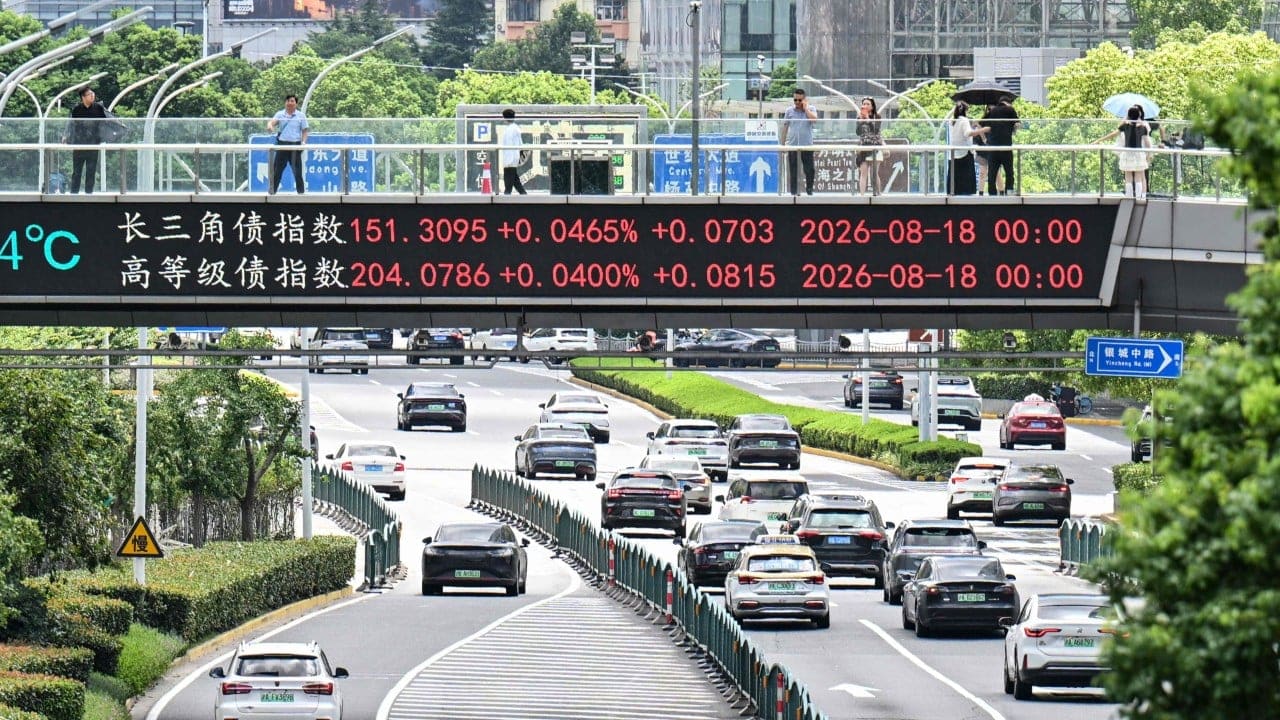
A Reversal After Years of Retreat
Global institutional investors added approximately one-third more shares of mainland-listed Chinese companies between April and June, according to Wind Information data. By the end of the second quarter, foreign fund managers collectively held 10.1 billion shares, up from 7.5 billion in the prior three months. The aggregate value of those positions jumped 87 percent to 272.8 billion yuan, or roughly 40.6 billion US dollars.
At DailyTechWire, we've tracked capital flows across Asia's major exchanges for the past two years, and this marks one of the sharpest quarterly reversals in foreign sentiment toward A-shares since Beijing's regulatory crackdowns began in late 2021. The inflow coincides with two structural shifts: China's push to localize semiconductor packaging and testing capacity, and the scaling of domestic solar and battery manufacturing that now commands over 70 percent of global output.
AI Hardware and the Localization Imperative
Much of the fresh capital targeted companies operating in the artificial intelligence hardware supply chain. While US export controls continue to restrict access to cutting-edge logic chips, China's ecosystem has pivoted toward packaging, assembly, and test services, as well as advanced cooling systems and power-management modules that sit one layer below the restricted silicon itself.
Foreign fund managers appear to be betting that even in a bifurcated semiconductor landscape, Chinese firms will capture a disproportionate share of the physical infrastructure that surrounds AI compute. Thermal-management specialists, connector manufacturers, and companies that produce high-bandwidth memory substrates have all seen their foreign ownership ratios tick upward. These businesses benefit from proximity to hyperscale data-center construction in tier-two cities, where land and power costs remain a fraction of those in coastal hubs.
The dynamic underscores a broader theme we've observed in Seoul and Taipei as well: investors are no longer pricing pure-play chip designers at the same premium they once commanded. Instead, capital is flowing toward the picks-and-shovels layer, where margin compression is slower and geopolitical risk is more diffuse.
Green Energy as a Strategic Anchor
The second major driver of inflows was China's green-energy sector, particularly solar-cell manufacturers, lithium-battery producers, and electric-vehicle component suppliers. These industries have matured rapidly over the past three years, moving from subsidy-dependent startups to vertically integrated manufacturers with meaningful export revenue.
Foreign investors are drawn to the scale advantages these companies now enjoy. Production volumes in polysilicon refining and cathode-material synthesis have reached levels that make it economically difficult for competitors in Europe or North America to match, even with local subsidies. The result is a set of businesses that generate hard-currency revenue while operating in a policy environment that remains supportive of capacity expansion.
At the same time, the sector faces headwinds. Tariff threats from the United States and the European Union, along with rising raw-material costs, have compressed margins for mid-tier players. The inflows suggest that foreign managers are selectively positioning in market leaders with diversified customer bases, rather than taking broad sector exposure.
The Macro Context and Remaining Risks
The 87 percent surge in foreign holdings should be understood against a backdrop of historically low baselines. Foreign participation in mainland equities remains well below the levels seen in 2020 and early 2021, before regulatory uncertainty and pandemic-related lockdowns triggered a prolonged exodus. The current uptick represents a tactical reallocation rather than a structural vote of confidence.
Currency risk remains a consideration. The yuan has traded within a narrow band against the dollar this year, but expectations of further monetary easing by the People's Bank of China introduce the possibility of depreciation that could erode dollar-denominated returns. Foreign investors are also mindful of liquidity constraints in A-shares, where daily trading volumes can swing sharply and institutional exit can be more difficult than in Hong Kong or Singapore.
Regulatory risk has not disappeared. Beijing's approach to data security, cross-border listings, and foreign ownership in sensitive sectors continues to evolve. The fact that inflows have concentrated in hardware and manufacturing, rather than consumer internet or fintech, suggests that fund managers are deliberately steering away from sectors with higher political sensitivity.
What It Signals for Regional Capital Allocation
The shift in foreign positioning toward Chinese equities has implications for capital flows across the rest of Asia. If global managers are rotating into mainland hardware and green-tech names, they are by definition reducing allocations elsewhere. We've seen modest outflows from Indian mid-cap tech stocks and Southeast Asian consumer plays over the same period, suggesting that the China trade is being funded in part by trimming exposure in markets that had absorbed the "China-plus-one" narrative over the past two years.
This rotation does not necessarily indicate a reversal of supply-chain diversification. Rather, it reflects a recognition that certain segments of China's industrial base, particularly those tied to physical infrastructure and energy transition, offer risk-adjusted returns that are difficult to replicate in other geographies at current valuations.
For founders and venture investors in the region, the takeaway is nuanced. Foreign institutional capital is becoming more selective, favoring businesses with tangible assets, export revenue, and defensible cost structures. The era of growth-at-any-cost venture bets, even in frontier markets, continues to recede. What remains is a preference for companies that can demonstrate unit economics and operate in sectors where China's scale advantages are structural rather than temporary.
Looking Ahead
The second-quarter inflows represent a data point, not a trend. Whether foreign investors sustain or expand their positions in Chinese equities will depend on a combination of macroeconomic factors, policy signals from Beijing, and the trajectory of US-China technology decoupling. The concentration in AI hardware and green energy suggests that capital is following industrial logic rather than broad market sentiment.
For now, the message is clear: foreign fund managers see selective value in China's manufacturing and infrastructure sectors, even as they remain cautious about consumer-facing and data-intensive businesses. How long that calculus holds will depend on whether the policy environment remains stable and whether the companies receiving inflows can continue to deliver margin expansion in an increasingly competitive global landscape.