CXMT Revenue Climbs 873% as China's DRAM Champion Scales Production
Hefei chipmaker's first earnings since Shanghai debut reveal the rewards and risks of racing to break foreign memory dominance
The Numbers Behind China's Memory Bet
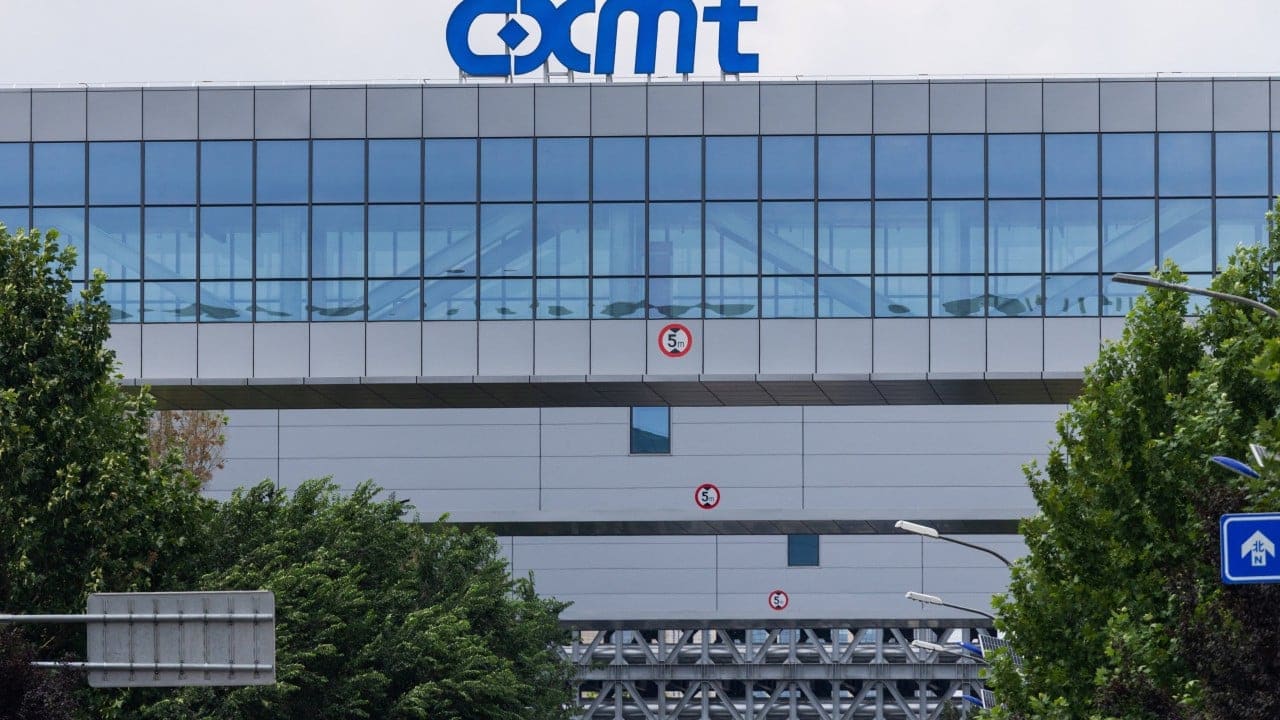
ChangXin Memory Technologies delivered first-half revenue of 150.31 billion yuan ($22.4 billion), nearly nine times the year-earlier figure, according to the company's latest filing. The Hefei-based firm unveiled these results in its first earnings report since completing a high-profile Shanghai listing last month that made it China's most valuable publicly traded semiconductor company.
The scale of the jump underscores how quickly CXMT has ramped fabrication of dynamic random-access memory, the volatile chips that handle active data in everything from smartphones to servers. At DailyTechWire, we've tracked the firm's progression from pilot lines in 2019 to volume shipments that now supply domestic handset makers, cloud operators, and PC assemblers hungry for an alternative to Samsung, SK hynix, and Micron.
What the headline growth obscures is the capital intensity behind it. CXMT has been pouring cash into new fabs and process nodes, a strategy that mirrors the trajectory of Taiwan's DRAM champions in the 1990s but compressed into a far shorter window. The question facing investors and policymakers alike is whether the company can sustain momentum as technology gaps narrow and global oversupply cycles return.
Capacity at Speed
The revenue surge reflects two forces converging. First, CXMT brought additional cleanroom capacity online across its Hefei campus, expanding wafer starts per month and lifting utilization rates. Second, the firm began shipping higher-density modules built on a more advanced process node, which command better pricing than the older-generation parts that dominated its early portfolio.
Industry observers note that CXMT's output still lags the leading-edge densities shipped by the South Korean incumbents, but the gap has closed faster than many anticipated. Where the company once trailed by three or four generations, it now sits roughly two nodes behind, a narrowing that matters for customers willing to trade cutting-edge specs for supply-chain diversification and cost.
Beijing's policy apparatus has played an enabling role. State-backed funds channeled tens of billions of yuan into CXMT's expansions, while procurement preferences among Chinese OEMs created a guaranteed floor of demand. Export controls imposed by Washington on advanced lithography tools have constrained the top end of CXMT's roadmap but have not prevented the firm from scaling volume production at nodes that serve the bulk of the market.
The Margin Reality
Revenue growth of this magnitude typically comes at the expense of near-term profitability, and CXMT's trajectory is no exception. The company's filing did not disclose net income, but industry analysts we follow estimate that capital expenditure and depreciation remain elevated, compressing margins even as revenue scales.
DRAM is a notoriously cyclical business. Prices swing violently with supply-demand imbalances, and new capacity entering the market often triggers downturns that punish latecomers. CXMT's expansion coincides with a period of relatively firm pricing, driven in part by data-center AI buildouts that consume high-bandwidth memory. Whether that tailwind persists through 2027 will shape the company's ability to reach sustainable profitability.
There is also the question of technology catch-up. Each successive process node requires more sophisticated lithography, tighter defect control, and higher R&D investment. CXMT has demonstrated it can execute on mature nodes, but advancing further without access to extreme ultraviolet scanners will demand either breakthroughs in alternative patterning techniques or a shift in the export-control landscape.
Strategic Implications for the Region
CXMT's growth reverberates beyond its own balance sheet. The company's rise has given Chinese electronics manufacturers a credible domestic source for a component that was once entirely import-dependent, reducing exposure to geopolitical supply shocks. For governments across Asia tracking semiconductor sovereignty, CXMT offers a case study in state-directed scale-up: expensive, risky, but achievable within a decade if capital and policy support align.
At the same time, the firm's success has intensified scrutiny from Washington and allied capitals. Memory chips sit at the intersection of commercial and strategic interests; they power both consumer devices and military systems. The prospect of a Chinese player achieving parity in DRAM has already prompted discussions about extending export controls to equipment used in older-node production, a move that would raise costs across the global supply chain.
For competitors in South Korea and the United States, CXMT represents both a threat and a validation. Samsung and SK hynix have lobbied for government support by pointing to the subsidies flowing to Chinese rivals, while Micron has accelerated its own capacity plans in response to shifting trade rules. The net effect is a memory industry that is fragmenting along geopolitical lines, with duplicate capacity and higher fixed costs becoming the new normal.
What Comes Next
The Shanghai listing last month gave CXMT a war chest and a public valuation that exceeded many established chip firms. That capital will fund the next phase of expansion: additional fabs, pilot lines for next-generation processes, and deeper investment in packaging and testing capabilities that allow the company to capture more value per chip sold.
But scale alone will not secure leadership. CXMT must navigate yield ramps, customer qualification cycles, and the perpetual risk that a memory downturn erases years of margin progress in a single quarter. The company's ability to attract and retain engineering talent also remains a constraint; DRAM process development is a specialized discipline, and the pool of experienced engineers in China is still smaller than in Seoul or Boise.
For now, the 873 percent revenue jump serves as a milestone in China's broader semiconductor ambition. It demonstrates that with sufficient capital, policy support, and execution discipline, a latecomer can carve out meaningful share in an oligopolistic market. Whether CXMT can transition from fast follower to technology leader is the harder test, and one that will play out over the next several product cycles. The stakes extend beyond any single earnings report: they touch the architecture of the global tech stack and the question of who controls the memory that underpins it.