Noah Medical Prepares Hong Kong IPO to Unlock China's Surgical Robotics Market
The SoftBank-backed firm is targeting over $100 million in a listing that reflects deepening capital flows between US innovation hubs and Asian growth markets
A Strategic Bridge Between Markets
Noah Medical has started groundwork for a Hong Kong initial public offering, a move that positions the surgical robotics developer to capture demand across mainland China while maintaining access to international capital. The company intends to file its listing application in 2027, according to founder Zhang Jian, with a fundraising target exceeding $100 million.
At DailyTechWire, we've tracked a pronounced shift in where medical device companies choose to list when Asia represents their primary growth vector. Hong Kong has emerged as the preferred venue for firms that straddle US R&D infrastructure and Chinese hospital procurement pipelines. Noah Medical's decision underscores that calculus: the company is headquartered in California's Silicon Valley, holds FDA clearance for its robotic bronchoscopy system, and now sees the Pearl River Delta and Yangtze River Delta hospital clusters as the next phase of commercial scale.
Why Surgical Robotics Matters Now
Robotic-assisted surgery has moved from niche oncology applications to broad adoption in pulmonology, urology, and gastrointestinal procedures. The global market for surgical robots is projected to grow at a compound annual rate above 15 percent through the end of the decade, driven by an aging population, rising chronic disease incidence, and hospital investments in precision instrumentation that reduce complication rates and shorten recovery windows.
China represents an especially compressed opportunity. The country's tiered hospital system is upgrading rapidly, with tertiary centers in provincial capitals competing to install advanced surgical platforms. Reimbursement policies have begun to cover robotic procedures in select provinces, removing a longstanding barrier to adoption. For a company like Noah Medical, which has already secured regulatory approval in the United States, the mainland market offers volume that can dwarf North American revenue within a few fiscal years.
The Hong Kong Listing Calculus
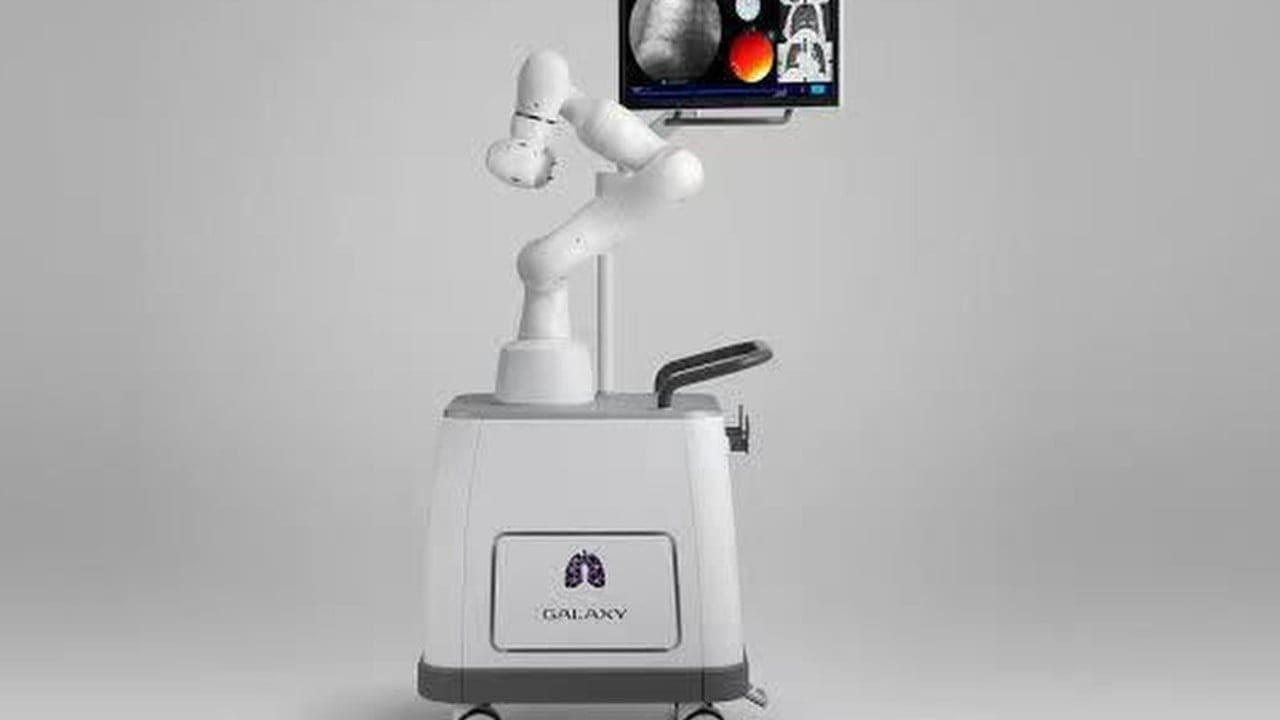
Choosing Hong Kong over New York or NASDAQ reflects more than geography. The Stock Exchange of Hong Kong has tailored its Chapter 18A rules to welcome pre-revenue and pre-profit biotech and medical device companies, provided they meet minimum R&D spend thresholds and hold at least one approval from a major regulator. That framework aligns neatly with Noah Medical's profile: the firm has commercialized its Galaxy system for lung nodule biopsy in the US and is navigating China's National Medical Products Administration review process.
Equally important is investor appetite. Hong Kong's institutional base includes sovereign wealth funds and family offices that have allocated significant capital to healthcare technology with a China angle. Listing in the city also simplifies future fundraising in renminbi, whether through private placements or convertible instruments, as the company scales its mainland sales and service network.
Backing and Competitive Landscape
Noah Medical counts SoftBank among its investors, a detail that signals both deep pockets and high expectations. SoftBank's Vision Fund has deployed billions into healthcare automation, from diagnostics to rehabilitation robotics, and the firm's portfolio companies often pursue aggressive geographic expansion once product-market fit is demonstrated in an initial territory.
The competitive environment in surgical robotics is intensifying. Intuitive Surgical remains the dominant player globally, with its da Vinci platform installed in thousands of operating rooms. However, newer entrants have carved out specialized niches: Auris Health, acquired by Johnson & Johnson, focuses on flexible endoscopy; CMR Surgical in the UK markets a modular system aimed at cost-sensitive markets; and a cohort of Chinese startups, including Wego Surgical Robotics and MicroPort MedBot, are building domestic capabilities with explicit government support.
Noah Medical's Galaxy platform differentiates through its emphasis on pulmonary applications, an area where robotic guidance can significantly improve diagnostic yield for peripheral lung lesions that are difficult to reach with conventional bronchoscopy. The company has published clinical data showing nodule detection rates above 85 percent, a benchmark that matters to pulmonologists evaluating capital equipment purchases.
Regulatory and Reimbursement Hurdles
Securing NMPA approval in China is a multi-year process that involves clinical trials conducted in mainland hospitals, manufacturing site inspections, and iterative technical documentation. Noah Medical has reportedly initiated those trials, but timelines remain uncertain. The company will need to demonstrate not only safety and efficacy but also that its system performs reliably in the hands of Chinese clinicians, who may have different training backgrounds and case mix than their US counterparts.
Reimbursement is the second gate. Even with regulatory clearance, hospitals will hesitate to adopt expensive robotic platforms if procedures are not covered by the national or provincial health insurance schemes. Recent policy signals have been cautiously positive: several provinces have added robotic-assisted lung biopsy to their reimbursement catalogues on a pilot basis. If those pilots expand, the commercial case for hospital investment strengthens considerably.
Capital Deployment and Expansion Plans
Proceeds from the Hong Kong offering will likely fund three priorities: expanding the sales and clinical support team in China, building out a local service and training infrastructure, and advancing the next generation of the Galaxy platform to address additional anatomical sites. Medical device companies that succeed in China typically localize not just their go-to-market strategy but also parts of their supply chain, to manage costs and demonstrate commitment to domestic value creation.
The timing of the IPO, planned for 2027, suggests Noah Medical expects to have meaningful traction in China by then, whether through early hospital installations under compassionate use pathways or full commercial launch following NMPA clearance. Investors will scrutinize pipeline metrics: number of systems placed, utilization rates, and the pace at which hospitals move from trial deployments to volume purchasing agreements.
A Broader Pattern in MedTech Listings
Noah Medical's move fits a broader pattern we've observed across the region. Companies that develop core technology in the US or Europe but see their largest addressable market in Asia are increasingly opting for dual strategies: maintain R&D and regulatory affairs in the West, but list and scale commercially in the East. This approach allows them to tap innovation ecosystems in Boston, California, or Switzerland while aligning their capital structure with the markets that will drive revenue growth.
Hong Kong's role as a conduit has grown more pronounced since 2020, as geopolitical friction and US-China tech decoupling have made NASDAQ listings more complex for companies with significant China exposure. The city offers a middle path: access to international institutional investors, a transparent legal framework, and proximity to the mainland without the regulatory overhang that comes with a purely domestic Chinese listing.
For surgical robotics specifically, the next 24 months will reveal whether the Hong Kong gateway proves durable. If Noah Medical's offering is well-received and the company executes on its China expansion, expect other US-based device makers in orthopedics, neurosurgery, and cardiovascular intervention to consider similar paths. The fusion of Silicon Valley engineering and Pearl River Delta manufacturing, financed through Victoria Harbour, may define the next chapter of medical technology growth in Asia.