Beijing Robot Games Become Test Bed for Huawei's 5G-Advanced Infrastructure
China Unicom and Huawei deploy next-generation wireless network to support real-time control of over 2,000 humanoid robots in competition environment
Infrastructure Meets Ambition
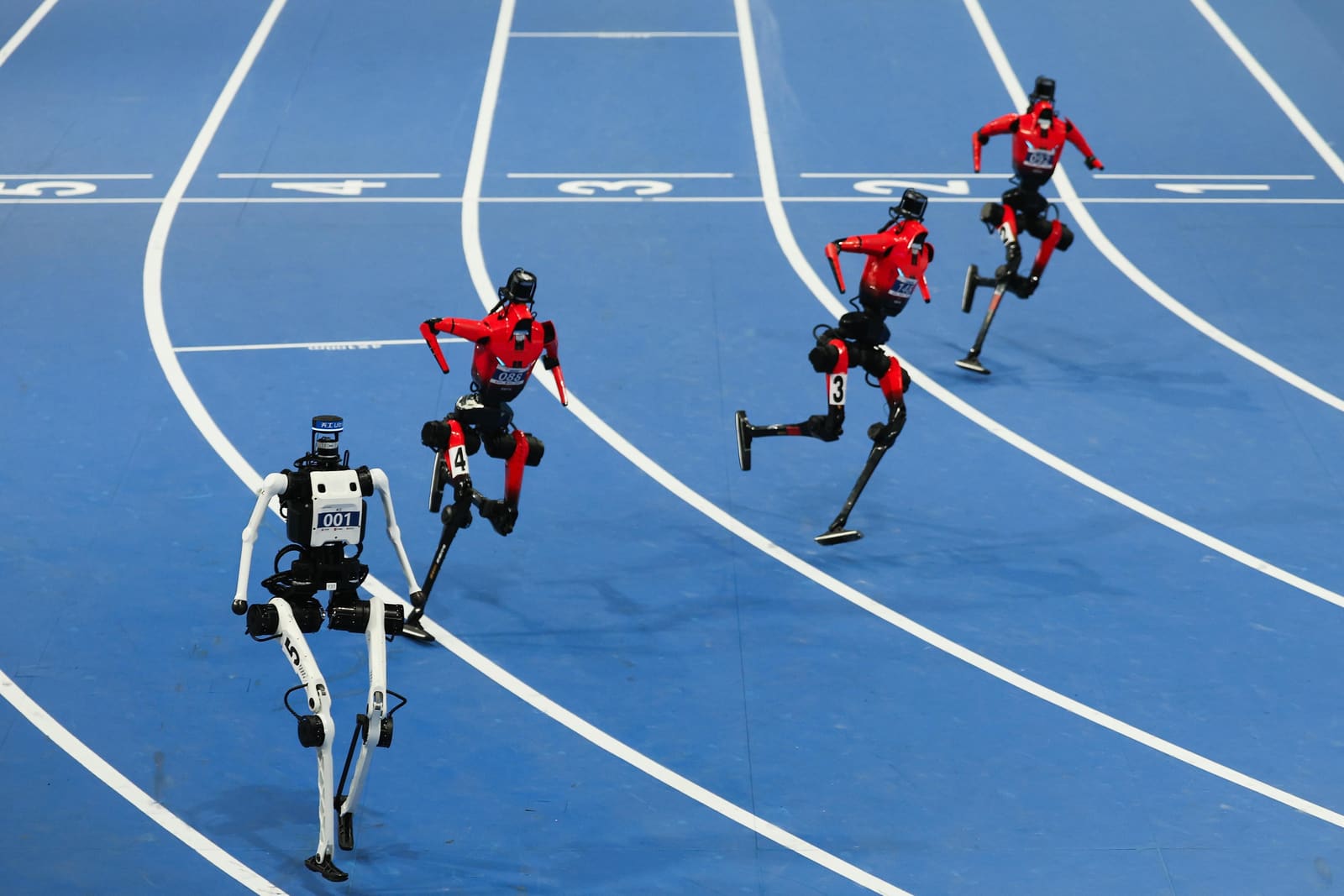
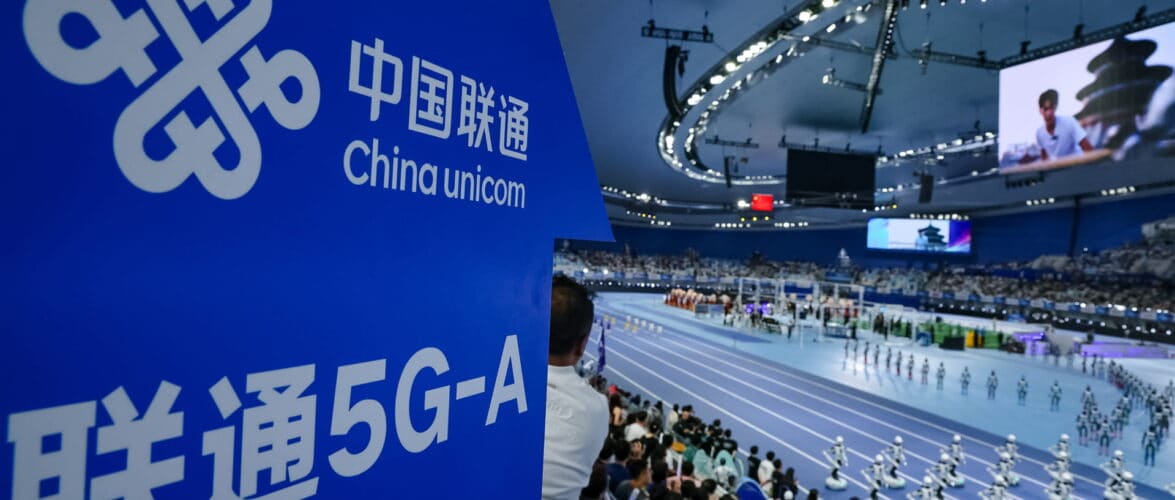
The second World Humanoid Robot Games, which opened August 22 at Beijing's National Speed Skating Oval, has become an unexpected showcase for next-generation wireless infrastructure. China Unicom and Huawei installed a dedicated 5G-Advanced network to handle the event's technical demands, transforming a robotics competition into a live test environment for mobile networking hardware that most carriers are still evaluating in labs.
The scale tells part of the story. According to official figures, 2,056 humanoid robots from 666 teams are competing through August 26 across 51 events, nearly double the 26 events held at the inaugural games. That density of wireless-controlled machines, operating simultaneously in close quarters, creates the kind of interference and latency challenges that telecom engineers typically simulate rather than encounter in the field.
At DailyTechWire, we've tracked 5G-A deployments across Asia over the past eighteen months, mostly in controlled industrial settings like smart factories in Shenzhen or logistics hubs in Busan. A multi-day public event with hundreds of autonomous units presents a different stress test entirely.
What 5G-A Brings to the Arena
5G-Advanced, often labeled 5.5G in industry shorthand, sits between current 5G networks and the theoretical 6G standard still years away. The core improvements center on latency reduction, uplink throughput, and device density, all of which matter when you're trying to coordinate robots that need to react in real time to physical opponents and environmental changes.
Standard 5G networks deliver latency around 10 milliseconds under optimal conditions. 5G-A targets sub-5ms, with some implementations pushing toward 1ms. For a humanoid robot adjusting balance mid-stride or responding to an opponent's movement, that difference translates to whether a motion command arrives before or after the moment has passed.
The uplink capacity is equally critical. Robots in competition generate continuous streams of sensor data, vision processing output, and telemetry that flow back to control systems. Legacy 4G and even early 5G networks were designed with consumer behavior in mind, optimized for downloading video rather than uploading high-frequency data bursts from thousands of endpoints.
Huawei's implementation at the venue reportedly uses multiple base stations configured for ultra-dense networking, a technical approach that divides the arena into overlapping coverage cells to prevent any single access point from becoming a bottleneck. The company has been refining this architecture in response to U.S. export restrictions that limit its access to cutting-edge chipmaking processes, pushing it toward software-defined optimization and network slicing rather than brute-force hardware upgrades.
From Competition Floor to Commercial Reality
The robotics games offer a convenient narrative for both China Unicom and Huawei, but the underlying business calculus is more pragmatic. Huawei has been vocal about 5G-A as a bridge technology that extends the commercial lifespan of existing 5G infrastructure investments while opening new enterprise revenue streams. Carriers globally are under pressure to monetize 5G deployments that have so far delivered modest returns outside of consumer mobile broadband.
Industrial automation, remote surgery, autonomous vehicles, and real-time edge computing all appear on the standard 5G-A pitch deck. The challenge is proving that the technology works outside the demo room. A robotics competition with live audiences, unpredictable movement patterns, and hard deadlines provides a useful proxy for the chaos of real-world deployments.
China Unicom's participation also signals where Chinese carriers see near-term opportunity. The company has been investing in vertical-specific network slicing, carving dedicated bandwidth for industrial clients willing to pay premium rates for guaranteed performance. A humanoid robot competition is a vertical market in miniature, a chance to stress-test the provisioning tools and service-level agreements that will underpin larger enterprise contracts.
The timing aligns with Beijing's broader push to position China as the center of gravity for humanoid robotics development. State-backed investment in the sector has accelerated over the past two years, with municipal governments offering subsidies for robotics R&D and manufacturing clusters emerging in cities like Shenzhen, Shanghai, and Hangzhou. Reliable, low-latency wireless infrastructure is a prerequisite for many of the use cases the government envisions, from elder care to warehouse automation.
Technical Constraints and Open Questions
Despite the optimism, 5G-A deployments face practical limits that a five-day event can't fully reveal. Power consumption remains a concern, both for base stations running dense antenna arrays and for battery-powered robots maintaining constant network connections. Early field trials in industrial settings have shown that 5G-A modems draw significantly more power than their 5G predecessors, a trade-off that matters less in a competition hall with charging stations than in a factory running multi-shift operations.
Interference management is another variable. The controlled environment of a sports venue, even one filled with robots, differs from a dense urban deployment where competing signals from consumer devices, neighboring networks, and legacy infrastructure create unpredictable noise floors. Huawei's network slicing and spectrum allocation techniques work well when the carrier controls the entire RF environment, but real-world conditions are rarely that clean.
There's also the question of cost. Dedicated 5G-A networks require more sophisticated hardware, denser base station placement, and ongoing optimization that raises both capital and operational expenses. For carriers already struggling to justify 5G investments to shareholders, the business case for 5G-A depends on finding customers willing to pay for guaranteed performance, a market segment that remains small outside of a few high-value verticals.
What Comes Next for Asia's Wireless Landscape
The robot games are a milestone, but they're also a marketing moment. Huawei has been leveraging high-profile deployments, from Olympic venues to smart city projects, to demonstrate technical capabilities that counter the narrative of a company hobbled by U.S. sanctions. The 5G-A rollout at the games serves a similar purpose, offering tangible proof that the company remains at the forefront of mobile infrastructure development despite restricted access to advanced semiconductors.
For China Unicom, the event is a proof point in conversations with enterprise customers evaluating private 5G networks. The ability to point to a live deployment managing thousands of simultaneous connections under demanding conditions carries more weight than a lab report or simulation.
Across the rest of Asia, carriers in South Korea, Japan, and Singapore are watching these developments closely. SK Telecom and NTT Docomo have both announced 5G-A trials, while Singtel is exploring network slicing for logistics and port operations. The competitive pressure to keep pace with Chinese infrastructure development is real, even as the business case remains uncertain.
The robotics competition will end this week, and the temporary network infrastructure will likely be dismantled or repurposed. But the data collected, the technical lessons learned, and the operational experience gained will feed into the next generation of deployments, both in China and beyond. Whether 5G-A becomes the backbone of industrial automation or remains a niche solution for high-value applications depends on whether the economics can match the engineering. The robots, at least, performed as expected.