Apple Tightens Defenses as Mercenary Spyware Targets High-Risk Users
The iPhone maker has overhauled its threat-notification system and published new guidance as state-backed surveillance tools spread across Asia and beyond
A Fresh Wave of Warnings
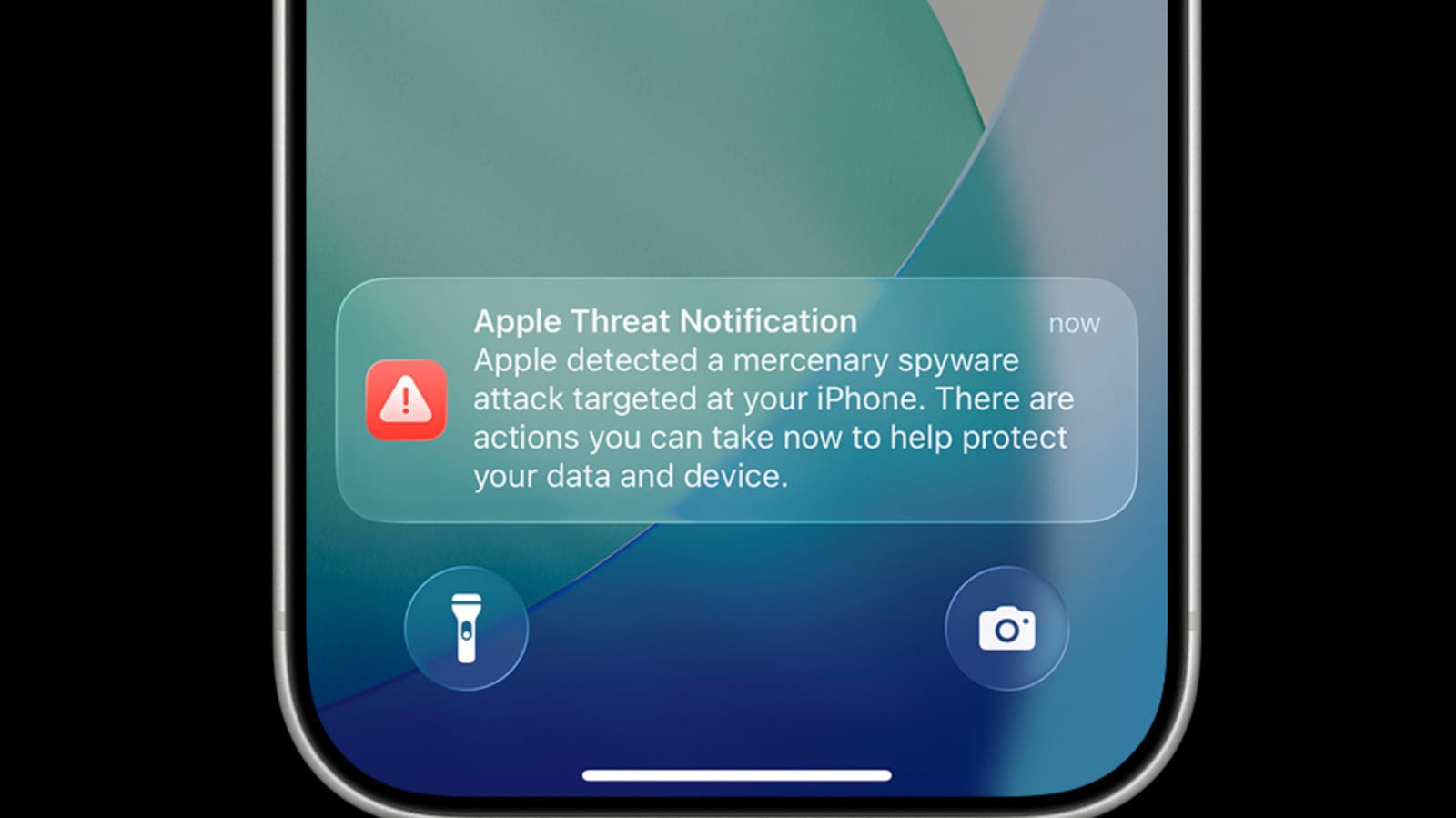
Apple has sent a new batch of threat notifications to users its systems flagged as targets of state-sponsored surveillance. The alerts, confirmed by John Scott-Railton of the University of Toronto's Citizen Lab, signal that sophisticated spyware tools remain active and governments continue deploying them against specific individuals.
The company simultaneously redesigned how it delivers these warnings and published a comprehensive support document explaining what recipients should do. The notification interface now surfaces immediate protective actions, a shift from earlier iterations that left users searching for next steps.
At DailyTechWire, we've tracked the evolution of commercial spyware across Southeast Asia, the Middle East, and Latin America over the past three years. What began as isolated incidents involving NSO Group's Pegasus has matured into a broader market where multiple vendors sell intrusion tools to state actors. Apple's updated approach reflects the reality that these attacks, while still rare in absolute terms, have become persistent enough to warrant a standing response protocol.
What Mercenary Spyware Actually Means
The term "mercenary spyware" describes surveillance software developed and sold by private companies to governments and state agencies. According to Apple, these tools represent the high end of the threat spectrum. They cost millions of dollars per deployment and are individually tailored to specific targets rather than broadcast to large populations.
Typical targets include journalists covering sensitive political beats, human-rights activists, opposition politicians, and diplomats. The attacks are technically sophisticated and designed to evade detection by standard security measures. Apple acknowledges that even its own detection systems operate on probabilities rather than certainties, describing its alerts as "high-confidence" rather than absolute determinations.
The company deliberately withholds technical details about how it identifies these attacks. Disclosing detection methods would allow spyware vendors to engineer around them, a cat-and-mouse dynamic familiar to anyone who follows vulnerability research and exploit development.
The Regional Context
Mercenary spyware is not evenly distributed. Citizen Lab and other research groups have documented concentrations of Pegasus infections in countries with restrictive press environments and active internal dissent. India, Thailand, and the Philippines have all appeared in case studies over the past two years. In the Middle East, Saudi Arabia and the UAE have been linked to multiple campaigns. Mexico and several Central American nations have seen sustained use of commercial intrusion tools against journalists and civil-society organizations.
Apple does not disclose the geographic distribution of its latest warnings, but the timing and scale suggest a coordinated deployment by one or more state clients. Scott-Railton's public alert indicates that multiple individuals received notifications within a narrow time window, a pattern consistent with a single campaign rather than isolated incidents.
The persistence of these tools raises questions about export controls and licensing regimes. Israel, where NSO Group is based, has faced pressure to tighten oversight of spyware exports. The European Union is considering regulations that would treat intrusion software as dual-use technology subject to stricter export licensing. Yet enforcement remains uneven, and smaller vendors continue operating in jurisdictions with minimal oversight.
Lockdown Mode and Practical Defense
Apple's primary recommendation for users who receive a threat notification is to enable Lockdown Mode, an extreme-hardening feature the company introduced in 2022. When activated, Lockdown Mode disables most message attachments, blocks incoming FaceTime calls from unknown contacts, prevents invitations to Apple services, and turns off shared photo albums. Web browsing is also restricted, with complex page features disabled to reduce the attack surface.
Lockdown Mode is not a silver bullet. It significantly degrades the user experience, cutting off features that many professionals rely on for communication and collaboration. But for individuals facing persistent, well-resourced adversaries, the trade-off is often justified. The mode is designed to close the narrow vectors that zero-click exploits typically use, forcing attackers to rely on older, more detectable techniques that require user interaction.
Apple also recommends that recipients seek expert assistance. The company specifically highlights Access Now's Digital Security Helpline, a nonprofit service that provides rapid-response support to at-risk users. Organizations like Citizen Lab and Amnesty International's Security Lab offer forensic analysis to confirm infections and document attack infrastructure.
The challenge for most targets is that they lack the technical background to interpret subtle indicators of compromise. Pegasus and similar tools are engineered to operate silently, leaving minimal traces even in system logs. Professional assistance is often the only reliable way to determine whether a device has been breached and what data may have been exfiltrated.
The Limits of Consumer-Grade Protection
Apple's updated notification system represents an improvement in user experience, but it also underscores the asymmetry between attackers and defenders in the mercenary-spyware market. Detection is probabilistic, and the company cannot guarantee that every targeted user will receive a warning. False negatives remain a risk, particularly as spyware vendors adapt to Apple's evolving defenses.
The broader industry has struggled to address the problem. Google's Threat Analysis Group and Microsoft's Security Response Center issue similar warnings to targeted users, but the volume of alerts remains small relative to the suspected scale of deployments. Many infections go undetected until forensic researchers analyze devices after the fact, often months or years after the initial compromise.
Regulatory responses are slowly taking shape. The United States added NSO Group to its Entity List in 2021, restricting American companies from doing business with the firm. The Biden administration issued an executive order in 2023 prohibiting federal agencies from using commercial spyware that poses risks to national security or human rights. Yet these measures have had limited impact on the global market, where demand from authoritarian governments remains strong and alternative vendors have filled the gap left by NSO's retrenchment.
What Comes Next
Apple's decision to publish a dedicated support page signals that mercenary-spyware attacks have crossed a threshold from isolated incidents to an ongoing category of threat. The company is building institutional knowledge into its support infrastructure, preparing both its own teams and its user base for a sustained campaign environment.
For users in high-risk categories, the calculus has shifted. Receiving a threat notification is no longer a remote possibility but a scenario worth preparing for in advance. That means understanding Lockdown Mode, establishing contact with digital-security organizations, and maintaining offline backups of critical data.
The mercenary-spyware market will continue evolving as long as governments are willing to pay for access and vendors can operate with limited accountability. Apple's technical defenses will improve, but so will the sophistication of the tools arrayed against them. The latest round of warnings is a reminder that for a small but growing number of users, surveillance is not a hypothetical risk but a present reality requiring active defense.