Anthropic's Dario Amodei Says AI Industry Faces a Trust Problem, Not a Messaging Problem
The CEO rejects claims that his warnings fueled backlash, arguing that public skepticism stems from decades of broken promises and a deeper mistrust of tech power.
A Public Dispute Over AI's Image Problem
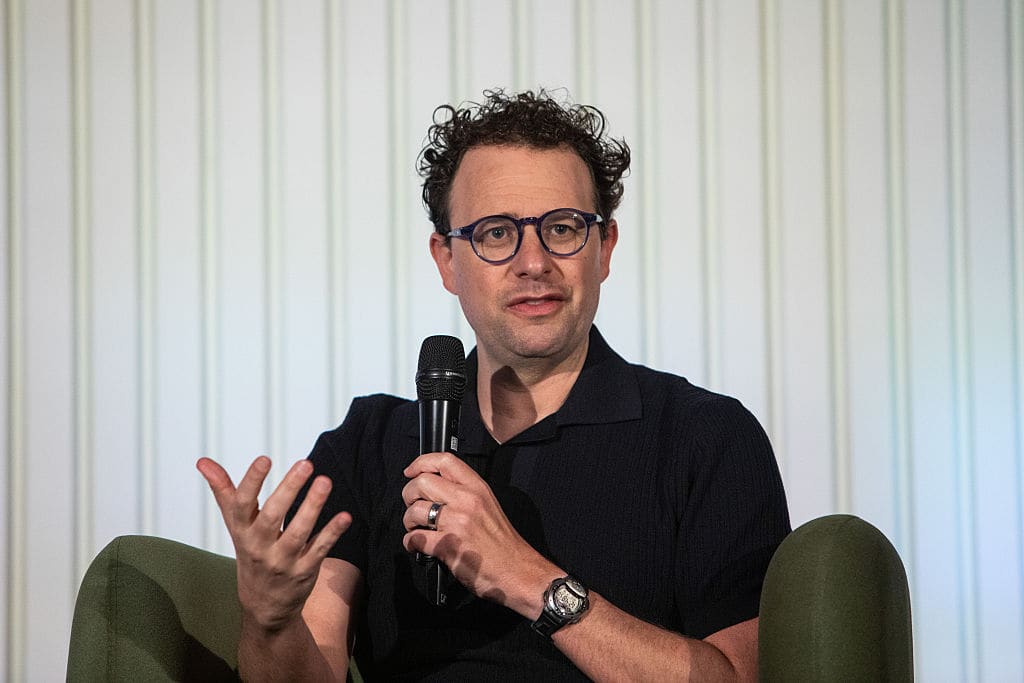
Dario Amodei, CEO of Anthropic, recently found himself at the center of a debate about whether AI leaders bear responsibility for growing public skepticism toward artificial intelligence. The conversation began when investor Gavin Baker criticized Amodei on social media and during an appearance on the All-In podcast, suggesting that the CEO's warnings about AI dangers have contributed to a backlash against the industry, particularly affecting data center development in the United States.
Baker's argument centered on the idea that Amodei, as the leader of what he described as "one of the most important companies in the world," should adopt a more optimistic public posture about AI's potential. The investor specifically pointed to Anthropic's support for regulatory measures, including a California bill requiring transparency from large AI companies, as evidence that Amodei has "lost the argument" on regulation.
The exchange highlights a growing tension within the AI industry between those who believe honest discussion of risks is necessary and those who worry that such candor undermines public confidence and invites regulatory constraints.
The Defense: Balance, Not Pessimism
In a series of posts responding to the criticism, Amodei rejected the characterization of his messaging as disproportionately negative. He pointed to his body of work as evidence of balance, noting that he has written major essays addressing both the risks and benefits of artificial intelligence. His essay "Machines of Loving Grace," he explained, was specifically crafted because he felt the AI industry wasn't articulating an inspiring enough vision of how the technology could transform society for the better.
Yet Amodei didn't dispute the underlying premise that public sentiment toward AI has soured. He acknowledged this as a significant problem for the industry but disagreed sharply with the diagnosis that warnings from AI executives are the primary cause.
Instead, Amodei framed the issue as what he called "fundamentally a crisis of trust." According to him, ordinary people harbor deep suspicion toward companies, governments, and the technology sector broadly, always anticipating that these institutions are devising new ways to exploit them. The AI backlash, in this view, is merely the latest manifestation of a mistrust that has been building for decades.
Delivery Over Marketing
The most pointed part of Amodei's response came when he addressed what he considers the industry's actual failing. Rather than accepting criticism about messaging and marketing strategy, he argued that the most valid critique of AI companies, including Anthropic, is that they haven't yet delivered on their ambitious promises to benefit the world.
This failure to deliver, Amodei suggested, is entirely the responsibility of AI companies themselves. He drew a distinction between making promises and fulfilling them, noting that pledging to cure cancer with AI has become more of a cliche than an inspiration. What would genuinely shift public opinion, he argued, would be actually curing cancer or achieving other concrete breakthroughs that improve people's lives.
This perspective reframes the debate away from communications strategy and toward product development and real-world impact. At DailyTechWire, we've tracked similar patterns across Asia's tech sector, where companies that focused on tangible user benefits, particularly in fintech and e-commerce, built stronger public trust than those that led with futuristic rhetoric.
The Regulation Debate: False Choices and Power Concentration
Amodei also pushed back on Baker's framing of the regulation debate. He rejected what he described as a "false choice" between distributing AI widely without regulation or concentrating the technology in the hands of a few companies through regulatory capture.
According to Amodei, there's a prevalent shorthand in Silicon Valley where regulation automatically equals regulatory capture and concentration of power. He called this an oversimplified view of how policy actually works, pointing out that many people outside the tech bubble view regulation as a mechanism to constrain corporate power and protect ordinary citizens.
While Amodei said he doesn't necessarily subscribe fully to that alternative perspective either, it informs how Anthropic approaches policy proposals. The company, he explained, tries to craft recommendations that would slow down frontier AI companies while advantaging smaller competitors, an approach that runs counter to typical regulatory capture dynamics.
Structural Power and the Limits of Open Weights
Underlying Amodei's defense of thoughtful regulation is his belief that AI is structurally a technology that tends to concentrate power. This is a critical point that distinguishes his thinking from many in the open-source AI community who argue that openly available model weights are sufficient to democratize the technology.
Amodei acknowledged that open-weights models help address power concentration to some degree, but he characterized them as "nowhere near a sufficient solution." His reasoning is that open weights simply shift the concentration somewhat toward those with the most compute resources and chips, rather than eliminating it.
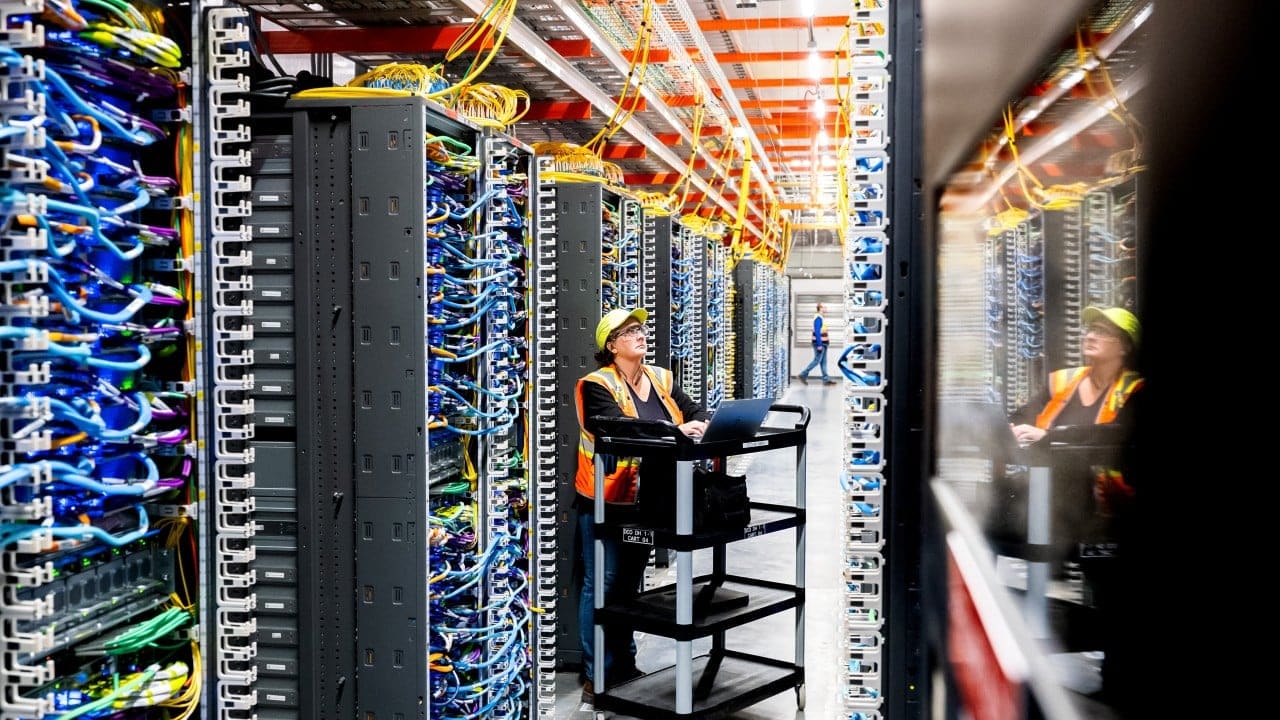
This analysis resonates with realities we've observed in Asia's AI ecosystem, where access to computational infrastructure and specialized chips has created clear tiers of capability. Smaller research teams in Seoul, Singapore, and Bengaluru can fine-tune open models, but training frontier systems remains the domain of well-capitalized players with access to vast GPU clusters.
The Right Rules of the Road
Amodei outlined what he sees as the potential for well-designed regulation to achieve multiple objectives simultaneously. The right "rules of the road," as he put it, could address AI's cybersecurity, biosecurity, and alignment risks while also institutionally constraining the power of frontier AI companies and leaving room for open-weights models, provided the specific risks they bring are also managed.
This is a nuanced position that doesn't fit neatly into the binary of pro-regulation versus anti-regulation camps. It suggests that Amodei views policy as a tool that can be wielded in different ways depending on its design, rather than as inherently good or bad for innovation.
The challenge, of course, lies in the details. Crafting regulations that genuinely advantage smaller competitors while constraining larger players is difficult in practice, particularly when those larger players often have more resources to influence the regulatory process. Anthropic's support for the California transparency bill, which imposes requirements on large AI companies, represents an attempt to put these principles into practice, though critics like Baker argue it will ultimately harm American competitiveness.
Trust as the Underlying Currency
The exchange between Baker and Amodei ultimately circles back to the issue of trust, which has become increasingly central to discussions about AI leadership. Sam Altman at OpenAI has faced repeated questions about his credibility and intentions, and Amodei's response suggests this is a broader industry challenge rather than an individual one.
What makes the trust deficit particularly acute for AI companies is the combination of enormous claims about transformative potential and the relatively limited evidence, so far, of those transformations materializing in ways that benefit ordinary people. The technology has demonstrated impressive capabilities in narrow domains, but the gap between demo and deployment at scale remains wide for many applications.
Amodei's argument is that this gap, not his warnings about risks, is what drives public skepticism. If AI companies want to change public perception, his response suggests, they should focus less on polishing their message and more on building products and services that demonstrably improve lives in tangible, measurable ways.
Whether that approach will prove sufficient to bridge the trust gap remains an open question. The history of technology adoption suggests that public attitudes are shaped by both concrete experiences and broader narratives about power, control, and whose interests are being served. Amodei's willingness to engage with the latter, even at the cost of industry criticism, may ultimately prove either a liability or a differentiator for Anthropic as the AI race intensifies.